Young Adult vs Adult Books: The Real Differences Beyond Age
 Aug, 11 2026
YA vs Adult Fiction Classifier
Answer these four questions about your book concept to see whether it leans more towards Young Adult (YA) or Adult Fiction.
Analysis Complete!
Based on your choices, here is how your book concept is classified.
0
Points out of 40
Points out of 4Interpretation
Loading analysis...
Walk into any bookstore, and you’ll likely find yourself standing between two towering shelves that look suspiciously similar. On one side, the covers are bright, bold, and often feature striking typography. On the other, the designs are more subdued, perhaps featuring abstract art or a simple title in elegant serif font. You might pick up a novel about a teenager navigating high school drama from the "Adult" section, or grab a fantasy epic meant for adults that features a protagonist who is only sixteen. So, what’s the deal? Why does the industry insist on separating these stories?
The short answer is that young adult fiction isn’t just about how old the main character is. It’s about voice, pacing, emotional stakes, and the specific lens through which the story is told. While there is significant overlap-and plenty of readers who enjoy both-understanding the distinction helps you find exactly the kind of experience you’re looking for.
The Protagonist Rule: Who Is Driving the Story?
If you want a quick heuristic, look at the protagonist. In Young Adult (YA) fiction, the main character is almost always between the ages of twelve and eighteen, with the sweet spot being fifteen to seventeen. These characters are in the thick of adolescence-a time defined by identity formation, first loves, rebellion against authority, and the terrifying prospect of an uncertain future.
In adult fiction, the protagonist can be any age. They could be twenty-two, forty-five, or eighty. But more importantly, their problems usually reflect the complexities of established adulthood. A YA character might struggle with whether to go to college or follow their passion for music. An adult character might struggle with balancing a career, raising children, and caring for aging parents. The stakes feel different because the life stage dictates the pressure points.
However, don’t let the age fool you entirely. There are plenty of adult novels with teenage protagonists, such as *The Catcher in the Rye* or *To Kill a Mockingbird*. The difference lies in the narrative voice. YA books are written *for* teenagers, often mimicking their internal monologue, urgency, and perspective. Adult books with young protagonists are often written *about* them, viewed through a more reflective, sometimes nostalgic, older lens.
Voice and Pacing: The Speed of Life
One of the most noticeable differences when switching between these categories is the pacing. YA fiction tends to move faster. This isn’t just a stylistic choice; it mirrors the intensity of adolescence. For a teenager, every day feels monumental. A breakup isn’t just a bad weekend; it’s the end of the world. A fight with a best friend feels like a permanent exile. YA narratives capture this heightened sense of immediacy.
- Sentence Structure: YA often uses shorter sentences and simpler syntax to maintain momentum and accessibility.
- Chapter Length: Chapters in YA are frequently shorter, creating natural stopping points that encourage binge-reading.
- Vocabulary: While not dumbed down, YA avoids dense, archaic, or overly academic language unless it serves a specific genre purpose (like historical fiction).
Adult fiction, by contrast, allows for more meandering. It can linger on descriptions, delve into complex philosophical tangents, or explore backstory in great detail. The pacing is often slower, reflecting the way adults process events-with more context, history, and sometimes, cynicism. If you pick up a literary adult novel, you might spend ten pages watching a character think about a memory. In a YA novel, that memory would likely be triggered by immediate action.

Themes: Identity vs. Consequence
The core themes of a book often signal its category. YA fiction is obsessed with identity. Who am I? Where do I fit in? Who do I love? These questions are central to the adolescent experience. Themes of friendship, first romance, family conflict, and societal rebellion dominate the landscape. Even in dystopian YA, the political uprising is often framed through the lens of personal freedom and self-discovery.
Adult fiction explores consequences. It deals with the aftermath of choices made. Themes include marriage, divorce, career stagnation, mortality, grief, and systemic corruption. Romance in adult fiction is often less about the thrill of the first kiss and more about the complexities of long-term commitment, infidelity, or co-parenting. The emotional arc is less about finding oneself and more about maintaining oneself amidst chaos.
Consider the topic of death. In YA, death is often sudden, traumatic, and transformative-it shatters the protagonist’s world and forces them to grow up quickly. In adult fiction, death might be slow, expected, or bureaucratic. It carries the weight of legacy, inheritance, and the quiet erosion of life over decades.
Content Boundaries: What Can Be Said?
This is where misconceptions often arise. People assume YA means "clean" and adult means "dirty." That’s not entirely true. YA books can have intense violence, dark themes, and even sex scenes. However, the treatment of these elements differs.
In YA, sex is often portrayed with a focus on emotion, discovery, and awkwardness. It’s rarely gratuitous. The camera stays close to the characters’ feelings rather than their bodies. Violence in YA is impactful but may lack the graphic, visceral detail found in adult thrillers or horror. The goal is to evoke empathy and tension without overwhelming the reader with sensory overload.
Adult fiction has fewer guardrails. Sex can be explicit, clinical, or erotic, depending on the genre. Violence can be gory and detailed. Language can be profane and relentless. This isn’t to say adult books are inherently "worse," but they operate under a different set of expectations regarding maturity and tolerance for discomfort. Publishers also play a role here; marketing teams often categorize books based on perceived marketability rather than strict content rules.
| Attribute | Young Adult (YA) | Adult Fiction |
|---|---|---|
| Protagonist Age | 12-18 years old | Any age (typically 18+) |
| Narrative Voice | Immediate, urgent, introspective | Reflective, complex, varied |
| Pacing | Fast, plot-driven | Variable, often slower |
| Core Themes | Identity, belonging, first love | Consequences, legacy, complexity |
| Language | Accessible, contemporary | Diverse, potentially dense |
| Sex/Violence | Emotional focus, less graphic | Explicit, detailed, realistic |
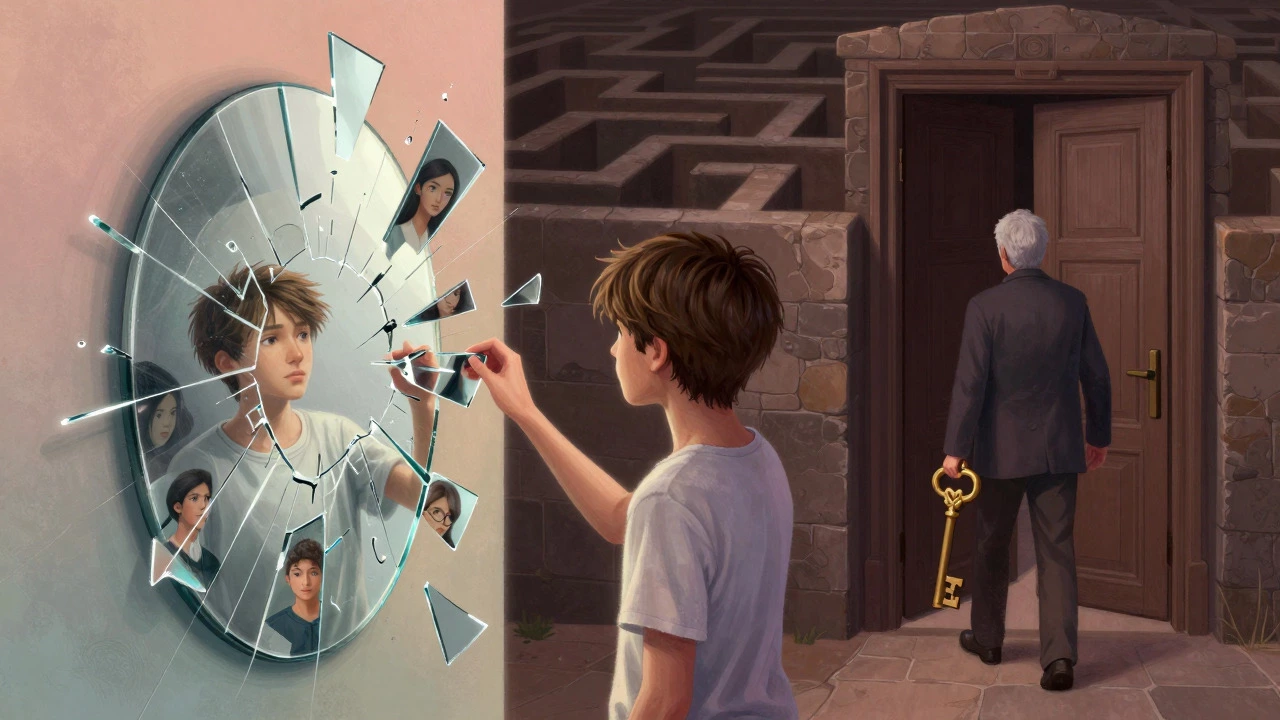
The Gray Area: New Adult and Crossover Hits
Not every book fits neatly into a box. Enter "New Adult" (NA), a term that emerged in the 2010s to describe fiction featuring protagonists aged eighteen to twenty-five. These characters are no longer teens, but they aren’t fully settled adults either. They’re dealing with college, early careers, and independence. NA often bridges the gap, offering the fast pace and romantic intensity of YA with the slightly darker, more explicit content allowed in adult fiction.
Then there are crossover hits. Books like *The Hunger Games* or *Harry Potter* were marketed as YA but became massive successes among adult readers. Why? Because universal themes resonate across ages. Adults read YA for nostalgia, simplicity, or the refreshing clarity of moral binaries. Teens read adult fiction for sophistication, deeper lore, or to feel grown-up. The lines are blurring, especially in genres like fantasy and science fiction, where world-building often transcends age demographics.
Why Does This Distinction Matter?
For readers, understanding these differences helps manage expectations. If you’re craving a quick, emotionally charged ride, YA is your friend. If you want to lose yourself in intricate prose and nuanced character studies, adult fiction might be better. For writers, knowing the target audience shapes everything from word choice to plot structure. Writing a YA novel requires mastering the authentic voice of a teenager without slipping into caricature. Writing adult fiction demands patience and depth.
Ultimately, labels are tools, not prisons. Don’t let a sticker on the spine stop you from picking up a book that interests you. The best stories connect us, regardless of the author’s intended age group. Whether you’re sixteen or sixty, if the story speaks to you, it’s the right book.
Can adults read Young Adult books?
Absolutely. Many adults enjoy YA fiction for its fast pacing, clear moral frameworks, and nostalgic appeal. Series like *Harry Potter* and *Percy Jackson* have huge adult fanbases. There is no shame in reading books marketed to younger audiences if you enjoy the story.
Is Middle Grade (MG) the same as Young Adult?
No. Middle Grade fiction targets readers aged 8-12. The protagonists are younger, the themes are less intense, and romance is usually absent or very mild. YA targets 12-18 year olds and includes more complex emotional issues, romance, and higher stakes.
Why are some books with teen protagonists classified as Adult?
Classification depends on voice, theme, and content. If a book with a teen protagonist uses complex language, explores mature themes like addiction or trauma in depth, or features explicit content, publishers may classify it as Adult to reach a broader, more mature audience.
What is New Adult fiction?
New Adult is a subgenre featuring protagonists aged 18-25. It bridges the gap between YA and Adult fiction, often combining the romantic intensity of YA with the explicit content and complex life stages (college, early career) of Adult fiction.
Do Young Adult books have simpler vocabulary?
Generally, yes. YA aims for accessibility to ensure engagement, using contemporary language and shorter sentences. However, this doesn’t mean the ideas are simple. YA books can tackle profound philosophical and social issues, just expressed in a more direct style.