Why Are People Leaving Goodreads? The 2026 Exodus Explained
 Sep, 1 2026
Find Your Perfect Book Tracking Platform
The Great Goodreads Exodus is real. Are you ready to switch? Answer these 5 quick questions to find the platform that fits your reading style in 2026.
Your Recommended Platform:
Why this fit?
Remember when Goodreads was the undisputed king of online bookshelves? For over a decade, it was where you logged your reads, argued with friends about spoilers, and pretended to be more well-read than you actually were. But if you’ve been scrolling through your feed lately, you might notice it feels... quieter. Or maybe just angrier. And that’s because a massive chunk of the community has quietly packed up their digital libraries and moved on.
This isn’t just a rumor; it’s a measurable shift in how people discover and discuss books. We’re seeing a real Goodreads exodus toward platforms like StoryGraph, The StoryGraph, and even back to simple spreadsheets or niche Discord servers. Why is this happening? Is it just nostalgia for the old internet, or did Goodreads fundamentally break its relationship with its users?
The Algorithm That Doesn’t Know You
Let’s start with the elephant in the room: the recommendation engine. For years, Goodreads relied heavily on collaborative filtering-if you liked Harry Potter, buy Percy Jackson. Simple, right? But as our tastes became more nuanced, this blunt instrument stopped working. It’s like asking a friend who only knows three movies to recommend you a film for date night. They’ll suggest The Notebook every time, regardless of whether you hate romance.
In 2026, readers want specificity. They don’t just want "fantasy"; they want "cozy fantasy with low stakes and found family." Platforms like StoryGraph thrive here by using mood-based tagging. You can filter by "slow burn," "dark academia," or "unreliable narrator." Goodreads tags are often user-generated chaos-half helpful, half spam. When the platform fails to deliver relevant suggestions, you stop trusting it. And once trust is gone, you look elsewhere.
Social Media Hijacked Discovery
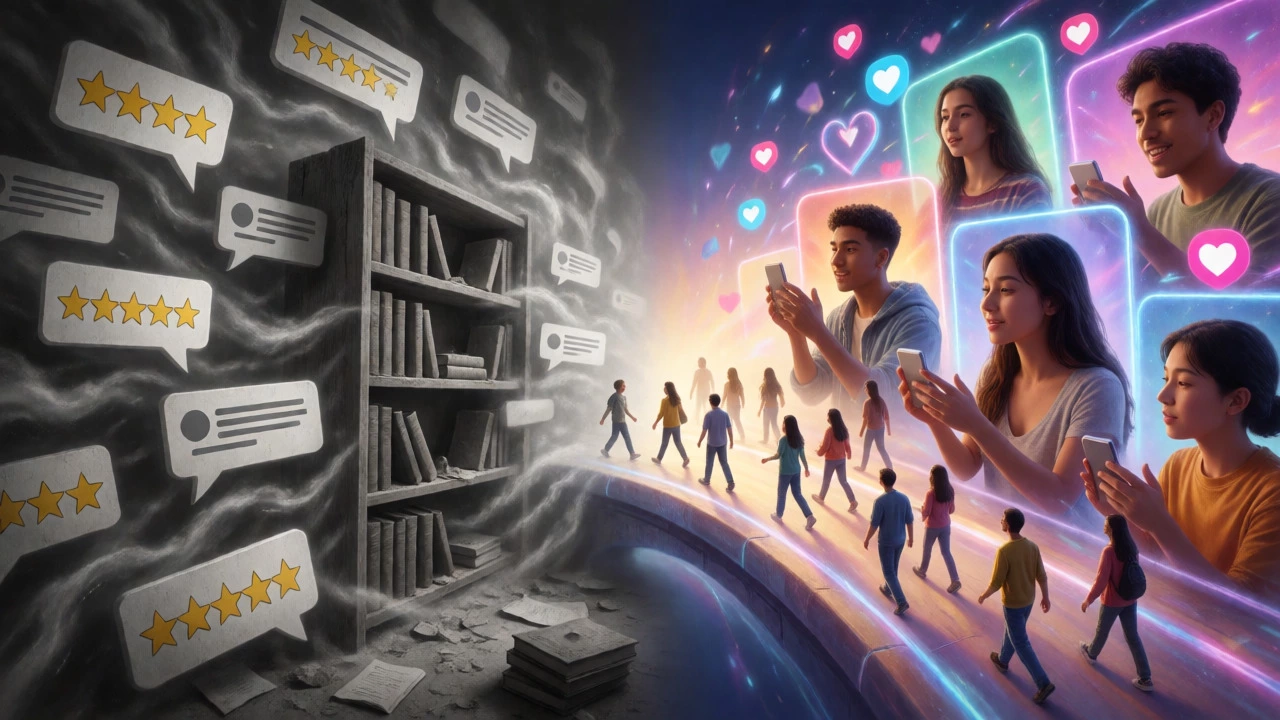
Here’s a controversial take: Goodreads didn’t lose its market share to other reading apps; it lost it to TikTok and Instagram. BookTok changed the game entirely. Suddenly, discovery wasn’t about browsing lists; it was about emotional resonance. A 15-second video of someone crying over a plot twist sells more copies than a five-star review ever could.
Goodreads tried to compete by integrating social features, but it felt forced. Their interface remained clunky and dated, while TikTok offered instant gratification and visual storytelling. Users realized they could get better recommendations from creators who shared their specific aesthetic preferences rather than from an algorithm that thought everyone loved The Da Vinci Code. This shift created a vacuum. Where do you go after you’ve seen the viral clip? You need a place to log it, track it, and discuss it. If Goodreads feels like a relic, you won’t go there.
The Toxicity Problem
We need to talk about the comment sections. Goodreads reviews have become notorious for two things: rating inflation and aggressive gatekeeping. On one hand, you have the 5-star army-users who rate everything highly to boost their own status or because they’re paid influencers. On the other, you have the "Did Not Finish" (DNF) brigade, who leave scathing one-star reviews not because the book was bad, but because it didn’t match their personal preference.
This polarization makes finding honest opinions difficult. Did the author write a poorly paced third act, or did the reviewer just hate slow burns? It’s impossible to tell without wading through pages of subjective ranting. Newer platforms attempt to mitigate this by focusing on private logging or smaller, curated communities. In Discord servers dedicated to specific genres, discussions tend to be more respectful and detailed. The anonymity of Goodreads breeds toxicity; the intimacy of niche communities fosters connection.
Data Ownership and Privacy Concerns
Since Amazon acquired Goodreads in 2013, many users have wondered: who really owns my data? Every book you read, every page you turn, every rating you give feeds into Amazon’s massive profiling machine. While some don’t mind, others feel uneasy about their literary history being used solely to sell them more products.
Alternative platforms like LibraryThing and Hoopla offer different models. Some focus on library integration, others on independent ownership. As privacy laws tighten globally and users become more aware of data mining, the appeal of a neutral, non-commercial space grows. If you’re tired of feeling like your reading list is just another ad slot, you might find solace in platforms that prioritize user experience over shareholder value.
Feature Fatigue vs. Simplicity
Goodreads tries to be everything to everyone: a social network, a store, a forum, and a tracker. This jack-of-all-trades approach means it masters none. The interface is cluttered with ads, pop-ups, and prompts to join groups you’ll never engage with. Contrast this with minimalist apps that do one thing well: track your reading progress.
Many users are returning to analog solutions or simple digital logs. There’s a growing trend of "reading journals"-both physical notebooks and basic spreadsheet templates-that allow for deeper reflection without the distraction of likes and comments. The cognitive load of managing a complex social profile around a hobby should be fun, not work, is leading people to simplify. If tracking your books feels like a second job, you’ll quit.

Comparison: Where Readers Are Going
If you’re considering making the switch, it helps to know what’s out there. Here’s a quick breakdown of the main alternatives attracting former Goodreads users.
| Platform | Primary Strength | Best For | Weakness |
|---|---|---|---|
| Goodreads | Largest database & community size | Finding obscure titles & global reach | Dated UI, toxic comments, weak algo |
| StoryGraph | Mood-based recommendations | Readers seeking specific vibes | Smaller community, fewer reviews |
| Bookwyrm | Open-source & privacy-focused | Tech-savvy users & privacy advocates | Steeper learning curve, less polish |
| Literal | Clean design & social sharing | Aesthetically driven readers | Newer platform, smaller feature set |
| Notion/Spreadsheets | Total customization | Power users who want full control | No built-in social features |
How to Make the Switch Without Losing Your Mind
Leaving Goodreads doesn’t mean deleting your history. Most alternative platforms offer import tools. Here’s how to handle the migration smoothly:
- Export Your Data: Go to Goodreads settings and request a CSV export of your shelves. This usually takes a few days to process.
- Clean Up: Before importing, delete duplicates and correct typos. Importing messy data will make your new shelf look chaotic.
- Choose Your Destination: Pick a platform based on your primary need. Want better recs? Try StoryGraph. Want privacy? Try Bookwyrm. Want simplicity? Use a spreadsheet.
- Rebuild Gradually: Don’t try to re-review every book immediately. Focus on your current year and favorites first.
What This Means for Authors and Reviewers
If you write or review books, this fragmentation matters. Relying solely on Goodreads ratings is risky. An author might have a high average rating but zero engagement. Conversely, a niche title might have fewer reviews but passionate advocacy on Discord or Reddit. Diversify your presence. Engage where the conversations are actually happening, not just where the numbers are highest.
Is Goodreads shutting down?
No, Goodreads is not shutting down. It remains the largest book database in the world. However, its active user base is declining relative to competitors, and its cultural dominance has waned significantly since its peak in the early 2010s.
Which app is best for replacing Goodreads?
It depends on your needs. StoryGraph is best for personalized recommendations based on mood. Bookwyrm is ideal for those who value privacy and open-source software. For pure tracking without social noise, a simple Notion template or spreadsheet is often superior.
Can I move my reviews to StoryGraph?
Yes, StoryGraph allows you to import your Goodreads data via a CSV file. You can choose which shelves to import and whether to bring over your ratings and reviews. Note that formatting may need minor adjustments after the import.
Why are Goodreads ratings unreliable?
Ratings are often skewed by fanbases inflating scores for popular series or trolls leaving low ratings for controversial authors. Additionally, the lack of context in star-only reviews makes it hard to judge quality objectively compared to written critiques.
Do I still need Goodreads for anything?
Some users keep a dormant account primarily for its massive database, which can help identify obscure editions or verify publication dates. However, for daily tracking and community interaction, most active readers have migrated to specialized alternatives.