Why Are American Kids Struggling to Read? The Science Behind the Crisis
 May, 21 2026
Reading Readiness & Risk Assessment Tool
Based on the science of reading, a child's ability to decode words by the end of first grade is one of the strongest predictors of future success. Use this tool to assess your child's current skills and understand potential risks for the "third-grade slump."
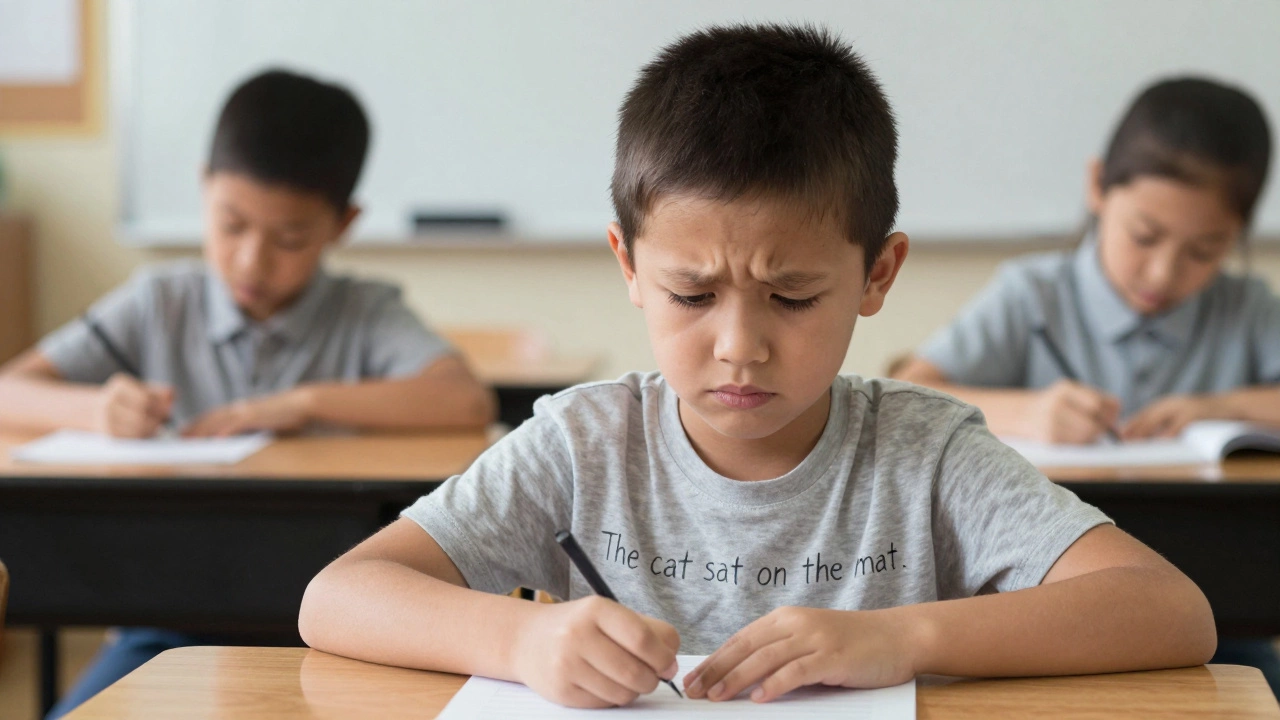
Imagine a child who has spent three years in school but still cannot read a simple sentence like "The cat sat on the mat." This isn't a hypothetical scenario; it is the reality for millions of children across the United States. For decades, educators and parents have watched reading scores stagnate or decline, creating what experts now call a national literacy crisis. But why is this happening? Is it a failure of teachers, a flaw in the curriculum, or something deeper rooted in how we understand the human brain?
The answer lies not in blaming individuals, but in examining the methods used to teach reading. To understand why American kids are struggling, we need to look at the science of reading, the shift in educational policies, and the specific barriers that prevent students from decoding text effectively.
The Broken Method: Why Phonics Matters
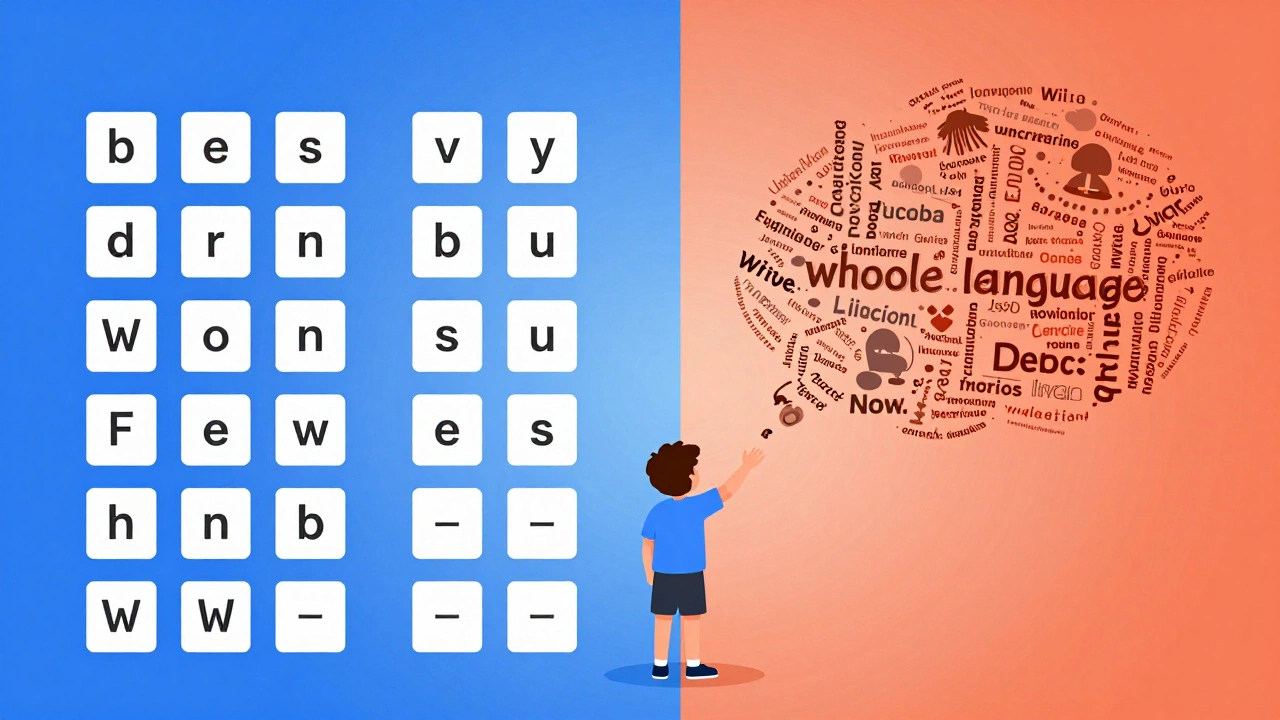
For most of the twentieth century, the dominant method for teaching reading in the U.S. was Phonics, which is a method of teaching reading by correlating sounds with letters or groups of letters. It worked. Children learned that the letter 'C' makes a /k/ sound, and 'A' makes an /ae/ sound, allowing them to blend these into "cat." However, starting in the 1970s and accelerating through the 1990s, many schools shifted toward Whole Language, which is an approach to literacy education that emphasizes meaning over decoding skills.
The Whole Language theory suggested that reading is a natural process, similar to speaking, and that children should learn to recognize whole words by context and pictures rather than sounding them out. Proponents argued that phonics was boring and mechanical. They believed that if you surrounded children with rich literature and encouraged them to guess words based on illustrations, they would naturally become readers.
Decades later, data tells a different story. Studies consistently show that without explicit phonics instruction, a significant portion of students-particularly those with language-based learning differences-cannot decode unfamiliar words. When a child encounters the word "bicycle," guessing from context might work once. But when they encounter "psychology" or "chrysanthemum," context clues fail. Without the ability to break down the sounds (phonemes) and map them to letters (graphemes), reading becomes a game of chance rather than a skill.
| Method | Core Philosophy | Effectiveness for Struggling Readers |
|---|---|---|
| Systematic Synthetic Phonics | Explicitly teaches sound-letter correspondences and blending | High; essential for building decoding fluency |
| Whole Language | Emphasizes meaning, context, and whole-word recognition | Low; often leaves gaps in decoding skills |
| Balanced Literacy | Combines phonics with whole-language strategies | Mixed; often lacks sufficient phonics intensity |
The Silent Epidemic: Dyslexia and Undiagnosed Learners
A major reason American kids struggle to read is that many have undiagnosed Dyslexia, which is a learning disorder characterized by difficulty with accurate and/or fluent word recognition and by poor spelling and decoding abilities. Dyslexia affects approximately 5% to 10% of the population, yet studies suggest that up to 30% of students in special education classrooms have undiagnosed reading disabilities.
In a classroom using Whole Language or weak Balanced Literacy approaches, a child with dyslexia may appear to be "lazy" or "not trying." They might memorize sight words for early grades, giving the illusion of progress. But as texts become more complex in third grade-a period known as the "fourth-grade slump"-their inability to decode new words catches up with them. By then, they have fallen so far behind that catching up requires intensive intervention.
The problem is compounded by the fact that many teacher preparation programs do not adequately train educators in the science of reading. A teacher might know how to manage a classroom and engage students in discussion, but if they lack knowledge of phonological awareness-the ability to hear and manipulate sounds in speech-they cannot effectively teach a child with dyslexia to read.
The Third-Grade Slump: A Critical Turning Point
If you follow the trajectory of a child's education, there is a pivotal moment around third grade. Before this age, children are "learning to read." After third grade, they are expected to "read to learn." In subjects like science and social studies, students must extract information from textbooks, not just listen to the teacher read aloud.
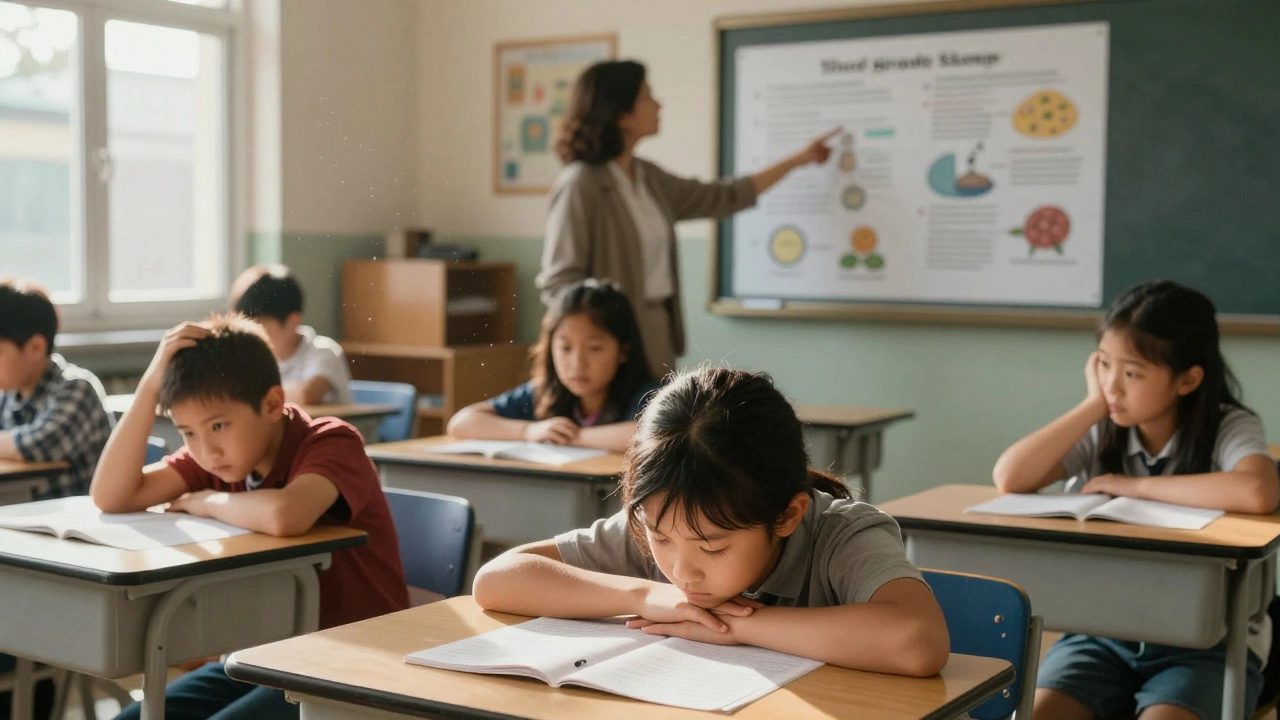
When a child enters third grade without strong decoding skills, they hit a wall. They spend so much mental energy trying to figure out individual words that they have no cognitive capacity left to comprehend the meaning of the passage. This leads to frustration, avoidance, and a loss of confidence. Many of these children stop attempting to read altogether, leading to long-term academic struggles and higher dropout rates.
This phenomenon is not random. It is predictable. Research shows that a child's ability to decode words by the end of first grade is one of the strongest predictors of their future reading success. If a child cannot decode simple CVC (consonant-vowel-consonant) words like "dog" or "sit" by mid-first grade, they are at high risk for lifelong reading difficulties without intervention.
Poverty and Environmental Factors
While instructional methods are crucial, we cannot ignore the environmental factors that contribute to the reading crisis. Poverty remains one of the biggest hurdles. Children from low-income households often have less access to books at home. They may experience food insecurity, housing instability, or exposure to violence, all of which impact cognitive development and stress levels.
Furthermore, the "word gap" is real. Studies indicate that by age three, children from professional families have heard millions more words than children from welfare-dependent families. Language exposure is foundational to reading. If a child does not have a rich vocabulary and strong oral language skills, mapping those spoken words to written text becomes exponentially harder.
Schools in underfunded districts also face challenges. They may lack resources for small-group instruction, specialized tutors, or updated curricula aligned with the science of reading. Teachers in these areas often have larger class sizes, making it difficult to provide the individualized attention that struggling readers need.
The Shift Toward Evidence-Based Practices
Fortunately, there is a growing movement to address these issues. Over the past few years, several states-including Mississippi, Indiana, and Florida-have passed legislation requiring teachers to be trained in evidence-based reading instruction. These states have seen remarkable improvements in reading proficiency scores.
Mississippi, for example, went from being near the bottom of national reading rankings to showing some of the highest gains in the country after implementing systematic phonics training for teachers and screening students for dyslexia in kindergarten. This proves that change is possible when policy aligns with scientific evidence.
At the federal level, the Every Student Succeeds Act (ESSA) encourages the use of evidence-based interventions. However, implementation varies widely. Some districts are still clinging to outdated Balanced Literacy models, arguing that phonics is too rigid. Others are embracing Structured Literacy, an approach that includes explicit, systematic instruction in phonics, syllable division, morphology, and syntax.
What Parents Can Do Right Now
If you are a parent concerned about your child's reading skills, you don't have to wait for systemic changes. There are concrete steps you can take:
- Check for Phonemic Awareness: Can your child identify the individual sounds in a word? Ask them to clap out the sounds in "stop" (st-op). If they struggle, practice games that focus on hearing and manipulating sounds.
- Encourage Decoding, Not Guessing: When your child reads aloud and stumbles on a word, resist the urge to give them the answer immediately. Encourage them to sound it out. If they say "fly" instead of "free," gently correct them by asking, "Does 'fly' make sense here? What sound does 'ee' make?"
- Read Aloud Daily: Even if your child is learning to read independently, continue reading to them. This builds vocabulary, comprehension, and a love for stories. Choose books slightly above their independent reading level to expose them to complex language.
- Advocate for Screening: Request that your child be screened for dyslexia or other learning disabilities if they are struggling despite extra help. Early identification is key to effective intervention.
Conclusion: A Path Forward
The question of why American kids are struggling to read is not unsolvable. It is a result of decades of ignoring scientific evidence in favor of ideological preferences. By returning to systematic phonics, training teachers in the science of reading, and supporting vulnerable students with targeted interventions, we can reverse this trend.
Reading is not a gift bestowed upon the lucky few; it is a skill that can be taught to almost every child. When we get the instruction right, we unlock doors to knowledge, opportunity, and empowerment. The time for action is now.
What is the difference between phonics and whole language?
Phonics explicitly teaches the relationship between letters and sounds, helping children decode words. Whole language focuses on meaning and context, encouraging children to guess words based on pictures and sentences. Research shows phonics is more effective for most learners, especially those with dyslexia.
How can I tell if my child has dyslexia?
Signs of dyslexia include difficulty rhyming, trouble remembering letter names or sounds, slow reading pace, frequent mistakes when reading aloud, and difficulty spelling. If you notice these signs, request a formal evaluation through your school or a private specialist.
Is it too late to improve reading skills in older children?
No, it is never too late. While early intervention is ideal, older children and even adults can improve their reading skills with structured, multisensory instruction tailored to their needs. Programs like Orton-Gillingham are effective for older learners.
What is the "third-grade slump"?
The third-grade slump refers to the point where students transition from "learning to read" to "reading to learn." Children who haven't mastered decoding skills by this stage struggle to keep up with content-heavy subjects, leading to academic frustration and falling behind.
Which states have successfully improved reading scores?
States like Mississippi, Indiana, and Florida have seen significant gains in reading proficiency after implementing laws requiring evidence-based reading instruction and teacher training in phonics and the science of reading.