Who Is the Father of Fantasy Novels? The True Origin of the Genre
 Mar, 6 2026
Fantasy Element Analyzer
Analyze Your Fantasy Story
Check if your story contains the core elements that George MacDonald pioneered in modern fantasy literature.
George MacDonald pioneered these core elements in his 1858 novel Phantastes:
Results
MacDonald Influence Score:
0%
Key Findings
- George MacDonald
When people think of fantasy novels, they often picture wizards, dragons, and epic battles between good and evil. But who actually started it all? The question of who the father of fantasy novels is doesn’t have a simple answer-but one name rises above the rest: George MacDonald.
Before Tolkien, There Was MacDonald
Most assume J.R.R. Tolkien invented modern fantasy with The Lord of the Rings. But Tolkien himself said he was building on something that already existed. In his 1936 lecture On Fairy-Stories, he credited George MacDonald as a major influence. Tolkien called MacDonald’s work “a mine of gold”. That’s not casual praise-it’s the acknowledgment of a master shaping a tradition.
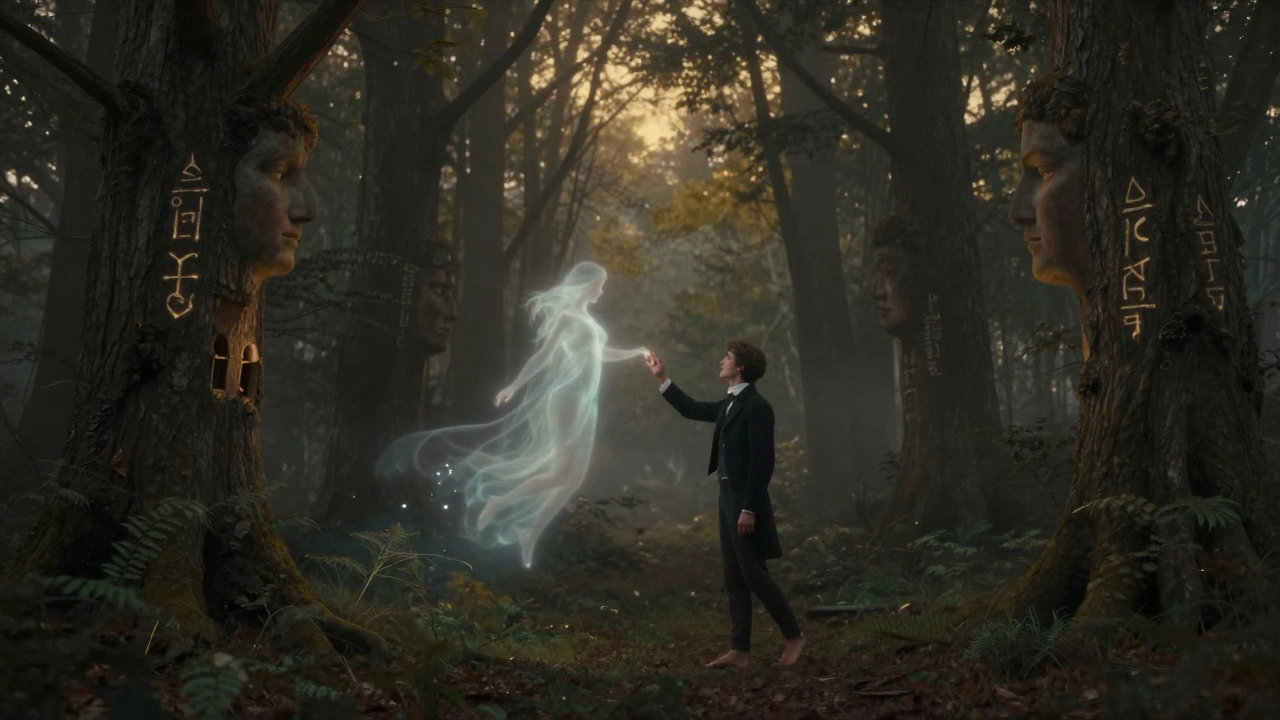
MacDonald wrote his first fantasy novel, Phantastes, in 1858-nearly 70 years before The Hobbit. It tells the story of Anodos, a young man who enters a dreamlike world filled with talking trees, shadowy spirits, and a mysterious female figure who guides him through trials. The book wasn’t just a fairy tale. It was a spiritual allegory wrapped in mythic imagery. Readers didn’t just read it-they felt it.
What Made MacDonald Different?
Before MacDonald, stories about magic and otherworldly realms were mostly short folk tales or moral fables meant for children. They were simple, episodic, and rarely had deep emotional arcs. MacDonald changed that. He wrote long, complex novels with real characters who grew, suffered, and changed. His worlds weren’t just backdrops-they were psychological landscapes.
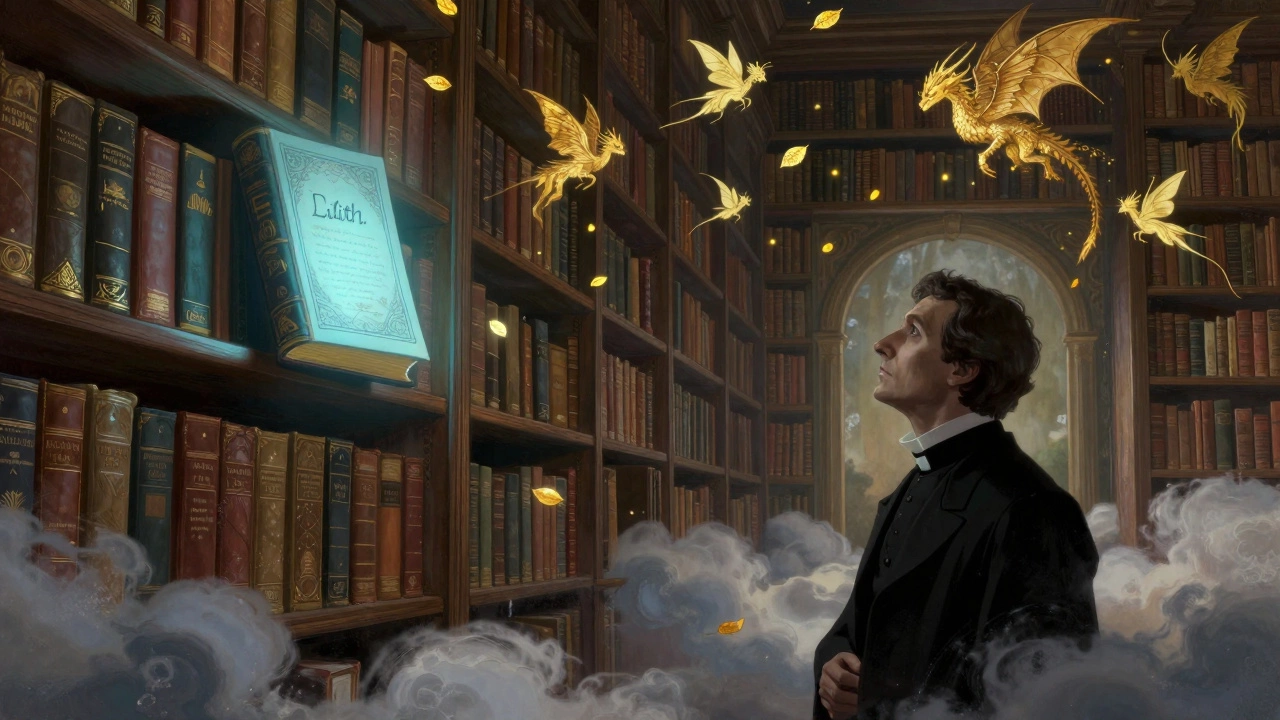
In Phantastes, the protagonist’s journey mirrors inner struggles with pride, fear, and self-deception. In Lilith (1895), he explored death, rebirth, and redemption through a haunting, surreal narrative. These weren’t bedtime stories. They were soul-searching novels disguised as fantasy.
He also introduced key elements later adopted by every fantasy writer:
- Secondary worlds with their own rules and histories
- Mythical creatures that carry symbolic meaning, not just spectacle
- Magical systems tied to moral or spiritual laws
- Heroes who change through inner transformation, not just physical victory
MacDonald didn’t just write fantasy-he redefined what fantasy could be. He treated it as literature, not escapism.

His Influence Spread Through the Writers Who Came After
MacDonald didn’t work in a vacuum. He was a close friend of Lewis Carroll, and his ideas directly shaped C.S. Lewis. Lewis called Phantastes the book that “baptized my imagination”. He even named his son after MacDonald. Lewis’s The Chronicles of Narnia owes more to MacDonald’s tone and structure than most readers realize.
Even Tolkien’s elves, dwarves, and enchanted forests echo MacDonald’s vision. The way the character of the White Lady in Phantastes appears to Anodos-mysterious, beautiful, and morally ambiguous-is almost identical to how Galadriel appears to Frodo in The Lord of the Rings. Tolkien didn’t invent the archetype-he refined it.
Later writers like Ursula K. Le Guin, Neil Gaiman, and Patrick Rothfuss all name MacDonald as a foundational influence. Gaiman once said, “If you want to understand where fantasy comes from, start with George MacDonald. Everything else is variation.”
Why Isn’t He More Famous Today?
Despite his influence, MacDonald isn’t a household name. Partly because his writing style is dense and Victorian. His sentences are long. His tone is earnest. Modern readers sometimes find him slow. He wasn’t trying to entertain-he was trying to awaken.
Also, fantasy as a genre exploded after Tolkien. Publishers and readers wanted epics with maps, armies, and clear villains. MacDonald’s quiet, introspective stories didn’t fit the mold. His books went out of print for decades. Only in the last 20 years have scholars and serious fantasy fans begun to rediscover him.
But if you read Phantastes or Lilith today, you’ll hear the roots of every modern fantasy novel. The quiet magic of Harry Potter’s world? The moral weight in The Wheel of Time? The haunting beauty of His Dark Materials? All trace back to a Scottish minister writing in the mid-1800s.
The Legacy: Fantasy as a Mirror of the Soul
MacDonald believed fantasy wasn’t about running away from reality-it was about seeing it more clearly. He wrote because he thought the deepest truths were best told through myth. His stories didn’t hide pain. They framed it. They didn’t promise easy victories. They offered transformation.
That’s why he’s the true father of fantasy novels. Not because he created the first magical world. But because he proved that fantasy could be a vehicle for truth, depth, and emotional honesty. He showed that dragons and fairies could carry the weight of human longing.
Today, fantasy is a $15 billion industry. But its soul still belongs to the quiet man in Aberdeen who wrote about a boy walking through a forest of whispering trees, learning that the greatest battle isn’t against monsters-but within himself.
Is George MacDonald the only candidate for the father of fantasy novels?
No, but he’s the most influential. Some point to Homer’s Odyssey or medieval romances like King Arthur as early fantasy. Others cite E.T.A. Hoffmann’s dark fairy tales or William Morris’s utopian fantasies. But none of them combined myth, psychological depth, and narrative length the way MacDonald did. He created the first modern fantasy novel as we recognize it today-long, character-driven, and spiritually resonant.
Did George MacDonald write only fantasy?
No. MacDonald was a minister and wrote many sermons, poems, and realist novels about Victorian life. But his fantasy works had the deepest impact. He believed fantasy was the most honest way to speak about truth. His non-fantasy novels, like David Elginbrod, are still read by scholars, but they lack the cultural reach of Phantastes and Lilith.
Where can I read George MacDonald’s fantasy novels today?
His works are in the public domain and available for free online through Project Gutenberg and the Internet Archive. Print editions are published by publishers like Christian Classics Ethereal Library and Lion Hudson. The best starting point is Phantastes-it’s shorter than Lilith and easier to follow. Many modern fantasy readers find it surprisingly fresh.
Why do modern fantasy writers still reference him?
Because he proved fantasy could be literary. Today’s writers are tired of formulaic tropes. They want stories with emotional weight, moral complexity, and symbolic depth. MacDonald’s work shows that magic doesn’t need to be flashy to be powerful. A whispering tree can change a soul more than a thousand sword fights. Writers like N.K. Jemisin, China Miéville, and Neil Gaiman cite him because he reminds them fantasy is about the human condition-not just worldbuilding.
Was George MacDonald the first to use magic in fiction?
Absolutely not. Magic appears in ancient myths, medieval legends, and Gothic tales. But he was the first to build an entire novel around a magical world that functioned like a psychological mirror. He didn’t use magic as spectacle-he used it as metaphor. That shift-from magic as trickery to magic as revelation-is what made him the father of the modern fantasy novel.