What is Penny Fiction? The Cheap Thrills of Mythological Storytelling
 Oct, 27 2026
Penny Fiction Value Calculator
Enter your wage and choice to see how far one penny went in 1840 London.
Did You Know?
While a novel cost £3 (approx. 720 pennies), a penny booklet offered immediate gratification. Publishers like Edward Lloyd used cheap paper and rapid serialization to make mythology accessible to millions who could never afford a library subscription.
The One-Penny Hook
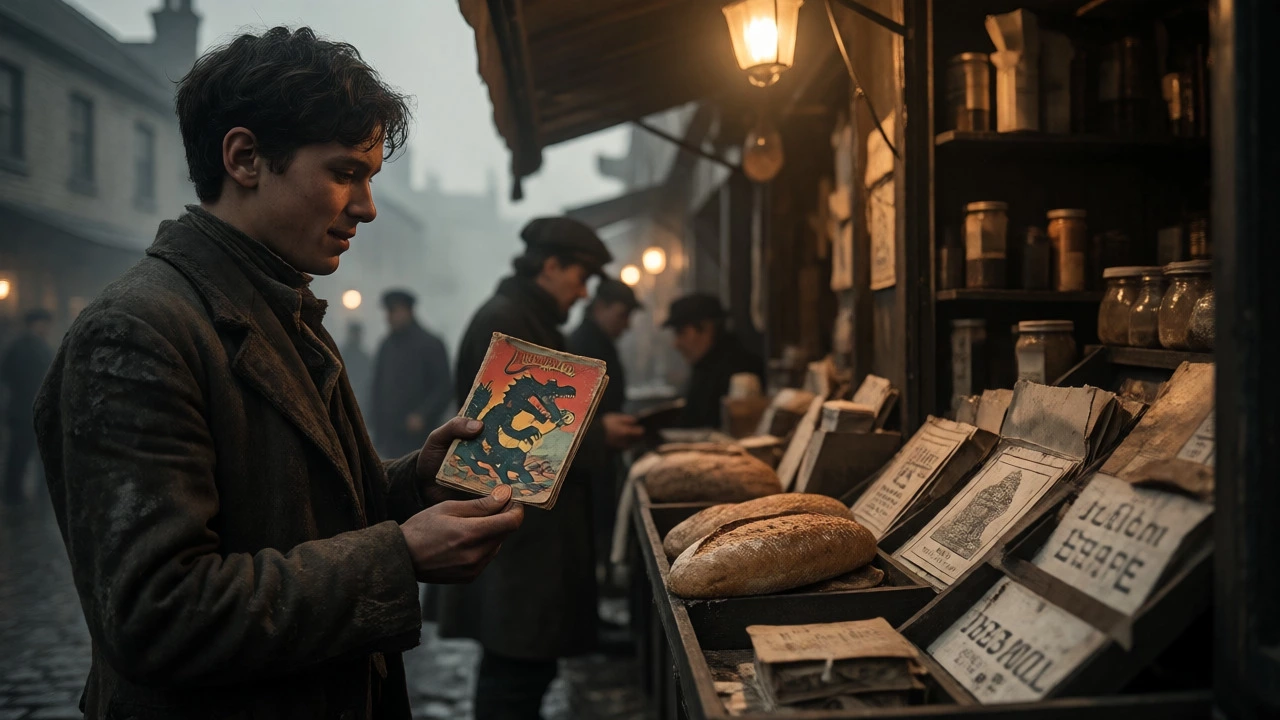
You walk into a crowded London street in 1840. You have one penny in your pocket. You can buy a loaf of bread, or you can buy a small, flimsy booklet with a garish cover depicting a dragon eating a knight. You choose the dragon. Why? Because for that single coin, you get a story about gods, monsters, and magic that feels bigger than your cramped apartment and harder life. This is penny fiction, a form of mass-produced, inexpensive literature that dominated popular reading in the 19th century by offering sensational narratives at a price point accessible to the working class. It wasn't high art. Critics hated it. But it shaped how millions of people understood mythology, history, and adventure long before paperback novels existed.
If you've ever wondered where the tropes of modern fantasy come from-why dragons always hoard gold, why heroes always start poor-you're looking at the legacy of penny fiction. Specifically, when we talk about mythological fiction, stories rooted in ancient legends, folklore, and supernatural traditions, repackaged for commercial entertainment., penny fiction was its primary vehicle for decades. It took complex oral traditions and turned them into digestible, thrilling serials. Let's break down exactly what this genre was, why it mattered, and how it still influences the books on your shelf today.
Defining the Genre: More Than Just Cheap Paper
Penny fiction isn't just "cheap books." It was a specific economic and cultural phenomenon. Before the 1830s, books were expensive luxury items. A novel might cost three guineas (about £3), which was weeks' wages for a factory worker. Then publishers like Edward Lloyd realized they could cut costs drastically. They used cheaper paper, smaller fonts, and no illustrations. They sold these booklets for one penny. Suddenly, literature was democratic.
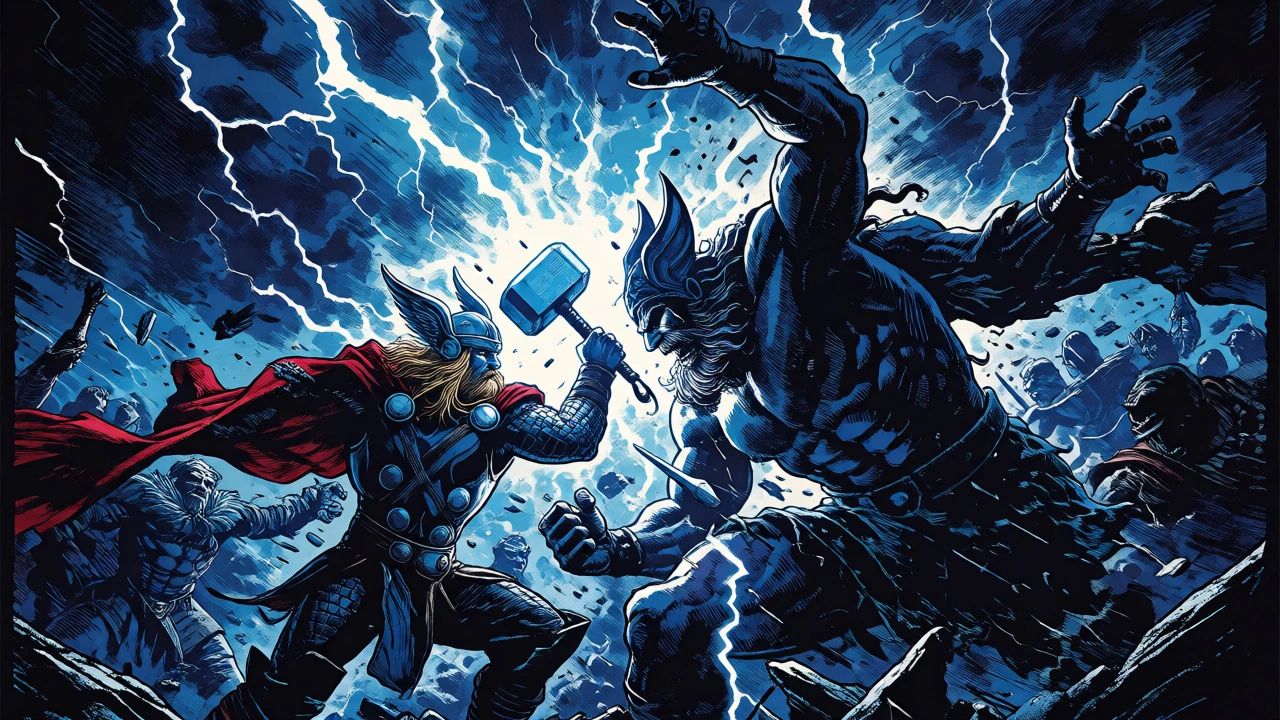
But what made it fiction? And specifically, what made it mythological? Publishers needed content that was exciting enough to sell but simple enough to write quickly. Ancient myths provided perfect raw material. Stories of Greek gods, Norse giants, and Arthurian knights were already known, so writers didn't need to build worlds from scratch. They just had to make them sensational. A writer could take the legend of Thor, add a few dramatic fights, insert a romance subplot, and sell thousands of copies. This process stripped myths of their religious context and turned them into pure entertainment.
| Feature | Penny Fiction | Traditional Novels |
|---|---|---|
| Price | 1 penny (approx. £0.04 today) | £3 - £5 (weeks of wages) |
| Audience | Working class, children, semi-literate adults | Middle and upper classes |
| Content Focus | Action, horror, romance, mythology | Social realism, character development |
| Production | Rapid serialization, low-quality paper | Hardcover, careful editing |
Why Mythology Was Perfect for the Masses
Why did publishers lean so heavily on folklore, traditional beliefs, customs, and stories passed down through generations within a community. and ancient myths? Because they solved two major problems for writers: world-building and moral clarity.
In a 16-page booklet, you don't have space to explain a new magic system or political landscape. But everyone knew Zeus threw lightning bolts. Everyone knew Merlin was a wizard. This shared knowledge allowed writers to jump straight into action. If a hero faced a hydra, readers immediately understood the stakes without needing ten pages of exposition. This efficiency made mythological fiction ideal for serialization. Readers bought part one because they wanted to see if Jason got the Golden Fleece. They bought part two because they needed to know if he survived the voyage.
Moreover, myths offered clear good-versus-evil narratives. In an era of rapid industrialization and social uncertainty, people craved stories where morality was black and white. Heroes were brave; monsters were evil. There was no ambiguous postmodern irony. If Odysseus tricked Polyphemus, it was clever, not morally grey. This simplicity resonated deeply with readers seeking escapism from the grim realities of Victorian life.
The Business Model Behind the Books
Publisher Edward Lloyd is often credited as the father of this industry. He didn't care about literary prestige. He cared about volume. His strategy was ruthless efficiency. He hired writers on piecework rates, paying them per line rather than per word. This encouraged speed over style. Writers churned out hundreds of pages a week, often recycling plots and characters.
These publications weren't sold in fancy bookstores. They appeared in newsstands, train stations, and even door-to-door salesmen. The distribution network was aggressive. By the 1850s, some titles sold over a million copies. For comparison, Charles Dickens' A Christmas Carol sold around 6,000 copies in its first edition. Penny fiction reached audiences Dickens never touched.
However, this business model had downsides. Quality control was nonexistent. Errors abounded. Plots were repetitive. Critics called it "trash" or "poison." Yet, the sheer accessibility meant that literacy rates rose partly because people actually wanted to read these stories. If you could read, you could afford to be entertained. That’s a powerful incentive.
Legacy: From Penny Dreadfuls to Modern Fantasy
So, does penny fiction still exist? Not in its original form, but its DNA is everywhere. When you pick up a modern urban fantasy, a subgenre of speculative fiction set in a city environment where magical elements are integrated into the real world. novel featuring vampires in New York, you’re seeing the descendant of penny mythological fiction. Both rely on familiar supernatural creatures placed in recognizable settings. Both prioritize plot momentum over deep psychological introspection.
Consider the popularity of retellings like Madeline Miller’s Circe or Neil Gaiman’s Norse Mythology. These books strip ancient tales of academic dryness and present them as engaging human dramas. That’s exactly what penny fiction did in 1840, albeit with less nuance. The core appeal remains: taking old stories and making them feel immediate and thrilling.
Even video games owe a debt here. Many RPGs use quest structures derived from serialized penny fiction. You enter a town, hear rumors of a monster, accept a quest, fight the monster, and get paid. Repeat. It’s a loop designed for engagement, much like the cliffhangers at the end of each penny installment.
Common Misconceptions About Penny Fiction
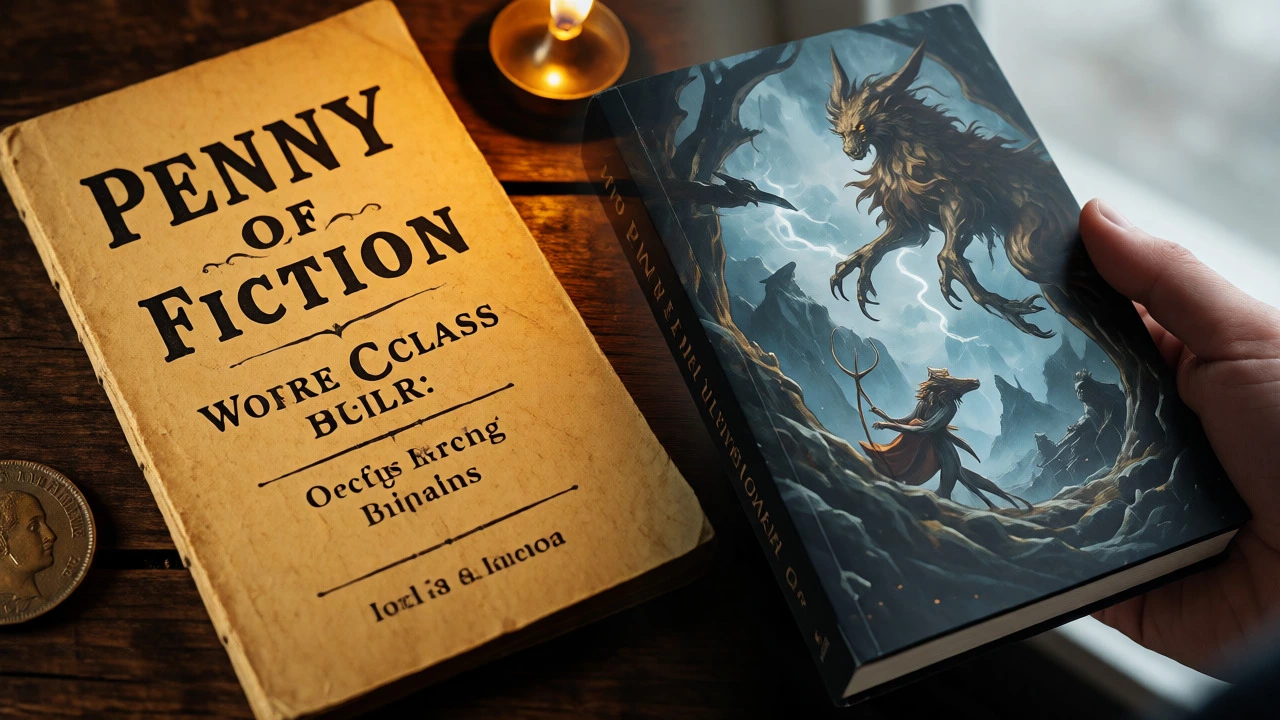
People often confuse penny dreadfuls, serialised stories published in weekly parts, often featuring sensational crime or horror themes. with general penny fiction. While related, they aren’t identical. Penny dreadfuls were typically serialized weekly installments focused on crime and horror (like Sweeney Todd). Penny fiction is a broader category that includes complete short stories, historical romances, and yes, mythological adventures, sold as single issues or small books.
Another myth is that only uneducated people read them. In reality, many middle-class families banned penny fiction from their homes, yet secretly enjoyed it. Parents worried about the sensationalism, especially regarding sexuality and violence. But kids devoured it. The stigma was more about class anxiety than actual intellectual capacity. Reading a bad story doesn’t make you stupid; it just means you value entertainment over critique.
How to Spot Penny Fiction Elements Today
If you’re interested in exploring this genre’s influence, look for these markers in modern books:
- High Stakes, Low Nuance: The conflict is urgent and physical. Moral dilemmas are rare.
- Familiar Archetypes: The hero is usually young, male, and underestimated. The villain is overtly wicked.
- Fast Pacing: Chapters end on cliffs. There’s little downtime for reflection.
- Mythic Borrowing: Characters reference well-known legends casually, assuming reader familiarity.
You’ll find these traits in everything from YA dystopias to blockbuster superhero comics. The engine driving them is the same one that kept Victorian workers buying their next penny issue: the promise of immediate, visceral excitement.
Is penny fiction considered legitimate literature?
Historically, critics dismissed it as trash. However, modern scholars recognize its cultural importance. It democratized reading and influenced narrative structures still used today. While rarely taught in universities as "high literature," it is studied extensively in media studies and history courses for its societal impact.
What is the difference between penny fiction and pulp magazines?
Penny fiction preceded pulp magazines. Penny fiction consisted of small, cheap booklets sold individually in the mid-19th century. Pulp magazines emerged later, in the late 19th and early 20th centuries, using cheap wood-pulp paper. Pulp magazines contained multiple stories per issue and featured colorful covers, whereas penny fiction was often simpler in design and focused on single narratives.
Did penny fiction only feature mythology?
No. While mythological fiction was a huge component, penny fiction covered all genres popular with the masses. This included crime stories (like Jack Sheppard), historical romances, nautical adventures, and domestic melodramas. Mythology was favored because it required less original world-building, making it cheaper and faster to produce.
Can I still buy penny fiction today?
Original copies are collectibles found in antique bookshops or online auctions. However, many modern publishers reprint classic penny fiction titles. Look for editions labeled as "Victorian reprints" or collections of "penny bloods" and "penny dreadfuls." Some digital archives also offer free scans of original issues.
Why did penny fiction decline?
Several factors led to its decline. Rising literacy rates increased demand for higher-quality writing. The expansion of public libraries gave people free access to better books. Additionally, competition from new media forms, such as newspapers with serialized novels and eventually cinema, drew audiences away from cheap booklets.