What is Grotesque Fiction? A Guide to the Weird, Dark, and Distorted
 Jul, 14 2026
What is Grotesque Fiction? A Guide to the Weird, Dark, and Distorted
Imagine reading a story where the hero’s nose grows so long it breaks through the ceiling, or where a character slowly turns into a pile of ash while trying to buy groceries. It sounds absurd, right? But that is exactly what you get when you step into the world of grotesque fiction. This genre doesn't just scare you; it confuses you, disgusts you, and then makes you laugh. It sits in the messy middle ground between horror and comedy, refusing to pick a side.
If you have ever felt unsettled by something that was funny but also deeply wrong, you have experienced the core of grotesque fiction. It is not about jump scares or blood splatters. It is about the distortion of reality, the exaggeration of human flaws, and the blurring of lines between the sacred and the profane. In this guide, we will break down what makes this genre tick, where it came from, and why readers keep coming back for more.
The Roots: From Medieval Walls to Modern Pages
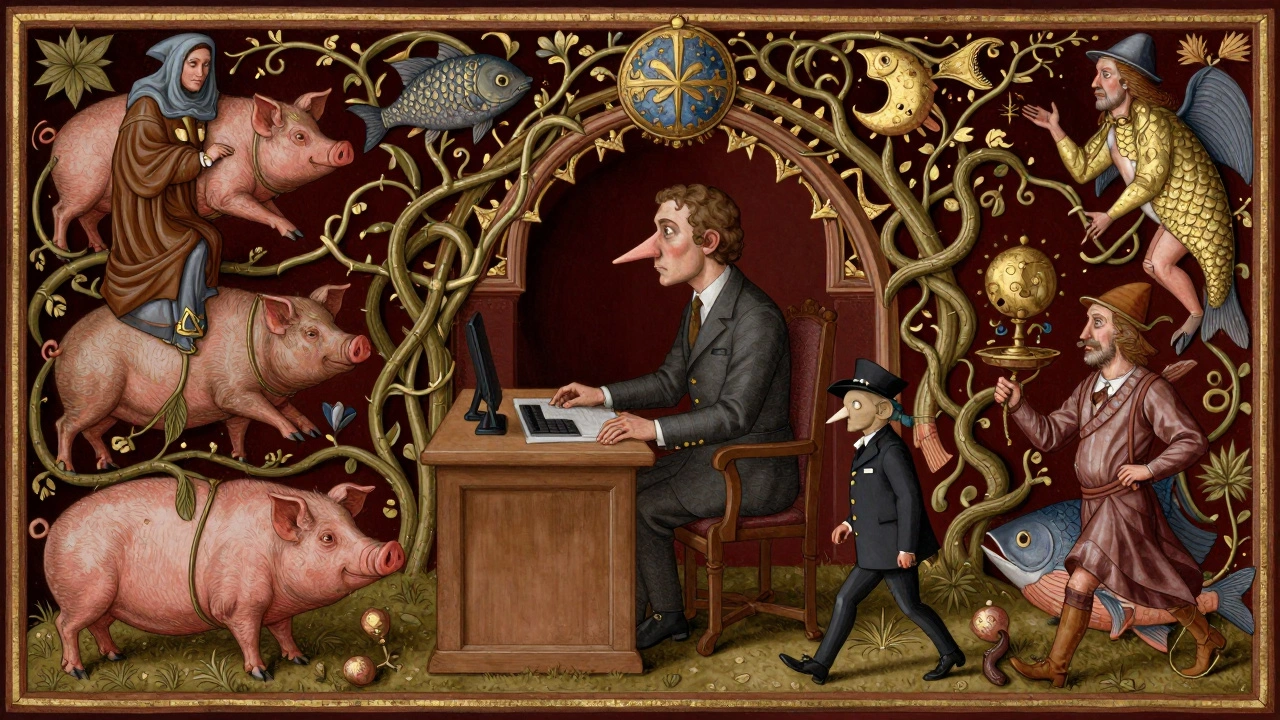
To understand Grotesque fiction is a literary genre characterized by the use of bizarre, distorted, and often unsettling imagery to explore the darker aspects of human nature and society., you have to look at its name. The word "grotesque" comes from the Italian grottesca, which refers to the ornamental decorations found in ancient Roman ruins (grottoes) that were rediscovered during the Renaissance. These designs featured twisted plants, hybrid animals, and strange human figures that looked both playful and terrifying.
When writers started using the term in literature, they weren't just talking about weird art. They were talking about a specific way of seeing the world. In the medieval period, grotesque elements appeared in marginalia—the doodles in the margins of religious manuscripts. You would see monks drawing devils riding pigs or humans with fish tails next to serious theological texts. This juxtaposition was key: placing the ridiculous next to the serious to highlight the absurdity of life.
By the 19th century, writers like Nikolai Gogol is a Russian writer whose work 'The Nose' is considered a foundational text of the grotesque genre. began turning these visual concepts into narrative. His story "The Nose," where a man’s nose detaches and walks around St. Petersburg as a high-ranking official, is a perfect example. It is silly, but it also critiques social hierarchy and identity. This marked the shift from visual decoration to literary device.
Key Characteristics: What Makes a Story Grotesque?
Not every weird book is grotesque fiction. To qualify, a story usually needs a mix of specific ingredients. Here is what you should look for:
- Distortion of Reality: The physical world is warped. Characters might have exaggerated features, or everyday objects might behave strangely. Think of Kafka’s Gregor Samsa waking up as an insect. It is not a monster movie; it is a bureaucratic nightmare wrapped in a bug suit.
- Ambiguity: You never quite know if you should laugh or cry. The tone shifts rapidly. One moment a character is suffering tragically; the next, their suffering is presented in such an absurd way that it becomes hilarious. This emotional whiplash is intentional.
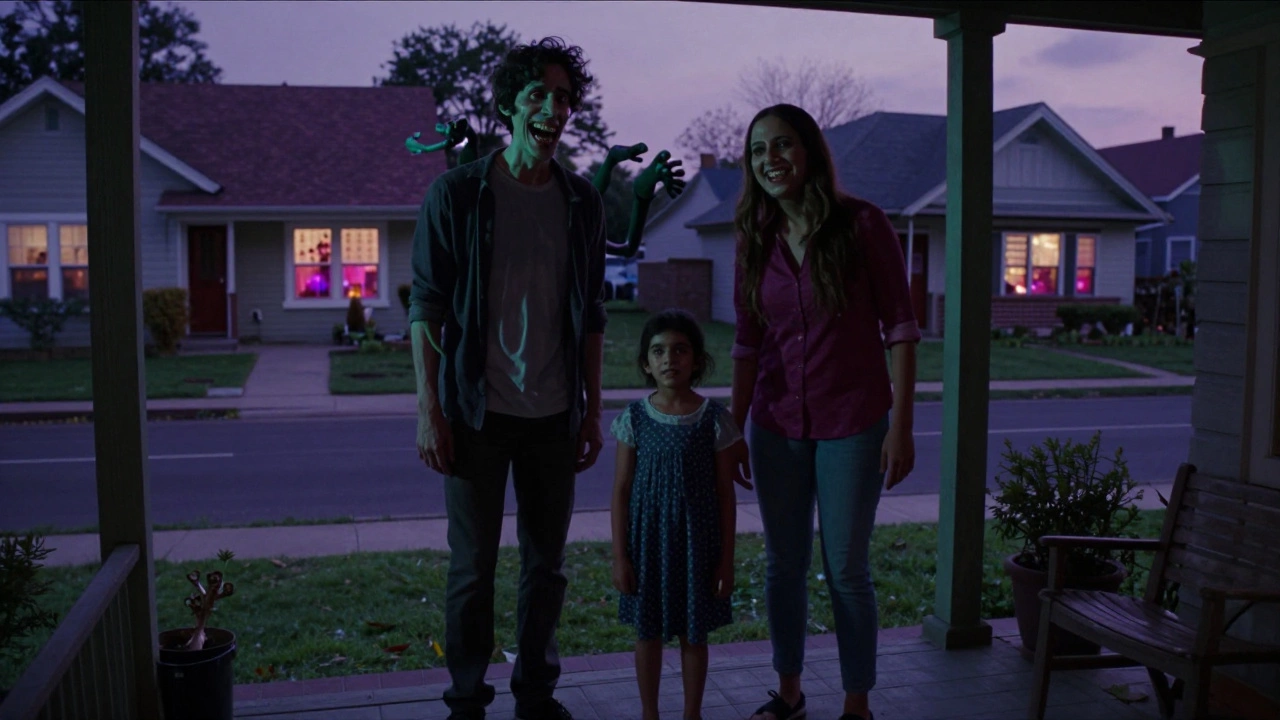
- The Mundane Meets the Macabre: Grotesque fiction loves to take ordinary settings—a kitchen, an office, a suburban street—and inject them with horror or absurdity. The contrast makes the horror feel closer to home.
- Moral Ambiguity: There are rarely clear heroes or villains. Characters are often flawed, selfish, or pathetic. The genre exposes the ugliness beneath the surface of polite society.
These elements work together to create a sense of unease. The reader is forced to confront things they usually ignore: decay, bodily functions, social hypocrisy, and the fragility of the human body.
Grotesque vs. Horror vs. Gothic: Clearing Up the Confusion
Many people lump grotesque fiction in with horror or Gothic literature. While they share DNA, they have different goals. Let's compare them to see the differences.
| Feature | Horror | Gothic | Grotesque |
|---|---|---|---|
| Primary Emotion | Fear, Dread | Sublime Terror, Melancholy | Disgust, Amusement, Unease |
| Tone | Serious, Suspenseful | Dramatic, Romantic | Ironic, Satirical, Absurd |
| Setting | Isolated, Dark | Castles, Ruins, Storms | Everyday, Mundane, Domestic |
| Goal | To Scare | To Explore the Past/Subconscious | To Critique Society/Human Nature |
| Example | The Shining | Dracula | American Psycho |
Notice how horror aims to scare you straight out of your seat. Gothic literature, with its castles and ghosts, aims to evoke a sense of awe and mystery. Grotesque fiction, however, aims to make you squirm. It uses humor as a weapon. When Patrick Bateman in American Psycho describes a murder in meticulous detail while worrying about his skincare routine, it is horrifying, yes. But it is also a savage satire of consumer culture. That dual reaction is the hallmark of the grotesque.
Major Authors and Essential Reads
If you want to dive into this genre, you need to start with the masters. Here are a few authors who defined the grotesque and where to begin with their work.
Franz Kafka is a Prague-based writer known for blending bureaucracy with surreal nightmares, most notably in 'The Metamorphosis'. is arguably the grandfather of modern grotesque fiction. His stories feel like bad dreams you can’t wake up from. The Metamorphosis is the obvious starting point, but don't skip In the Penal Colony, where a machine tattoos a man’s crimes onto his body until he dies. It is brutal, mechanical, and deeply absurd.
Then there is Flannery O'Connor is an American Southern Gothic writer who used grotesque characters to explore themes of grace and sin.. Her work is rooted in the American South, where she used physically deformed or morally twisted characters to reveal spiritual truths. Stories like "A Good Man Is Hard to Find" feature a grandmother who is selfish and deluded, leading to a violent climax that is both shocking and darkly funny. O’Connor believed that normal people couldn't perceive grace unless it was shown to them in extreme, grotesque ways.
For a more contemporary take, look at Katherine Dunn is the author of 'Geek Love', a novel about a family of circus freaks created by their parents' experiments.. Her novel Geek Love is a wild ride through a family of intentional mutants. It explores love, acceptance, and monstrosity in a way that is heartbreaking and hilarious. Another modern giant is Cormac McCarthy is an American novelist known for his bleak, violent, and poetic prose, particularly in 'Blood Meridian'.. While often classified as Western or historical fiction, his works like Blood Meridian are steeped in grotesque imagery, depicting violence with a cold, almost scientific detachment that leaves the reader reeling.
Why Do We Read Grotesque Fiction?
It might seem counterintuitive to pay money for books that make you feel uncomfortable. Why read about bodily decay, social failure, and absurd horror? Psychologists and literary critics suggest a few reasons.
First, it acts as a pressure valve. By confronting our fears and taboos in a safe, fictional environment, we can process them without real-world consequences. Laughing at a grotesque situation helps us distance ourselves from the fear. It is similar to why people enjoy roller coasters: the thrill is controlled.
Second, grotesque fiction holds a mirror to society. It exaggerates the traits we already see in the world—greed, vanity, cruelty—to show us how ridiculous they really are. Satire has always been a tool for social change, and the grotesque is one of its sharpest forms. When you read about a character obsessed with status to the point of self-destruction, you recognize the same obsession in news headlines or social media feeds.
Finally, it challenges our definitions of beauty and normalcy. In a world that often prioritizes perfection, grotesque fiction celebrates the broken, the odd, and the ugly. It reminds us that humanity is messy. As Darren Lanchester might tell you over a coffee in Bristol, there is a strange comfort in knowing that everyone is a bit of a mess underneath.
How to Spot Grotesque Elements in Your Reading
You don't need a degree in literature to identify grotesque fiction. Keep an eye out for these signs as you read:
- Bodily Excess: Look for descriptions of eating, drinking, bleeding, or decaying that go beyond what is necessary. If a character vomits rainbows or bleeds ink, you are in grotesque territory.
- Hybrid Creatures: Are there characters that are part human, part animal, or part object? These hybrids symbolize the confusion of identity.
- Irony and Understatement: Does the narrator describe horrific events in a calm, casual tone? This disconnect creates the grotesque effect.
- Carnival Atmosphere: Many grotesque stories take place in settings that resemble carnivals, fairs, or circuses—places where rules are suspended and masks are worn.
Once you start looking for these elements, you will find them everywhere. They appear in cartoons, political cartoons, and even advertisements. The grotesque is a lens for viewing the absurdity of existence.
The Future of the Genre
Grotesque fiction is far from dead. In fact, it is thriving in the digital age. Social media, with its curated perfection and underlying anxiety, provides fertile ground for grotesque storytelling. Writers like Douglas Coupland is a Canadian artist and writer who explores the grotesque aspects of consumerism and technology. and others continue to push boundaries. New voices are emerging, blending the grotesque with sci-fi and fantasy to explore issues like climate change, genetic engineering, and AI.
As the world becomes more complex and uncertain, the need for stories that capture that chaos grows. Grotesque fiction offers a way to laugh at the darkness, to acknowledge the weirdness of being alive, and to find connection in our shared imperfections. So, the next time you pick up a book that feels a little off-kilter, lean into it. You might just find yourself laughing at the very thing that unsettles you.
Frequently Asked Questions
No, they are distinct. Horror aims to frighten and create suspense, often relying on supernatural threats. Grotesque fiction blends horror with comedy and satire. Its goal is to provoke discomfort, disgust, and laughter simultaneously, usually by distorting reality rather than introducing monsters.
There is no single "first" grotesque novel because the style evolved from visual art and medieval folklore. However, Nikolai Gogol's 19th-century stories, such as "The Overcoat" and "The Nose," are widely considered foundational texts that established the literary conventions of the genre.
Yes, many classic children's stories contain strong grotesque elements. Works by Roald Dahl, such as Matilda or The Witches, feature exaggerated physical transformations and monstrous characters that blur the line between scary and funny. This helps children process fears in a manageable way.
Gothic literature focuses on atmosphere, emotion, and the sublime, often set in isolated locations like castles. It deals with secrets, madness, and the past. Grotesque fiction focuses on the physical distortion of characters and settings, often in mundane environments, and uses irony and humor to critique society.
The body is the primary site of grotesque expression because it is vulnerable, decaying, and capable of excess. By focusing on bodily functions, deformities, and decay, grotesque fiction reminds readers of their mortality and the biological reality beneath social pretenses.
Imagine reading a story where the hero’s nose grows so long it breaks through the ceiling, or where a character slowly turns into a pile of ash while trying to buy groceries. It sounds absurd, right? But that is exactly what you get when you step into the world of grotesque fiction. This genre doesn't just scare you; it confuses you, disgusts you, and then makes you laugh. It sits in the messy middle ground between horror and comedy, refusing to pick a side.
If you have ever felt unsettled by something that was funny but also deeply wrong, you have experienced the core of grotesque fiction. It is not about jump scares or blood splatters. It is about the distortion of reality, the exaggeration of human flaws, and the blurring of lines between the sacred and the profane. In this guide, we will break down what makes this genre tick, where it came from, and why readers keep coming back for more.
The Roots: From Medieval Walls to Modern Pages
To understand Grotesque fiction is a literary genre characterized by the use of bizarre, distorted, and often unsettling imagery to explore the darker aspects of human nature and society., you have to look at its name. The word "grotesque" comes from the Italian grottesca, which refers to the ornamental decorations found in ancient Roman ruins (grottoes) that were rediscovered during the Renaissance. These designs featured twisted plants, hybrid animals, and strange human figures that looked both playful and terrifying.
When writers started using the term in literature, they weren't just talking about weird art. They were talking about a specific way of seeing the world. In the medieval period, grotesque elements appeared in marginalia-the doodles in the margins of religious manuscripts. You would see monks drawing devils riding pigs or humans with fish tails next to serious theological texts. This juxtaposition was key: placing the ridiculous next to the serious to highlight the absurdity of life.
By the 19th century, writers like Nikolai Gogol is a Russian writer whose work 'The Nose' is considered a foundational text of the grotesque genre. began turning these visual concepts into narrative. His story "The Nose," where a man’s nose detaches and walks around St. Petersburg as a high-ranking official, is a perfect example. It is silly, but it also critiques social hierarchy and identity. This marked the shift from visual decoration to literary device.
Key Characteristics: What Makes a Story Grotesque?
Not every weird book is grotesque fiction. To qualify, a story usually needs a mix of specific ingredients. Here is what you should look for:
- Distortion of Reality: The physical world is warped. Characters might have exaggerated features, or everyday objects might behave strangely. Think of Kafka’s Gregor Samsa waking up as an insect. It is not a monster movie; it is a bureaucratic nightmare wrapped in a bug suit.
- Ambiguity: You never quite know if you should laugh or cry. The tone shifts rapidly. One moment a character is suffering tragically; the next, their suffering is presented in such an absurd way that it becomes hilarious. This emotional whiplash is intentional.
- The Mundane Meets the Macabre: Grotesque fiction loves to take ordinary settings-a kitchen, an office, a suburban street-and inject them with horror or absurdity. The contrast makes the horror feel closer to home.
- Moral Ambiguity: There are rarely clear heroes or villains. Characters are often flawed, selfish, or pathetic. The genre exposes the ugliness beneath the surface of polite society.
These elements work together to create a sense of unease. The reader is forced to confront things they usually ignore: decay, bodily functions, social hypocrisy, and the fragility of the human body.
Grotesque vs. Horror vs. Gothic: Clearing Up the Confusion
Many people lump grotesque fiction in with horror or Gothic literature. While they share DNA, they have different goals. Let's compare them to see the differences.
| Feature | Horror | Gothic | Grotesque |
|---|---|---|---|
| Primary Emotion | Fear, Dread | Sublime Terror, Melancholy | Disgust, Amusement, Unease |
| Tone | Serious, Suspenseful | Dramatic, Romantic | Ironic, Satirical, Absurd |
| Setting | Isolated, Dark | Castles, Ruins, Storms | Everyday, Mundane, Domestic |
| Goal | To Scare | To Explore the Past/Subconscious | To Critique Society/Human Nature |
| Example | The Shining | Dracula | American Psycho |
Notice how horror aims to scare you straight out of your seat. Gothic literature, with its castles and ghosts, aims to evoke a sense of awe and mystery. Grotesque fiction, however, aims to make you squirm. It uses humor as a weapon. When Patrick Bateman in American Psycho describes a murder in meticulous detail while worrying about his skincare routine, it is horrifying, yes. But it is also a savage satire of consumer culture. That dual reaction is the hallmark of the grotesque.
Major Authors and Essential Reads
If you want to dive into this genre, you need to start with the masters. Here are a few authors who defined the grotesque and where to begin with their work.
Franz Kafka is a Prague-based writer known for blending bureaucracy with surreal nightmares, most notably in 'The Metamorphosis'. is arguably the grandfather of modern grotesque fiction. His stories feel like bad dreams you can’t wake up from. The Metamorphosis is the obvious starting point, but don't skip In the Penal Colony, where a machine tattoos a man’s crimes onto his body until he dies. It is brutal, mechanical, and deeply absurd.
Then there is Flannery O'Connor is an American Southern Gothic writer who used grotesque characters to explore themes of grace and sin.. Her work is rooted in the American South, where she used physically deformed or morally twisted characters to reveal spiritual truths. Stories like "A Good Man Is Hard to Find" feature a grandmother who is selfish and deluded, leading to a violent climax that is both shocking and darkly funny. O’Connor believed that normal people couldn't perceive grace unless it was shown to them in extreme, grotesque ways.
For a more contemporary take, look at Katherine Dunn is the author of 'Geek Love', a novel about a family of circus freaks created by their parents' experiments.. Her novel Geek Love is a wild ride through a family of intentional mutants. It explores love, acceptance, and monstrosity in a way that is heartbreaking and hilarious. Another modern giant is Cormac McCarthy is an American novelist known for his bleak, violent, and poetic prose, particularly in 'Blood Meridian'.. While often classified as Western or historical fiction, his works like Blood Meridian are steeped in grotesque imagery, depicting violence with a cold, almost scientific detachment that leaves the reader reeling.
Why Do We Read Grotesque Fiction?
It might seem counterintuitive to pay money for books that make you feel uncomfortable. Why read about bodily decay, social failure, and absurd horror? Psychologists and literary critics suggest a few reasons.
First, it acts as a pressure valve. By confronting our fears and taboos in a safe, fictional environment, we can process them without real-world consequences. Laughing at a grotesque situation helps us distance ourselves from the fear. It is similar to why people enjoy roller coasters: the thrill is controlled.
Second, grotesque fiction holds a mirror to society. It exaggerates the traits we already see in the world-greed, vanity, cruelty-to show us how ridiculous they really are. Satire has always been a tool for social change, and the grotesque is one of its sharpest forms. When you read about a character obsessed with status to the point of self-destruction, you recognize the same obsession in news headlines or social media feeds.
Finally, it challenges our definitions of beauty and normalcy. In a world that often prioritizes perfection, grotesque fiction celebrates the broken, the odd, and the ugly. It reminds us that humanity is messy. As Darren Lanchester might tell you over a coffee in Bristol, there is a strange comfort in knowing that everyone is a bit of a mess underneath.
How to Spot Grotesque Elements in Your Reading
You don't need a degree in literature to identify grotesque fiction. Keep an eye out for these signs as you read:
- Bodily Excess: Look for descriptions of eating, drinking, bleeding, or decaying that go beyond what is necessary. If a character vomits rainbows or bleeds ink, you are in grotesque territory.
- Hybrid Creatures: Are there characters that are part human, part animal, or part object? These hybrids symbolize the confusion of identity.
- Irony and Understatement: Does the narrator describe horrific events in a calm, casual tone? This disconnect creates the grotesque effect.
- Carnival Atmosphere: Many grotesque stories take place in settings that resemble carnivals, fairs, or circuses-places where rules are suspended and masks are worn.
Once you start looking for these elements, you will find them everywhere. They appear in cartoons, political cartoons, and even advertisements. The grotesque is a lens for viewing the absurdity of existence.
The Future of the Genre
Grotesque fiction is far from dead. In fact, it is thriving in the digital age. Social media, with its curated perfection and underlying anxiety, provides fertile ground for grotesque storytelling. Writers like Douglas Coupland is a Canadian artist and writer who explores the grotesque aspects of consumerism and technology. and others continue to push boundaries. New voices are emerging, blending the grotesque with sci-fi and fantasy to explore issues like climate change, genetic engineering, and AI.
As the world becomes more complex and uncertain, the need for stories that capture that chaos grows. Grotesque fiction offers a way to laugh at the darkness, to acknowledge the weirdness of being alive, and to find connection in our shared imperfections. So, the next time you pick up a book that feels a little off-kilter, lean into it. You might just find yourself laughing at the very thing that unsettles you.
Is grotesque fiction the same as horror?
No, they are distinct. Horror aims to frighten and create suspense, often relying on supernatural threats. Grotesque fiction blends horror with comedy and satire. Its goal is to provoke discomfort, disgust, and laughter simultaneously, usually by distorting reality rather than introducing monsters.
Who wrote the first grotesque novel?
There is no single "first" grotesque novel because the style evolved from visual art and medieval folklore. However, Nikolai Gogol's 19th-century stories, such as "The Overcoat" and "The Nose," are widely considered foundational texts that established the literary conventions of the genre.
Can children's books be grotesque?
Yes, many classic children's stories contain strong grotesque elements. Works by Roald Dahl, such as Matilda or The Witches, feature exaggerated physical transformations and monstrous characters that blur the line between scary and funny. This helps children process fears in a manageable way.
What is the difference between Gothic and Grotesque?
Gothic literature focuses on atmosphere, emotion, and the sublime, often set in isolated locations like castles. It deals with secrets, madness, and the past. Grotesque fiction focuses on the physical distortion of characters and settings, often in mundane environments, and uses irony and humor to critique society.
Why is the grotesque often associated with the body?
The body is the primary site of grotesque expression because it is vulnerable, decaying, and capable of excess. By focusing on bodily functions, deformities, and decay, grotesque fiction reminds readers of their mortality and the biological reality beneath social pretenses.