What is an Epic Fantasy Novel? Definition, Tropes, and Key Examples
 Jul, 3 2026
Epic Fantasy Novel Analyzer
Question 1/3: The Scope
How large is the scale of the conflict in your story?
Personal / Local
Saving a village, personal revenge, or finding true love.Global / Universal
The fate of a continent, civilization, or the universe hangs in the balance.Question 2/3: The Setting
Where does the story take place?
Our World
Earth with modern technology, recognizable geography, or history.Secondary World
A completely separate reality with its own maps, languages, and rules.Question 3/3: Key Elements
Which combination best describes the depth of your world?
Sword & Sorcery Style
Fast-paced action, immediate physical threats, less focus on politics.Deep World-Building
Complex politics, ancient history, magic systems, and diverse cultures/races.Analyzing...
Calculating genre fit...
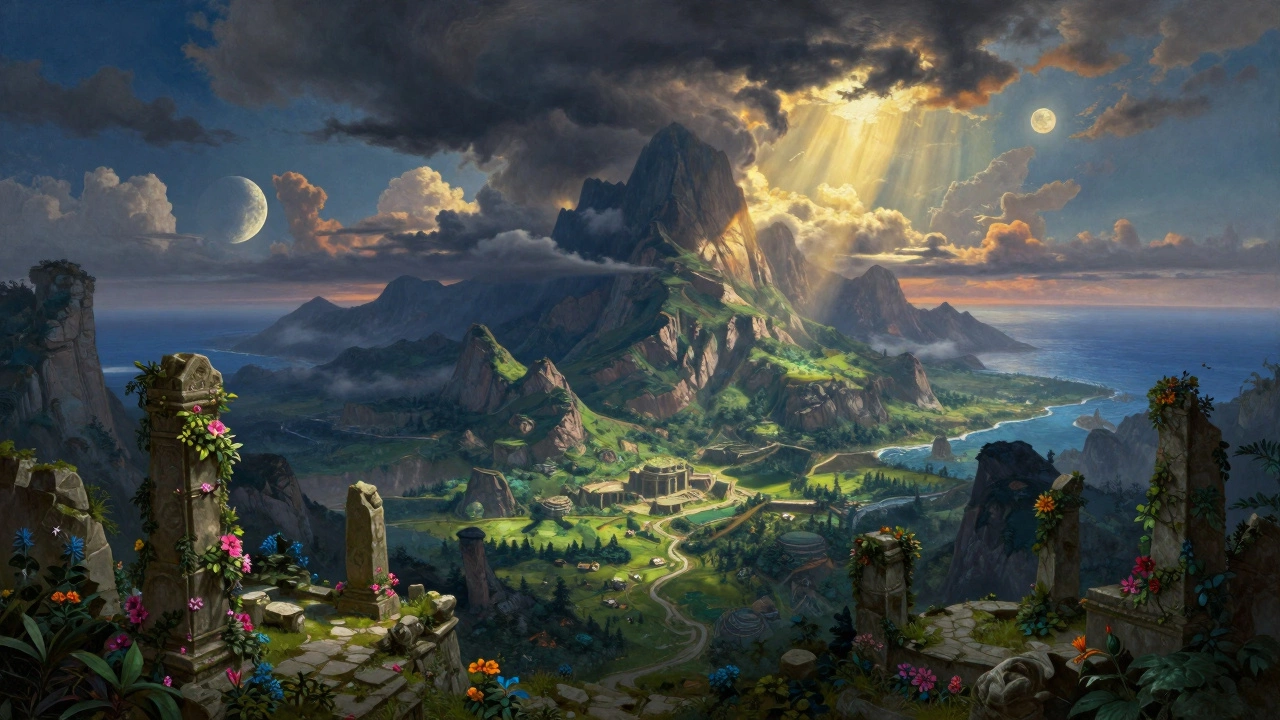
Imagine a story where the fate of the entire universe hangs in the balance. The stakes aren't just about saving a village or finding true love; they are about preventing the end of days. This is the heartbeat of epic fantasy, a subgenre of fantasy literature characterized by its large scope, complex plots, and high stakes involving the survival of worlds or civilizations. If you’ve ever felt overwhelmed by the sheer size of books like *The Lord of the Rings* or *A Song of Ice and Fire*, you’re not alone. But that scale is exactly what makes the genre so addictive. So, what actually qualifies a book as "epic"? Is it just length? Or is there something deeper going on? Let’s break down the anatomy of this massive genre.
The Core Definition: More Than Just Length
Many people mistake epic fantasy for simply "long fantasy." While most epic fantasies are indeed lengthy-often spanning multiple volumes-length is a symptom, not the cause. The defining feature is the scope. An epic fantasy novel deals with events that affect an entire continent, world, or even multiverse. It involves grand conflicts, usually between good and evil (though modern twists often blur these lines), and features protagonists whose actions have historical significance. Think of it as history written in magic. If the hero fails, millions die. If they succeed, an era begins.
This distinguishes it from low fantasy or urban fantasy, where magical elements intrude into our recognizable world. In epic fantasy, you are transported to a completely separate reality with its own rules, geography, and history.
World-Building: The Foundation of Epic Fantasy
You cannot have epic fantasy without rigorous world-building. Authors in this genre act as cartographers, historians, and linguists all at once. The setting isn't just a backdrop; it is a character in itself. Consider the depth required:
- Geography: Realistic maps with mountains, rivers, and climate zones that influence trade and war.
- History: A past that feels lived-in, complete with ancient empires, forgotten wars, and myths that shape current beliefs.
- Magic Systems: Rules that govern how power works. Is magic rare? Dangerous? Tied to bloodlines?
- Culture and Politics: Distinct languages, religions, and social hierarchies for different races or nations.
Key Tropes and Elements You’ll Recognize
While every epic fantasy is unique, the genre relies on certain recurring patterns. These tropes help readers navigate the unfamiliar world. Here are the most common ones:
| Trope | Description | Classic Example |
|---|---|---|
| The Chosen One | A protagonist destined by prophecy to save the world. | Frodo Baggins (The Lord of the Rings) |
| The Quest | A long journey to retrieve an object or reach a location. | The Fellowship's mission to Mordor |
| Ancient Evil | A powerful dark force awakening after centuries of dormancy. | Sauron / Voldemort |
| Diverse Races | Non-human species with distinct cultures (elves, dwarves, etc.). | Elves in Dune or Dragonlance |
| The Mentor | An older figure who guides the hero but often meets a tragic end. | Gandalf / Obi-Wan Kenobi |
Modern authors often subvert these tropes. Instead of a noble king, you might get a corrupt council. Instead of clear good vs. evil, you might find moral ambiguity where both sides believe they are right. This evolution keeps the genre fresh while honoring its roots.
Epic Fantasy vs. High Fantasy: What’s the Difference?
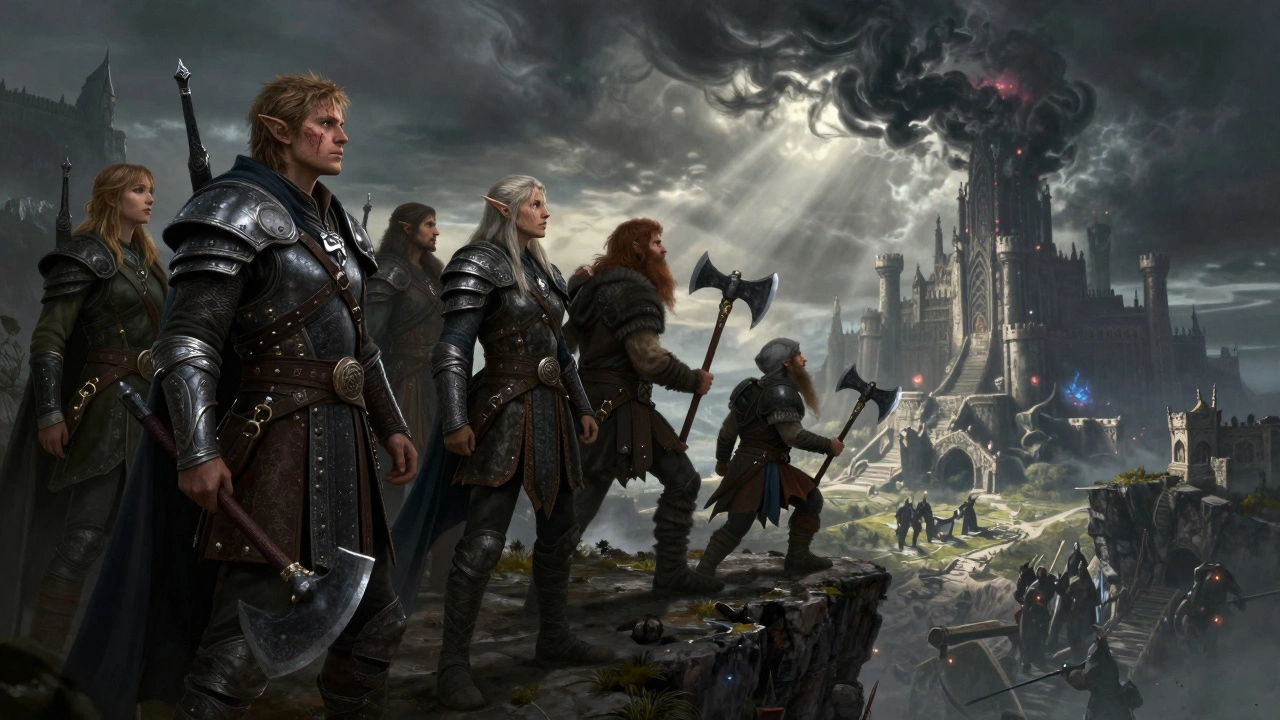
These terms are often used interchangeably, but there is a subtle distinction. High fantasy refers to stories set entirely in a secondary world (like Narnia or Westeros). Almost all epic fantasies are high fantasies because of their scale. However, not all high fantasies are epics. A short story about elves having tea in a secondary world is high fantasy, but it lacks the epic scope. Conversely, some epic fantasies can be "low fantasy" if the stakes are global but the setting is Earth-like, though this is rare. Generally, when people say "epic," they mean "high stakes + secondary world + multi-volume potential."
The Evolution of the Genre
The genre didn’t appear overnight. It has deep roots in mythology and oral tradition. Stories like the Epic of Gilgamesh or Norse sagas laid the groundwork. But the modern epic fantasy was born in the 20th century. J.R.R. Tolkien is widely considered the father of the genre. His publication of The Hobbit (1937) and The Lord of the Rings (1954-1955) established the template: detailed maps, invented languages, and a struggle against industrializing evil. Following Tolkien, C.S. Lewis wrote The Chronicles of Narnia, bringing allegory and Christian themes into the fold. Then came Robert E. Howard’s Conan the Barbarian, which introduced sword-and-sorcery-a grittier, more personal subset of epic fantasy. In the late 20th and early 21st centuries, the genre exploded. Authors like Patrick Rothfuss (The Kingkiller Chronicle) focused on lyrical prose and mystery. George R.R. Martin (A Song of Ice and Fire) brought political realism and deconstructed the "chosen one" trope. Brandon Sanderson (Mistborn) revolutionized magic systems with hard, rule-based mechanics. Today, we see diverse voices expanding the genre beyond European medieval aesthetics, incorporating African, Asian, and Indigenous mythologies.
Why Do We Love Epic Fantasy?
There is a psychological pull to these sprawling narratives. In a complex, fragmented modern world, epic fantasy offers clarity. It presents a world where actions have consequences, where courage matters, and where hope can triumph over despair. It also allows for escapism on a grand scale. You aren't just leaving your daily routine; you are entering a new reality. The complexity rewards repeated reading. You notice details in the second pass that you missed the first time. This re-readability builds a deep connection between the reader and the text. Furthermore, the genre explores universal themes: power, corruption, friendship, sacrifice, and identity. By placing these themes in a fantastical context, authors can examine them without the baggage of real-world politics, allowing for pure philosophical exploration.
Getting Started: Essential Reads
If you want to dive into the genre, here are three pillars that define different eras and styles of epic fantasy:
- The Classic: The Lord of the Rings by J.R.R. Tolkien. You don’t need to read it in order to appreciate it, but understanding its influence helps contextualize everything else.
- The Modern Political Epic: A Game of Thrones by George R.R. Martin. This series redefined the genre for adults, focusing on gritty realism and moral gray areas.
- The Hard Magic System: The Final Empire (Mistborn Book 1) by Brandon Sanderson. A perfect entry point for those who like clear rules, heists, and satisfying payoffs.
Conclusion: The Endless Horizon
Epic fantasy is more than just entertainment; it is a testament to human imagination. It asks us to believe in dragons, magic, and destiny, not because they are real, but because they reveal truths about ourselves. Whether you are drawn to the intricate maps, the complex characters, or the sheer scale of the conflict, there is a place for you in these worlds. The next great adventure is waiting on the shelf.
Is epic fantasy the same as high fantasy?
They are closely related but not identical. High fantasy refers to stories set entirely in a secondary world. Epic fantasy refers to the scope and stakes of the story. Most epic fantasies are high fantasies, but a short story set in a secondary world is high fantasy without being epic.
What are the best epic fantasy novels for beginners?
For beginners, The Name of the Wind by Patrick Rothfuss is highly accessible due to its narrative style. The Way of Kings by Brandon Sanderson is excellent if you prefer fast-paced action and clear magic rules, despite its length. Avoid starting with dense classics like The Silmarillion unless you are already familiar with the lore.
Why are epic fantasy books so long?
The length is necessary to support the world-building and multiple plotlines. Epic fantasy often follows several characters across different locations, requiring significant space to develop each arc. Additionally, the detailed descriptions of culture, history, and magic contribute to the page count.
Can epic fantasy include romance?
Yes, absolutely. While the primary focus is on the larger conflict, many epic fantasies include romantic subplots. In series like A Song of Ice and Fire or The First Law, relationships are often complex and integral to character development and political alliances.
What is the difference between epic fantasy and sword and sorcery?
Sword and sorcery focuses on individual heroes, personal vendettas, and immediate physical threats. It is faster-paced and less concerned with world-saving stakes. Epic fantasy focuses on the fate of nations or worlds, with slower pacing and broader political or historical implications.