What Does H Mean in Romance Novels? A Guide to Heat Levels
 Apr, 28 2026
Romance Heat Level Finder
Not sure what 'H level' you're in the mood for? Select the description that best matches your current reading vibe to find your ideal heat level.
Sweet & Cozy
I want emotional tension, longing, and sweet kisses, but I prefer the bedroom scenes to be "closed-door."
Steamy & Balanced
I like a bit of descriptive intimacy that moves the plot forward, but it shouldn't be the main focus.
Explicit & Spicy
I'm looking for high chemistry, detailed anatomical descriptions, and frequent, intense scenes.
Pro Tip: When searching for these on BookTok or Goodreads, look for the keywords mentioned above!
Before we get into the gritty details, let's clear one thing up: heat levels aren't about how "hot" the characters are physically. It's about the explicitness of the intimacy. Whether you're looking for a sweet "closed-door" story or something that reads like a manual for the bedroom, knowing the H meaning romance novels use will save you from the awkwardness of opening a spicy book in a crowded coffee shop or feeling disappointed when a "steamy" book turns out to be a G-rated hug.
Quick Breakdown of Heat Levels
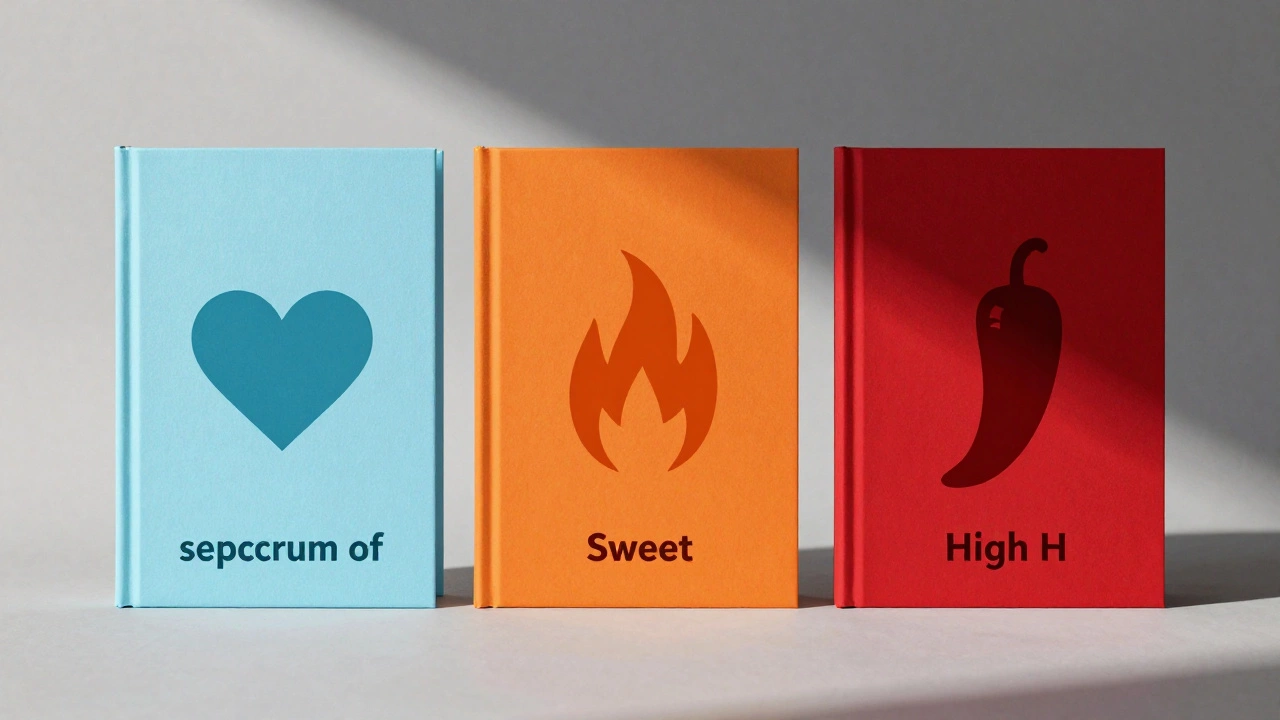
- Low H / Sweet: No explicit scenes. Kissing and tension are there, but the action happens "off-screen."
- Medium H / Moderate: A few descriptive scenes. They're detailed, but not the primary focus of the plot.
- High H / Spicy: Frequent, explicit, and detailed descriptions. The intimacy is a major part of the character development.
Understanding the Spectrum of Spice
To really grasp how heat works, you have to look at it as a sliding scale. In the industry, we often talk about "spice levels." If the 'H' is the metric, spice is the flavor. For example, Clean Romance is a subgenre of romantic fiction where the focus remains on emotional connection and the plot, strictly avoiding explicit sexual content . In these books, the heat level is practically zero. You might get a lingering look or a passionate kiss, but the moment things move toward the bedroom, the chapter ends. This is often called "closed-door" or "fade-to-black." It's perfect for readers who prefer the tension of the "will they, won't they" over the actual act.
Then you move into the middle ground. These are books where the characters definitely have a physical relationship, and the author describes it. However, the scenes are usually fewer in number and don't take up half the book. You'll find this in many mainstream contemporary romances. The heat is there to move the plot forward or show a shift in the relationship, but the author isn't spending three pages describing a single encounter.
At the other end of the spectrum, you have "High H" or Smut is a colloquial term for erotica or highly explicit romantic fiction where sexual encounters are a central focus . In these stories, the heat is turned up to the max. The descriptions are anatomical, frequent, and often very creative. If a review says "this book is pure H," expect a lot of pages dedicated to intimacy. This is where you'll find a lot of the viral "BookTok" hits that emphasize the physical chemistry between leads.
How to Spot the Heat Level Before You Buy
You don't have to guess. Authors and publishers have started using specific signals to let you know what you're getting into. First, look at the tropes. Certain Romance Tropes are recurring plot devices or character archetypes used in romantic fiction to create familiar emotional beats often correlate with higher heat. For instance, "enemies-to-lovers" often features a high-tension build-up that leads to a very high H payoff. On the other hand, "slow burn" stories start with very low H and gradually increase as the book progresses.
Check the cover art. While not a science, there are trends. Pastel colors and whimsical illustrations often signal "Sweet" or "Low H." Darker colors, shirtless models, or minimalist, bold typography often lean toward "High H." But the real goldmine is the review section. Look for keywords like "spicy," "steamy," "closed-door," or "explicit." If you see a rating system like "3 out of 5 peppers," that's a direct reference to the heat level.
| Term | H Level | What Happens? | Common Genre/Vibe |
|---|---|---|---|
| Closed-Door | Low | Kisses, hugging, fade-to-black | Sweet/Wholesome Romance |
| Steamy | Medium | Detailed but limited scenes | Contemporary Romance |
| Explicit / Spicy | High | Frequent, detailed anatomy | Erotica / Dark Romance |
Why the 'H' Label Matters for Readers
It's not just about avoiding shock; it's about mood. Sometimes you want a story that feels like a warm blanket and a cup of tea-that's Low H. Other times, you want something that feels like a shot of espresso and a dare-that's High H. When readers use the 'H' terminology, they are managing their expectations. There is nothing worse than starting a book expecting a slow-burn emotional journey only to find yourself in the middle of a graphic scene by chapter three if you aren't in the headspace for it.
Furthermore, this labeling helps with accessibility. For readers with specific triggers or those who find explicit content overwhelming, 'H' labels act as a safety filter. It allows the community to curate lists for different comfort levels. You'll often see lists like "Best High H Books for Summer" or "Clean Romance Recs for New Readers," which basically translates to "high heat" and "low heat."
The Role of Pacing in Heat
It's also worth noting that heat isn't always consistent throughout a book. Many authors use a "ramp-up" strategy. A book might start as Low H for the first 100 pages to establish the emotional stakes and the yearning. This build-up is what makes the eventual High H scenes feel earned. If a book is High H from page one, it's often categorized as Erotica is a genre of literature that explicitly describes sexual encounters, often prioritizing physical pleasure over a complex plot . In contrast, a "Romance Novel" usually prioritizes the relationship, and the heat is a supplement to the love story.
When you see a reviewer talk about the "burn rate," they are talking about how quickly the H level increases. A "slow burn" is the gold standard for many readers because the anticipation creates a psychological tension that makes the eventual heat feel more intense, even if the actual number of explicit scenes is lower than in a full-blown erotica novel.

Avoiding Common Misunderstandings
One common mistake is thinking that High H means the book lacks a plot. While there are certainly "plotless smut" books out there, some of the most critically acclaimed romance novels have incredibly high heat levels while also tackling heavy themes like grief, trauma, or political intrigue. The heat is just one attribute of the book, not the whole story. Similarly, don't assume a "Sweet" book is just for teenagers. Many adult readers prefer Low H because they find the emotional intimacy more compelling than the physical descriptions.
Another point of confusion is the difference between "spicy" and "dark." A book can be High H (very spicy) without being Dark Romance is a subgenre of romance that explores taboo themes, moral ambiguity, and often includes non-consensual or violent elements . Dark romance often involves "taboo" heat, whereas standard spicy romance is usually based on healthy, enthusiastic consent. Always check if a High H book is also labeled as "Dark" if you have specific boundaries regarding content.
Does 'H' always mean sexual content?
Yes, in the specific context of romance novels and book communities (like BookTok or Goodreads), 'H' almost exclusively refers to 'Heat,' which describes the level of sexual explicitness in the story.
What is the difference between 'closed-door' and 'low H'?
They are very similar. 'Low H' is the general rating for the amount of sex. 'Closed-door' is the specific technique where the author ends the scene right before the sex starts, effectively 'closing the door' on the reader.
Where can I find heat level ratings for books?
Check the 'Content Warning' or 'Author's Note' sections. Many authors now include a 'spice scale' (like 1-5 peppers) on their websites or in the first few pages of the ebook.
Can a book have both low and high H?
Yes, this is common in 'slow burn' romances. The book starts with low heat (tension and longing) and transitions into high heat (explicit scenes) toward the climax of the story.
Is 'smut' the same as 'high H'?
Essentially, yes. 'Smut' is a slang term for highly explicit content. While 'high H' is a description of the level, 'smut' is often used as a noun to describe the content itself.
Next Steps for Your Reading Journey
If you're still unsure about what you like, try the "sample method." Most ebooks offer a free preview. Read the first few chapters; if you see heavy flirting and physical tension but no explicit descriptions, you're likely in a Low to Medium H book. If the tension is immediate and the descriptions are graphic, you've found a High H story.
For those who want a curated experience, look for "Romance Maps" online. These are community-created spreadsheets that categorize books by trope and heat level simultaneously. It's the fastest way to find your next favorite read without any surprises. Whether you want a cozy night in with a sweet story or something a bit more daring, knowing the code of the 'H' ensures you always get exactly what you're in the mood for.