The Best-Selling Self-Help Books of All Time: A Data-Driven Guide
 Sep, 4 2026
Self-Help Book Matcher
Select a challenge above to see which of the world's best-selling self-help books fits you best.
You walk into a bookstore, and the "Personal Development" aisle is a wall of color. Bright yellow spines, bold promises, faces of gurus smiling from covers that seem to shout, "Change your life!" It’s overwhelming. But if you strip away the marketing noise and look at the cold, hard sales data, one title stands head and shoulders above the rest. It isn’t The Secret, it isn’t Atomic Habits, and it certainly isn’t any of the recent TikTok sensations.
The most sold self-help book in history is How to Win Friends and Influence People by Dale Carnegie. Since its publication in 1936, this self-help classic has shifted over 30 million copies worldwide. That number dwarfs modern competitors like James Clear’s Atomic Habits (which sits around 15-20 million) or Napoleon Hill’s Think and Grow Rich (roughly 70 million, though often categorized as business/motivational rather than pure interpersonal skills). If we are talking strictly about books focused on human interaction and soft skills-the core definition of modern self-help-Carnegie’s work is the undisputed king.
But why does a book written before the invention of the transistor still dominate the charts? And what else is selling right now? This guide breaks down the sales giants, explains why they stick, and helps you decide which one actually belongs on your nightstand.
Why Dale Carnegie Still Owns the Charts
It seems counterintuitive. We live in an era of digital communication, remote work, and AI assistants. Yet, the advice in How to Win Friends and Influence People remains the baseline for social intelligence. Carnegie didn’t invent charisma; he codified it. His principles-become genuinely interested in other people, remember names, talk in terms of the other person’s interests-are simple, but their application is timeless.
One reason for its enduring sales is utility. Unlike books that promise wealth through vague visualization techniques, Carnegie offers actionable scripts. You can use his advice in a job interview tomorrow. You can use it to de-escalate a fight with your spouse tonight. This immediate applicability drives word-of-mouth sales, which are far more durable than algorithm-driven spikes.
Furthermore, the book benefits from a massive network effect. It is frequently assigned in corporate training programs, university communications courses, and military leadership seminars. Every year, thousands of new graduates receive a copy as part of their professional toolkit. This institutional adoption ensures a steady baseline of sales that no viral trend can match.
The Heavyweights: Comparing Top Sellers
To understand where How to Win Friends and Influence People fits, we need to look at the broader landscape. Sales figures vary by source (Nielsen BookScan, publisher reports, etc.), but the hierarchy is clear. Below is a comparison of the top contenders based on estimated lifetime sales and primary focus.
| Title | Author | Est. Sales | Primary Focus | Year Published |
|---|---|---|---|---|
| How to Win Friends and Influence People | Dale Carnegie | 30+ Million | Interpersonal Skills | 1936 |
| Think and Grow Rich | Napoleon Hill | 70+ Million* | Wealth Mindset | 1937 |
| The Power of Positive Thinking | Norman Vincent Peale | 10+ Million | Mental Attitude | 1952 |
| Atomic Habits | James Clear | 15+ Million | Habit Formation | 2018 |
| The 7 Habits of Highly Effective People | Stephen Covey | 40+ Million | Productivity & Character | 1989 |
*Note: Think and Grow Rich often outsells Carnegie in raw numbers, but it is frequently classified under Business/Motivation rather than strict "Self-Help" regarding social dynamics. If you include all personal growth titles, Hill leads. If you restrict to "how to interact with others," Carnegie wins.
The Modern Contenders: What’s Selling Now?
While Carnegie holds the historical crown, the current market looks different. If you walked into a Waterstones or Barnes & Noble today, you’d see Atomic Habits stacked high. James Clear’s book has dominated bestseller lists since 2019. Why? Because it solves a specific, painful problem: procrastination.
Carnegie tells you what to do (be interested in others). Clear tells you how to make yourself do it (make the habit obvious, attractive, easy, and satisfying). This shift reflects a change in reader psychology. Modern readers are less interested in abstract philosophy and more interested in systems. They want a framework they can implement immediately without changing their entire personality overnight.
Another rising star is The Subtle Art of Not Giving a F*ck by Mark Manson. With over 15 million copies sold, Manson tapped into a cultural fatigue with toxic positivity. He argues that choosing your struggles wisely is more important than trying to be happy all the time. This resonates deeply with millennials and Gen Z, who have grown up hearing "just believe in yourself" while facing economic instability and climate anxiety.

Why Some Books Fade While Others Last
Not every bestseller becomes a classic. The Secret by Rhonda Byrne sold millions rapidly after its 2006 release, leveraging the power of media hype and the Law of Attraction. However, its sales plateaued relatively quickly compared to Carnegie or Covey. Why?
- Actionability: Carnegie and Covey provide tools. Byrne provides a belief system. When the initial excitement fades, readers drop books that don’t offer practical next steps.
- Timelessness vs. Trendiness: The Secret relied heavily on early 2000s wellness trends. How to Win Friends relies on human nature, which hasn’t changed in 100 years.
- Evidence Base: Modern readers are skeptical. Stephen Covey’s 7 Habits integrates psychological principles that feel grounded. Pure manifestation books often struggle to retain readers once the novelty wears off.
This doesn’t mean trendy books are bad. It means their lifecycle is shorter. If you buy Atomic Habits today, you’re buying a tool. If you buy How to Win Friends, you’re buying a manual for life. Both have value, but only one will likely be read by your grandchildren.
How to Choose the Right Book for You
Knowing the best-seller list is interesting trivia, but it doesn’t help you solve your problems. Here is a quick decision tree to pick the right book from the top sellers:
- Do you struggle with networking, public speaking, or difficult conversations? Read How to Win Friends and Influence People. It is the gold standard for social capital.
- Do you know what you want to do but can’t get started? Read Atomic Habits. It focuses on micro-changes and environment design to bypass willpower.
- Do you feel overwhelmed by life’s demands and lack direction? Read The 7 Habits of Highly Effective People. It helps you prioritize what matters and eliminate the trivial.
- Are you burned out by the pressure to be positive and successful? Read The Subtle Art of Not Giving a F*ck. It gives you permission to accept limitations and focus energy where it counts.
Notice that none of these books promise instant riches. The most sold self-help books succeed because they manage expectations. They acknowledge that change is hard, slow, and requires effort. That honesty builds trust, and trust drives long-term sales.
The Impact of Digital Formats
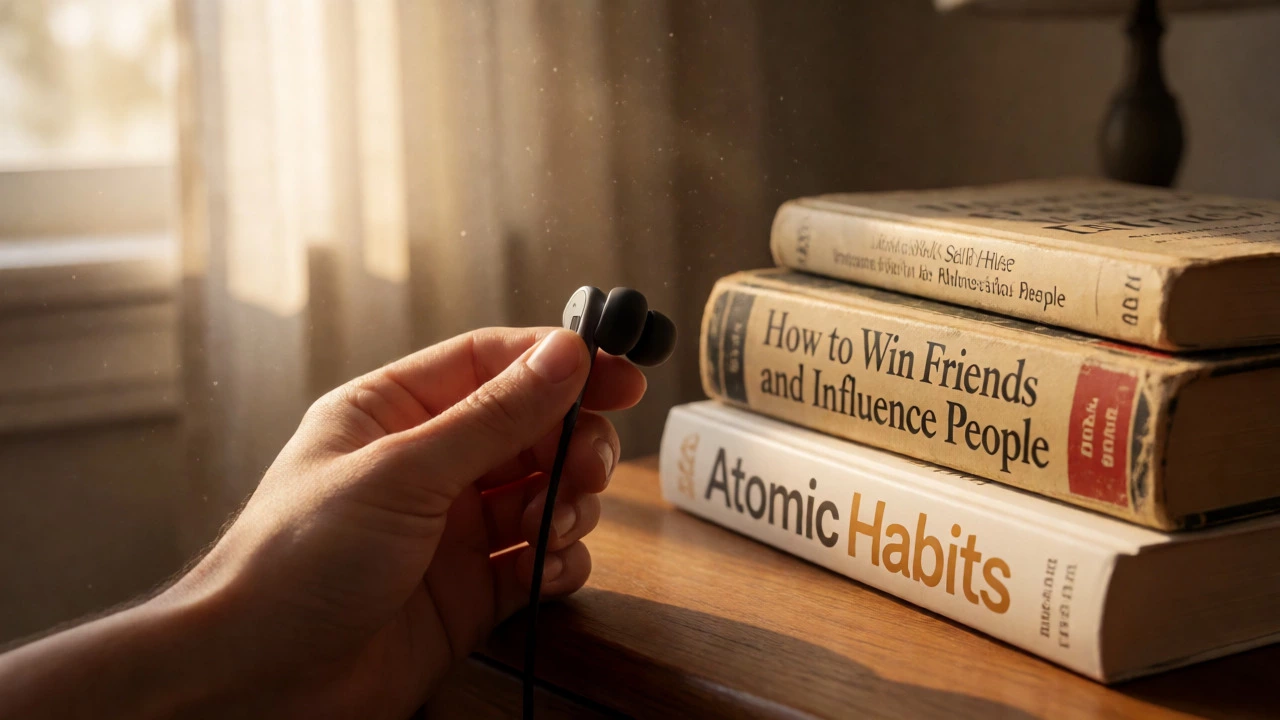
A significant factor in modern sales figures is the rise of audiobooks and e-books. Atomic Habits saw a massive surge in audio sales because listeners could consume the chapters during commutes. Similarly, Dale Carnegie’s book has been adapted into numerous abridged versions, summaries, and even mobile apps.
This accessibility keeps older titles alive. A 1936 book might feel intimidating in print, but a 4-hour audio summary feels manageable. Publishers have capitalized on this by releasing "modernized" editions of classics, updating language and examples while keeping the core principles intact. This strategy has helped How to Win Friends maintain relevance with younger audiences who might otherwise dismiss a pre-war text.
Beyond the Numbers: Quality vs. Quantity
Should you always buy the best-seller? Not necessarily. High sales volume indicates broad appeal, not necessarily deep impact for every individual. For example, Man’s Search for Meaning by Viktor Frankl sells fewer copies than Carnegie (around 16 million), but many readers cite it as the single most impactful book of their lives. It deals with existential purpose rather than tactical social skills.
If you are looking for tactical advice, stick to the top sellers. If you are searching for philosophical grounding, you might find better results in slightly lower-volume titles like The Four Agreements or When Breath Becomes Air. The "best" book is the one that addresses your specific pain point, regardless of its rank on the Amazon chart.
However, there is a safety in numbers. Buying a best-seller reduces the risk of wasting time on poorly researched fluff. The sheer volume of reviews for How to Win Friends and Influence People allows you to filter feedback effectively. You can see exactly how accountants, teachers, and salespeople applied the same principles differently. That collective wisdom is a feature of mass-market success.
Final Thoughts on the Industry
The self-help industry is projected to grow significantly through 2030, driven by mental health awareness and career uncertainty. As AI automates technical tasks, soft skills-communication, empathy, adaptability-become more valuable. This trend favors books like Carnegie’s, which focus on uniquely human interactions.
So, is How to Win Friends and Influence People still worth reading in 2026? Absolutely. It remains the most sold self-help book for a reason: it works. It doesn’t ask you to change your brain chemistry; it asks you to change your behavior. And unlike some fleeting trends, human behavior responds reliably to consistent, respectful engagement.
What is the number 1 best-selling self-help book of all time?
The number 1 best-selling self-help book of all time is widely considered to be How to Win Friends and Influence People by Dale Carnegie, with over 30 million copies sold. If including broader motivational/business titles, Napoleon Hill's Think and Grow Rich has higher sales figures, but Carnegie's work is the leader in the specific niche of interpersonal skills and social self-help.
Is Atomic Habits more popular than Dale Carnegie's book?
In terms of current momentum and recent annual sales, Atomic Habits by James Clear is extremely competitive and often tops weekly bestseller lists. However, in terms of lifetime cumulative sales, it has not yet surpassed Dale Carnegie's decades-long accumulation. Carnegie's book has had nearly 90 years to build its sales base, whereas Clear's book has been a phenomenon for less than a decade.
Why is How to Win Friends and Influence People still relevant?
It remains relevant because it focuses on fundamental human psychology-desire for importance, appreciation, and connection-which does not change with technology. Its advice on active listening, remembering names, and avoiding criticism applies equally well to email exchanges, Zoom calls, and face-to-face meetings.
Which self-help book is best for beginners?
For beginners, Atomic Habits is often recommended because it provides small, manageable steps that yield quick wins. The Subtle Art of Not Giving a F*ck is also good for those who dislike traditional self-help tone. However, How to Win Friends and Influence People is excellent for anyone starting their career or wanting to improve social confidence immediately.
Do self-help books actually work?
Yes, but only when paired with action. Studies suggest that reading alone produces limited change; implementation is key. The most successful books, like those by Carnegie or Clear, provide frameworks that encourage experimentation and reflection, turning passive reading into active practice.