Writing Technique: How to Craft Stories That Stick
At its core, writing technique, the deliberate methods writers use to shape stories, guide emotion, and hold attention. Also known as storytelling craft, it’s not about fancy words—it’s about making readers feel something real, whether they’re turning pages at 2 a.m. or reading to their kid before bed. You don’t need a degree to use it. You just need to know what makes a character matter, how to build tension without shouting, and when to let silence speak louder than description.
Good storytelling, the art of guiding a reader through a journey with purpose and emotion. Also known as narrative structure, it’s what turns a list of events into something unforgettable. Think about the fantasy villain who haunts you—not because they’re strong, but because their fear of death mirrors your own. That’s writing technique at work. Or the adventure girl who doesn’t wait to be saved—her journey works because the writer understood how to show growth through action, not monologues. Even cozy fantasy, with its quiet magic and small-town warmth, relies on precise pacing and emotional rhythm. These aren’t accidents. They’re choices.
And it’s not just about plot. character development, how a person changes over time in response to challenges and choices. Also known as arc, it’s the hidden engine behind every story that lingers. The 20-year-old reading 50 books a year isn’t just consuming words—they’re sensing when a character feels real. The parent who stops reading aloud to their child isn’t quitting—they’re recognizing when the child’s own inner voice starts to take over. That’s writing technique shaping how we grow, think, and connect.
Some writers think technique means following rules. It doesn’t. It means knowing which rules to bend, when to break them, and why. How long does it take to write 1,000 words? It depends. On your planning. On your mood. On whether you’re writing a sci-fi epic or a quiet YA moment. The technique isn’t the clock—it’s knowing how to make every sentence pull its weight.
What you’ll find below isn’t a textbook. It’s a collection of real stories—about villains who haunt us, books that change how we read, and heroes who rise not because they’re chosen, but because they decide to stand. Each post pulls back the curtain on how these stories were built. No theory. No fluff. Just the tools, tricks, and truths writers actually use.
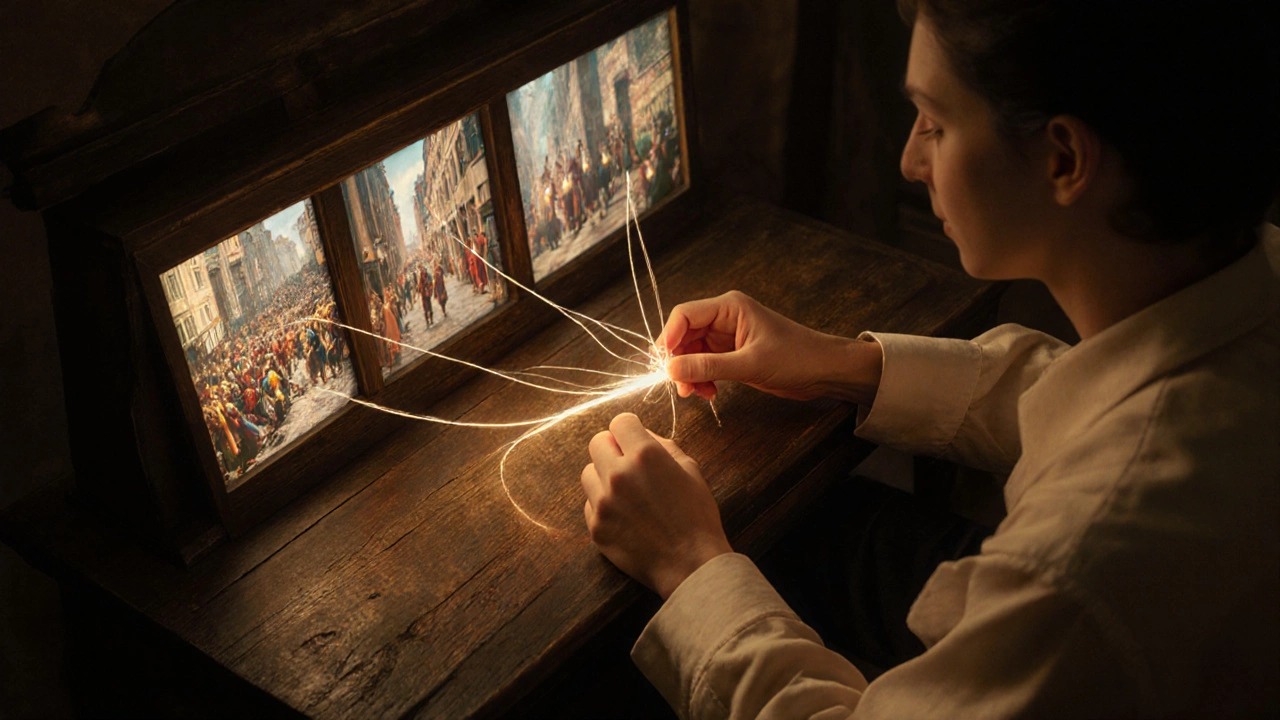
Narrative Storytelling Explained: How to Craft Compelling Stories
Explore narrative storytelling, its core elements, step‑by‑step guide, common pitfalls, and a handy checklist to craft compelling stories.
Read More