Rise of Christianity
When you think about the rise of Christianity, the historical expansion of a faith born in Judea that became the world’s largest religion. Also known as the spread of early Christianity, it didn’t happen because of emperors or armies at first—it happened because ordinary people told each other stories that changed how they saw life, death, and each other. This wasn’t just a religious shift. It rewrote social rules, gave power to the poor and women in ways Rome never did, and turned a persecuted group into the backbone of a new civilization.
The Roman Empire, the vast political system that ruled much of Europe, North Africa, and the Middle East. Also known as Imperial Rome, it initially saw Christians as troublemakers who refused to worship the emperor or the gods. But by the 4th century, the same empire that once arrested them made Christianity its official religion. Why? Because the movement offered something the state couldn’t: community in a time of chaos, hope when life was short, and a moral code that felt real, not just ceremonial. Meanwhile, early Christian communities, small, secret gatherings of believers who met in homes, shared meals, and baptized each other. Also known as house churches, they were the real engine of growth. No grand cathedrals, no royal backing—just people reading texts, praying together, and caring for the sick when others walked away. These weren’t theologians debating doctrine. They were neighbors helping neighbors, and that simple act became unstoppable.
The rise of Christianity wasn’t about magic or miracles alone. It was about consistency. It survived persecution because its followers lived differently. They didn’t abandon their sick. They didn’t abandon their enemies. They didn’t wait for power to act kindly. And when the empire collapsed, these communities didn’t. They held the light. They kept records. They taught children to read—not because they had to, but because they believed words mattered. That’s why, over 1,700 years later, you still hear their stories in churches, schools, hospitals, and even in the way we think about justice and mercy today.
What you’ll find below are posts that dig into the human side of this transformation—how belief moves through people, how stories outlast empires, and why some ideas refuse to die even when they’re meant to be erased. These aren’t dry histories. They’re about real lives, real choices, and the quiet power of sticking to something when the world says to let go.
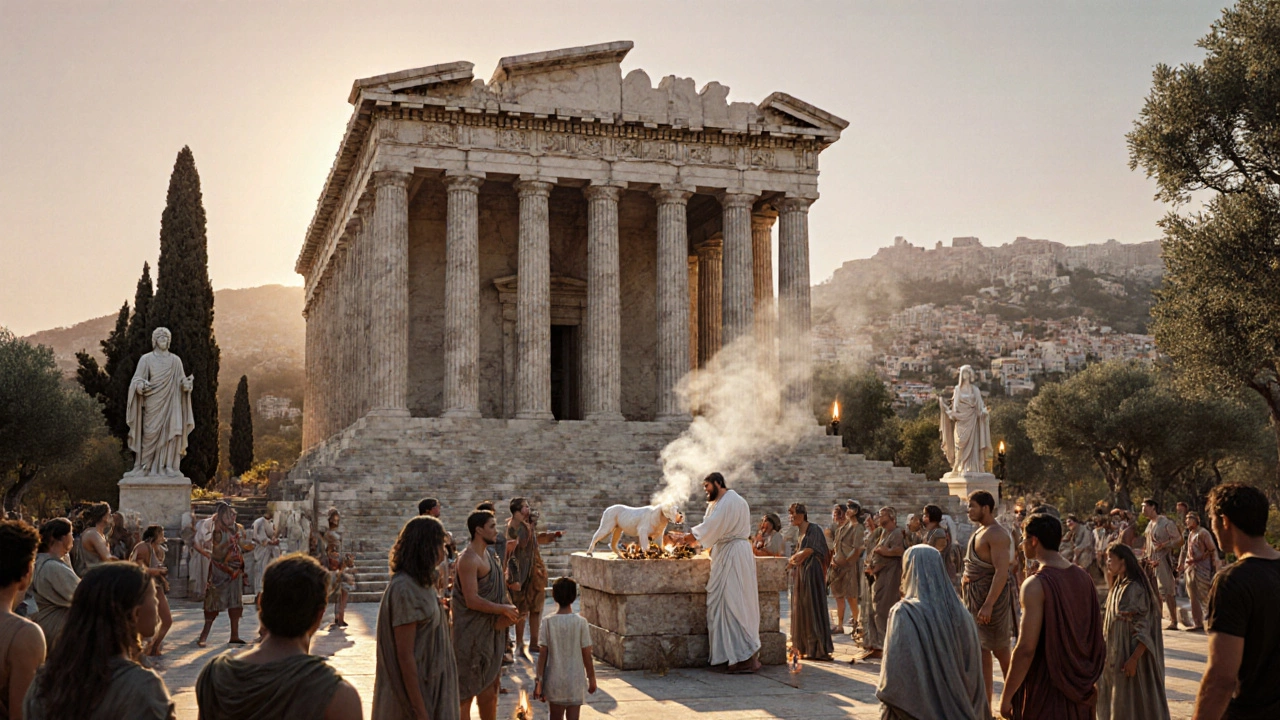
Why People Stopped Believing in Greek Gods - Historical Reasons Explained
Explore why ancient worship of the Greek gods vanished, covering philosophy, politics, Christianity, and cultural shifts that turned mythology into modern symbolism.
Read More