Decline of Polytheism: How Ancient Beliefs Faded and What Replaced Them
When you think of ancient gods, you picture Zeus, Indra, or Odin—powerful, human-like deities ruling over storms, war, and fate. But decline of polytheism, the gradual loss of belief in multiple gods across ancient civilizations. Also known as the shift from polytheistic to monotheistic systems, it didn’t happen overnight. It unfolded over centuries, shaped by empire, power, and changing human needs. This wasn’t just a religious change—it was a cultural earthquake.
One of the biggest drivers was monotheism, the belief in a single, all-powerful god. Also known as exclusive worship of one deity, it offered something polytheism couldn’t: simplicity and control. Think of the Hebrews in ancient Israel, or later, early Christians. A single god meant a single law, a single authority, and a single story to unite people under empire or state. religious shift, the large-scale movement from multiple gods to one. Also known as the transition to monotheistic faiths, it didn’t happen because people suddenly found polytheism illogical. It happened because rulers found monotheism easier to manage. Rome didn’t crush pagan temples because they were evil. They did it because a unified religion helped unify a fractured empire.
And then there’s cultural change, how society’s values, priorities, and identity evolve over time. Also known as social transformation, it played a quiet but deadly role. As trade routes expanded, people met new ideas. Literacy grew. Cities got bigger. The old gods tied to harvests and local rivers didn’t feel as relevant to a Roman merchant in Alexandria or a Persian bureaucrat in Susa. People began asking bigger questions: Why do bad things happen? Is there justice beyond this life? Monotheism offered answers—clear, absolute, and comforting. Polytheism didn’t need to die. It just stopped speaking to the people who held power.
What’s fascinating is that polytheism didn’t vanish because it was wrong. It faded because it became inconvenient. The gods of Olympus didn’t lose to logic—they lost to administration. The rituals of ancient Egypt didn’t collapse because they were silly—they collapsed because a new empire needed a single prayer, not a hundred.
Below, you’ll find posts that explore how belief systems rise and fall—not just in ancient times, but in how we think today. From fantasy villains who mirror our fears of divine power, to how modern readers still seek meaning in stories that echo old religious shifts. This isn’t just history. It’s about why we still need gods—and why we keep changing them.
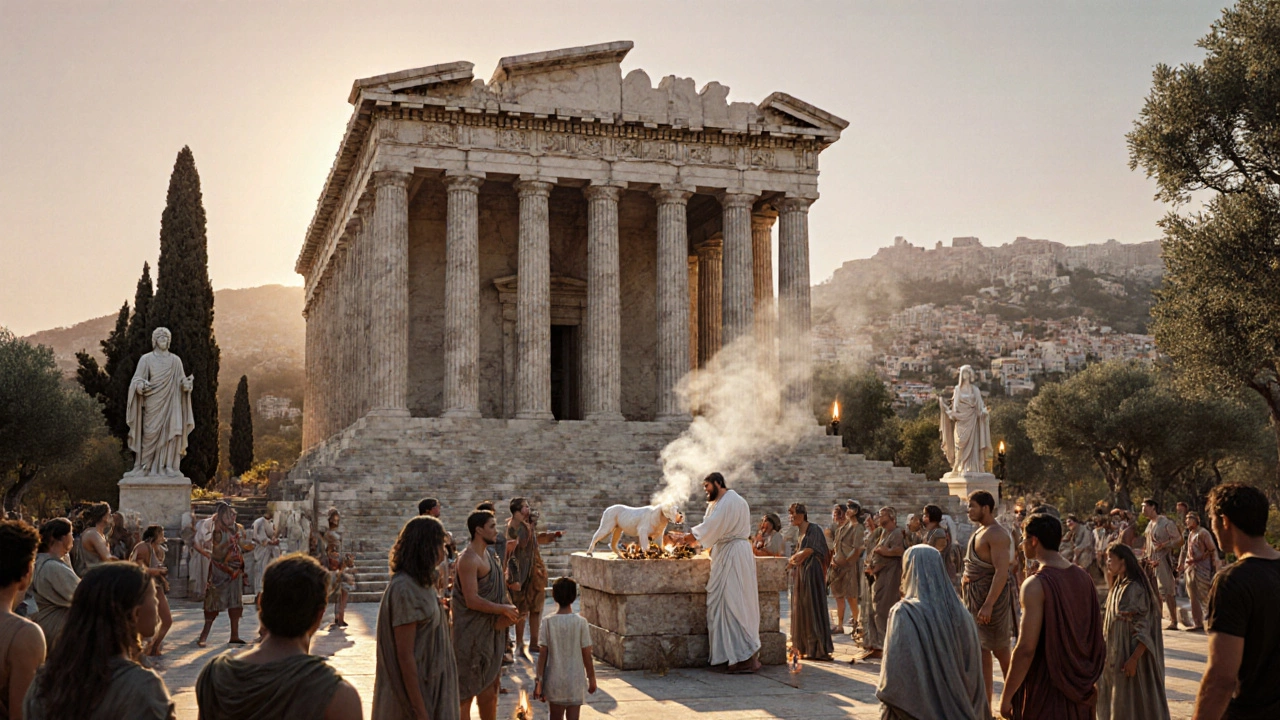
Why People Stopped Believing in Greek Gods - Historical Reasons Explained
Explore why ancient worship of the Greek gods vanished, covering philosophy, politics, Christianity, and cultural shifts that turned mythology into modern symbolism.
Read More