Creative Writing for Children
When we talk about creative writing for children, the process of guiding young minds to invent stories, characters, and worlds using their own words and ideas. It’s not about perfect grammar or big vocabularies—it’s about letting kids say what they feel, see, or dream. This isn’t just an activity for school. It’s a way for them to make sense of the world, process emotions, and find their voice before they even learn to spell "because" correctly.
children's storytelling, the natural way kids share ideas through made-up tales, often aloud, with wild twists and no rules happens everywhere—on the playground, at bedtime, in the backseat of the car. But when we give it structure—prompts, time, permission to be silly—it becomes something powerful. writing for kids, the intentional act of crafting stories that match a child’s thinking, not an adult’s expectations isn’t about simplifying. It’s about respecting how children see things: magic is real, animals talk, and a sock can be a superhero. The best stories for kids come from adults who remember what it felt like to believe in monsters under the bed—and then turn them into friends.
What makes creative writing for children stick? It’s not worksheets or prizes. It’s freedom. A kid who writes about a dragon who’s afraid of fire isn’t writing fantasy—they’re writing about their own fears. A story about a lost shoe that travels the world? That’s curiosity in action. child creativity, the raw, unfiltered ability of kids to connect unrelated ideas in surprising ways is what turns ordinary moments into epic tales. And when we encourage it—not correct it—we build more than writers. We build thinkers.
Some kids write poems before they write sentences. Others draw first, then tell the story. There’s no right way. The goal isn’t to produce the next J.K. Rowling. It’s to help a 7-year-old feel proud that their story exists—and that someone listened. You don’t need fancy tools. A notebook, a quiet hour, and a grown-up who says "Tell me more" are all it takes.
Below, you’ll find real insights from writers, teachers, and parents who’ve seen what happens when kids are given space to create. From how to turn a rainy afternoon into a story engine, to why asking "What happens next?" works better than "What’s the moral?"—these posts are packed with what actually works in homes and classrooms. No fluff. No theory. Just practical ways to unlock the stories inside every child.
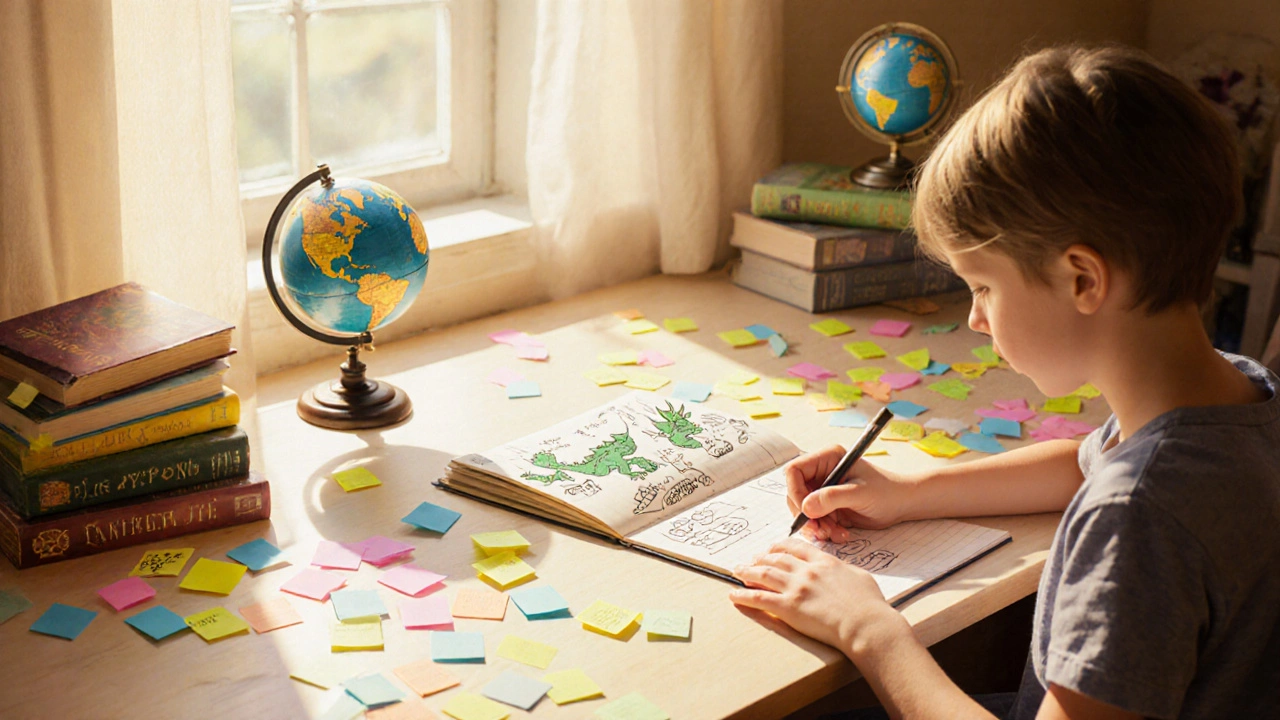
Story Ideas for 12‑Year‑Olds: What to Write About?
Discover fresh story ideas for 12‑year‑olds, with themed prompts, genre tips, character tricks, and a step‑by‑step writing guide.
Read More