Ancient Wisdom: Timeless Lessons from the Past That Still Shape Us Today
When we talk about ancient wisdom, practical insights from early civilizations that endure because they solve real human problems. Also known as timeless wisdom, it’s not about dusty scrolls or forgotten gods—it’s about patterns in how people lived, thought, and survived that still work today. You don’t need to be a scholar to see it. The advice to know yourself, to wait before reacting, to value community over ego—these aren’t just nice ideas. They’re survival tools tested over thousands of years.
Philosophical traditions, structured systems of thought from cultures like India, Greece, and China that explored ethics, mind, and existence didn’t just debate abstract ideas. They gave people ways to handle loss, anger, fear, and uncertainty. The Bhagavad Gita doesn’t tell you to avoid pain—it shows you how to act with clarity even when everything’s falling apart. Stoicism isn’t about suppressing emotion—it’s about controlling what you can and letting go of what you can’t. These aren’t just old books. They’re mental toolkits.
Spiritual texts, writings that carry moral, existential, and practical guidance rooted in cultural and religious history like the Upanishads, Tao Te Ching, or even parts of the Bible and Quran aren’t meant to be worshipped as dogma. They’re meant to be lived. Their power comes from repetition—not because they’re holy, but because they’re true. When you read about patience, humility, or inner stillness, you’re not reading poetry. You’re reading instructions for a calmer, clearer life.
What’s surprising? Modern psychology keeps rediscovering what ancient teachers already knew. Mindfulness? Practiced in India 3,000 years ago. The idea that your thoughts shape your reality? Found in Buddhist and Stoic texts. Even today’s self-help books are just remixes of ideas that survived because they worked. The difference? Ancient wisdom didn’t promise quick fixes. It asked for practice. For patience. For daily effort.
That’s why the posts here aren’t just about old stories. They’re about how those stories still live—in how we build character, handle stress, make choices, and even how we read. Whether it’s the quiet strength in a fantasy villain’s motivation, the calm focus of cozy fantasy, or the real-life habits behind reading 100 books a year—these threads all connect back to something older than algorithms, better than trends: human truth.
Below, you’ll find real discussions about what matters: how personality forms, why people stop believing in old gods, what makes a story feel true, and how ancient ideas quietly shape the books we love today. No fluff. No hype. Just the quiet, lasting stuff that still works.
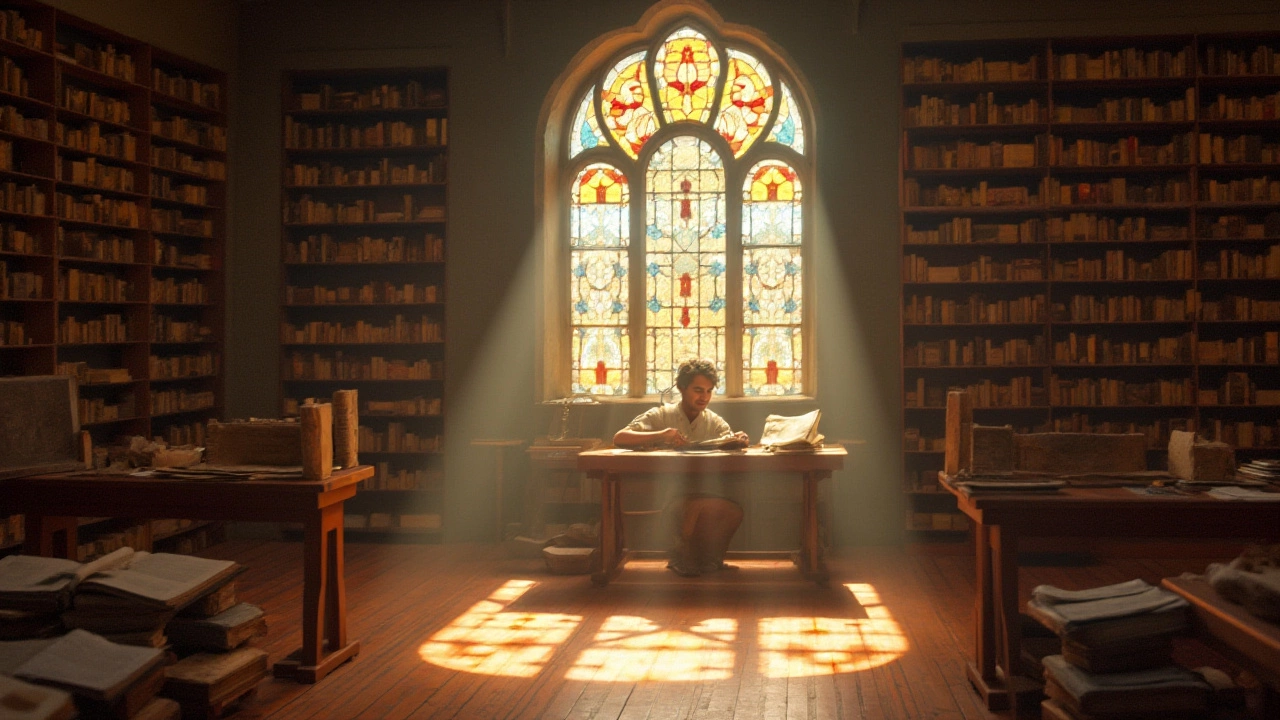
Unlocking the Age of God: A Historical Fiction Exploration
Delving into the ancient texts, mythologies, and philosophical ideas surrounding the age of God, this article presents a creative exploration of divine chronology as imagined in 2024. By weaving together historical research and fictional narratives, readers are invited on an enlightening journey through time to understand the origins of divinity. This article not only questions traditional assumptions but also presents a fresh take on how the concept of God's age has evolved throughout history.
Read More