Ancient Greek Religion: Myths, Gods, and How They Shaped Western Storytelling
When we talk about ancient Greek religion, a system of beliefs and rituals centered around multiple gods who intervened in human lives. Also known as Hellenic religion, it wasn't just about temples and sacrifices—it was the foundation of how people understood fate, justice, and heroism. Unlike modern monotheistic faiths, it didn't demand blind faith. You prayed to Zeus for storms to pass, to Athena for wisdom in battle, to Hades when someone died. No priest told you what to believe. You figured it out through stories—epics, plays, and local legends passed down for centuries.
These stories weren't just entertainment. They explained why the seasons changed, why people got sick, why love hurt. The Greek gods, powerful, flawed beings who argued, cheated, fell in love, and punished mortals acted like real people—only with lightning bolts and immortality. Zeus wasn't a distant creator. He was a jealous husband who turned women into cows. Aphrodite didn't just symbolize love—she caused wars. This wasn't abstract theology. It was drama. And that drama became the blueprint for every hero’s journey since.
The Greek mythology, the collection of myths and legends that gave form to ancient Greek religion didn’t die with the Romans. It lived in Shakespeare’s tragedies, in Renaissance paintings, in modern fantasy novels. When you read about a villain haunted by their past, or a hero cursed by fate, you’re seeing echoes of Oedipus or Perseus. Even today’s blockbuster movies borrow their structure from Greek myths: the reluctant hero, the wise mentor, the descent into darkness. This isn’t coincidence. It’s inheritance.
And then there’s the polytheism, the belief in many gods, each with their own domain and personality. No single god ruled everything. That’s why Greek religion felt alive—there was always another deity to turn to if one failed you. You didn’t need to pick one god and stick with them. You adapted. You bargained. You prayed to the right one for the right problem. That flexibility made it stick around for over a thousand years.
What you’ll find below aren’t dry academic essays. These are stories about how ancient beliefs still live—in the villains we love to hate, the heroes we root for, and the quiet moments of magic that feel timeless. Whether it’s a fantasy novel borrowing a god’s curse or a character facing impossible odds, you’ll see how ancient Greece didn’t just shape religion—it shaped storytelling itself.
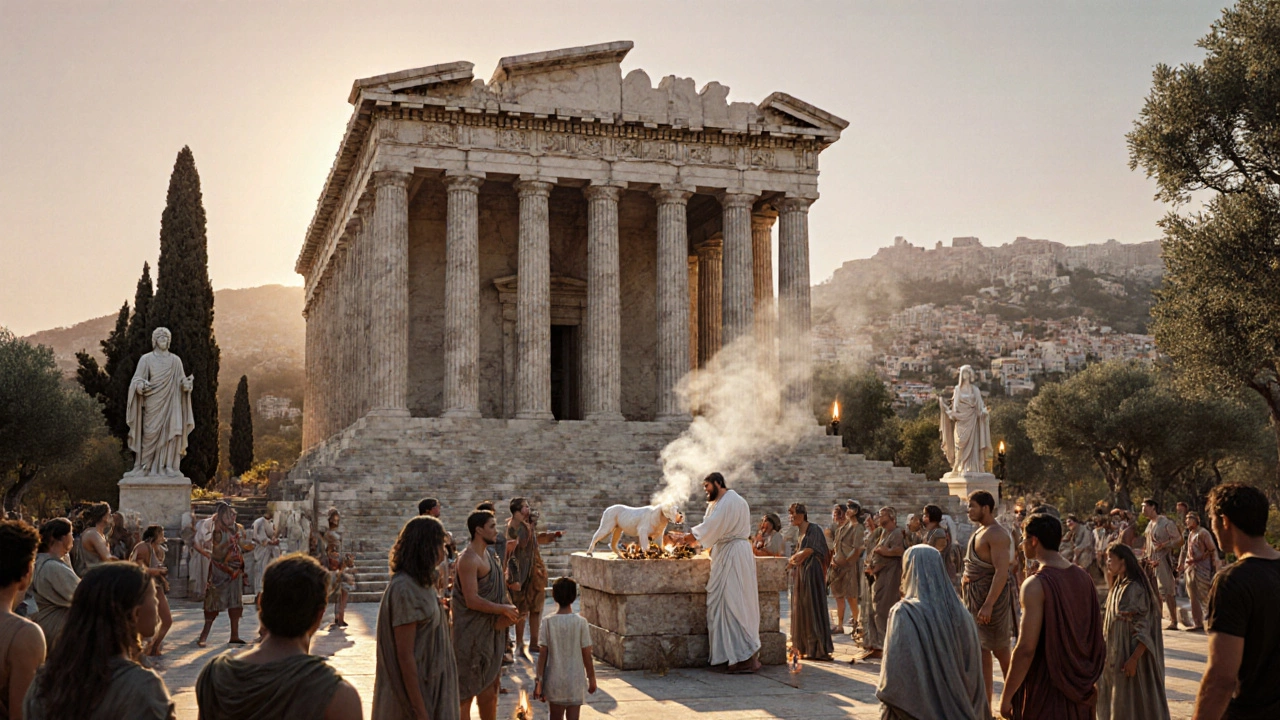
Why People Stopped Believing in Greek Gods - Historical Reasons Explained
Explore why ancient worship of the Greek gods vanished, covering philosophy, politics, Christianity, and cultural shifts that turned mythology into modern symbolism.
Read More