Ancient Art: Origins, Meaning, and Why It Still Moves Us Today
When we talk about ancient art, the earliest visual expressions created by human civilizations before the fall of Rome. Also known as early human art, it includes everything from handprints in caves to towering statues of gods—and it’s not just history, it’s the foundation of how we still tell stories today.
Think about it: before writing, people used images to record what mattered. A bison painted on a cave wall in Lascaux wasn’t decoration—it was a ritual, a prayer, a record of survival. Ancient civilizations, societies like the Sumerians, Egyptians, Indus Valley, and Minoans who developed complex cultures with art as a core part of life didn’t paint for galleries. They painted because they believed the image held power. A carved face on a temple could summon a god. A sculpture of a king could make his rule last beyond death. This wasn’t art for beauty’s sake—it was art for survival, control, and connection.
And it wasn’t just about religion. Cave paintings, the oldest known form of human artistic expression, dating back over 40,000 years and found across Europe, Asia, and Australia show animals in motion, hunters in groups, even abstract symbols. These weren’t random doodles. They were maps, memories, maybe even early forms of storytelling. Meanwhile, in Egypt, classical sculpture, highly stylized stone and metal figures created for tombs and temples, often following strict rules of proportion and symbolism didn’t try to look real—they tried to look eternal. Every angle, every pose, every line was chosen to preserve identity beyond time.
What’s surprising? We still do the same thing today. We take photos to remember. We post images to say who we are. We make murals to protest or celebrate. Ancient art didn’t die—it evolved. The same human need to express, to remember, to control the unknown is still driving us. The difference? Now we do it with phones instead of ochre. But the impulse? That’s unchanged.
Below, you’ll find posts that dig into how ancient art shaped modern storytelling, why we’re still obsessed with mythological creatures from old carvings, and how the earliest symbols still live in the books we read today. Whether you’re curious about the origins of fantasy villains or why adventure stories feel so timeless, the answers start here—with the first images humans ever made.
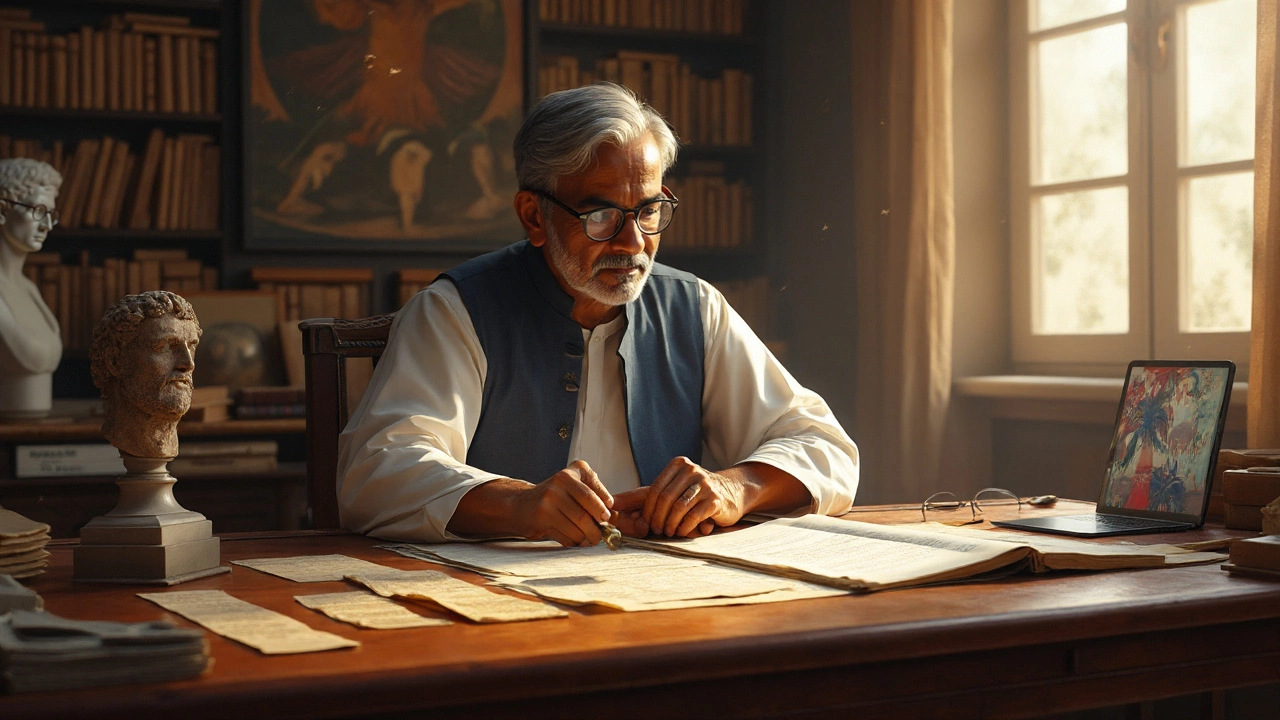
Was Achilles Black or White? Unraveling the Myth’s True Appearance
Explore the evidence behind Achilles' appearance, from Homeric texts to ancient art and modern scholarship, to answer whether the hero was black or white.
Read More