Is there a book review website? Here are the top ones real readers use
 Jan, 20 2026
Ever scrolled through your phone after finishing a book, wishing someone had already told you if it was worth the time? You’re not alone. Millions of readers turn to book review websites every day-not to get a quick star rating, but to find out if a story will stick with them long after the last page. The truth? There’s no single official book review website. But there are several that real readers trust, and they’re not what you might expect.
Goodreads isn’t just a website-it’s a reading community
When people ask, "Is there a book review website?" the first name that pops up is almost always Goodreads. Launched in 2007, it now has over 125 million members. That’s more than the population of Japan. But Goodreads isn’t just a place to write reviews. It’s where people track what they’ve read, set annual reading goals, join book clubs, and argue about endings.
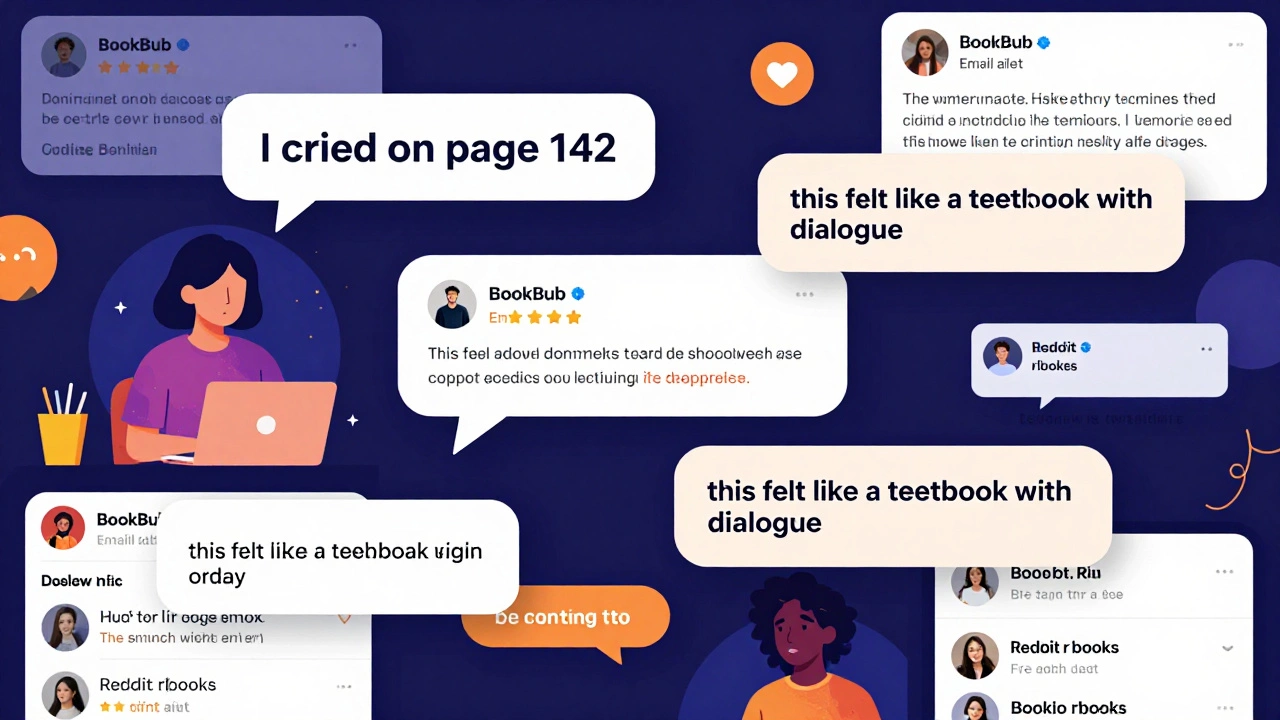
Here’s the thing: most reviews on Goodreads are written by regular readers, not critics. You’ll find honest takes like, "I cried on page 142 and then deleted the app for a week," or "This felt like a textbook with dialogue." That’s why it works. It’s raw, real, and unfiltered. The algorithm doesn’t push bestsellers-it surfaces books that readers just couldn’t stop talking about.
Goodreads also lets you see reviews from people with similar tastes. If you loved The Midnight Library, you can filter reviews by users who gave it 5 stars and see what else they liked. That’s how you find your next read without wasting weeks on a dud.
BookBub is where readers discover hidden gems
If Goodreads is the town square, BookBub is the local bookstore owner who knows your taste better than your best friend. Founded in 2012, BookBub started as a simple email newsletter. Now, it’s a full platform with curated lists, author interviews, and personalized book recommendations.
What makes BookBub different? It doesn’t rely on volume. It relies on curation. Each recommendation is hand-picked by editors who read hundreds of books before choosing just a few. You won’t find 500 reviews for the same thriller here. Instead, you’ll get one thoughtful note: "This quiet novel about a woman rebuilding her life after loss reminded me of Eleanor Oliphant Is Completely Fine-but with more hope. Read it in one sitting."
BookBub also tracks price drops. If you’ve been eyeing a hardcover that’s $18, you’ll get an alert when it drops to $3.99. That’s how many readers discover indie authors who never make it to the front table at Barnes & Noble.
LibraryThing is the quiet powerhouse for serious collectors
Most people haven’t heard of LibraryThing. That’s by design. It doesn’t chase trends. It doesn’t have flashy ads. It’s been around since 2005 and still runs on the same quiet, thoughtful ethos: catalog your books, tag them, and connect with people who care about the same obscure titles.
LibraryThing is where you’ll find reviews written by librarians, scholars, and people who own first editions. One user reviewed The Book of Lost Things by comparing its themes to medieval bestiaries. Another broke down the translation choices in a Russian novel and explained why one version felt more authentic.
It’s not for everyone. The interface feels like a 2008 website. But if you’re the kind of reader who keeps a reading journal or collects signed copies, LibraryThing is the only place that feels like home. It even lets you tag books by mood-"gloomy," "uplifting," "makes you question everything."
Reddit’s r/books is the unmoderated truth
Reddit’s r/books subreddit has over 8 million subscribers. It’s chaotic. It’s messy. And it’s the most honest place online to read about books.
Here, you won’t find polished reviews. You’ll find threads like: "Just finished Project Hail Mary. Spoilers below. Did anyone else feel like the alien was just a metaphor for climate denial?" Or: "I gave this 1 star because the main character kept yelling. I don’t need to be yelled at in my fiction."
What makes r/books powerful is the depth of discussion. One thread about Lessons in Chemistry had 2,300 comments-half of them from readers who’d never read a book since high school. They talked about chemistry, gender roles, and why the protagonist’s stubbornness felt real. That’s the kind of insight you won’t find on Amazon.
Amazon reviews? They’re useful-but don’t trust them blindly
Yes, Amazon has millions of book reviews. But here’s the problem: many are fake. Or written by people who never finished the book. Or posted by authors themselves to boost rankings.
Look for reviews with photos of the actual book. Check the reviewer’s history. If someone has reviewed 50 books in the last month-all 5 stars-that’s a red flag. Real readers don’t review that fast.
Still, Amazon is useful for spotting patterns. If 30% of reviews say "the ending felt rushed," that’s worth paying attention to. But don’t rely on it alone. Combine it with Goodreads or r/books to get the full picture.
What to do when you can’t find a review for a niche book
Not every book gets reviewed. Especially small press titles, translated works, or self-published novels. If you’re stuck, try this:
- Search the author’s name + "interview" on Google. Authors often talk about their inspiration in podcasts or blogs.
- Check if the publisher has a blog. Small presses like Tin House or Catapult often publish deep-dive essays about their books.
- Look for booktubers on YouTube. Many focus on indie or translated fiction and give thoughtful 10-minute breakdowns.
- Ask on r/books or Goodreads. Someone always has read it-and they’ll be happy to talk about it.
Don’t wait for a professional review. The best insights come from readers who just finished the book and still can’t stop thinking about it.
Why book review websites matter more than ever
In 2026, there are over 3 million new books published every year. That’s more than 8,000 a day. No one can read them all. So we rely on others to help us filter.
But it’s not about finding the "best" book. It’s about finding the right one-for you. A book that fits your mood, your pace, your life right now. That’s why book review websites aren’t just tools. They’re lifelines.
The next time you’re standing in a bookstore, unsure what to pick up, remember: someone out there just finished a book that changed their week. They wrote about it. And now, you can find it.
Is Goodreads the only book review website?
No, Goodreads is the largest, but it’s not the only one. BookBub focuses on curated recommendations, LibraryThing is for serious collectors, Reddit’s r/books offers raw, unfiltered discussions, and Amazon reviews can be useful if you know how to spot fake ones. Each site serves a different kind of reader.
Are book review websites trustworthy?
They’re as trustworthy as the people using them. Goodreads and LibraryThing have mostly genuine reviews from readers. Reddit’s r/books is brutally honest but sometimes harsh. Amazon has fake reviews, so look for detailed, long-form comments with photos. The key is to read multiple reviews and look for patterns-not just star ratings.
Can I trust reviews for self-published books?
Yes, but be careful. Many self-published books have inflated ratings because friends and family leave reviews. Look for reviews from people who clearly read the whole book and mention specific scenes or characters. Sites like r/books and LibraryThing are better for honest takes on indie titles than Amazon.
Do book review websites cost money?
No. Goodreads, LibraryThing, Reddit, and BookBub are all free to use. BookBub does send email alerts about discounted books, but you’re not charged for those. Some sites offer premium features, like advanced filtering or ad-free browsing, but you don’t need them to get real reviews.
Why don’t professional critics write reviews on these sites?
Most professional critics write for newspapers, magazines, or their own blogs. The power of sites like Goodreads and Reddit is that they’re run by everyday readers-not paid reviewers. That’s why the reviews feel more personal and relatable. You’re getting reactions from people who read for joy, not for work.
Where to go next
Start with Goodreads. It’s the easiest way to find books people are actually talking about. Then check BookBub for curated picks that match your taste. If you want deeper analysis, dive into r/books or LibraryThing. And if you’re stuck on a book no one seems to have reviewed? Ask. Someone out there has read it-and they’re waiting to tell you about it.