Is Percy Jackson Low Fantasy? Defining the Genre of Modern Myth
 Aug, 7 2026
Percy Jackson Genre Quiz
Loading question...
Have you ever finished a Percy Jackson is a popular series of young adult novels by Rick Riordan that blends modern life with Greek mythology book and tried to explain it to a friend, only to get stuck on what genre it actually is? It’s not just adventure. It’s not strictly historical fiction. The most common question people ask is whether it counts as low fantasy is a subgenre of fantasy where magical elements are intruded into or emerge from a realistic or historically based world. The short answer? No, not really. While it shares some DNA with low fantasy, Percy Jackson fits much more comfortably into the categories of urban fantasy is a genre of fantasy literature set in cities or other contemporary settings, often featuring magic hidden within the mundane world and mythological fiction is a literary genre that uses characters, themes, or plots from traditional myths, legends, or folklore.
The Core Difference: Secondary Worlds vs. Our World
To understand why Percy Jackson isn’t low fantasy, we first need to look at how fantasy genres are defined. The biggest divider in fantasy is the setting. High fantasy, also known as epic fantasy, takes place in a completely invented world. Think of Middle-earth in J.R.R. Tolkien’s works or Westeros in George R.R. Martin’s series. These are secondary worlds with their own maps, languages, and histories that have no direct connection to our reality.
Low fantasy, on the other hand, keeps the setting grounded in our real world. The magic invades our reality. A classic example might be C.S. Lewis’s Narnia series, where children step through a wardrobe into a magical land, but the story begins and ends in 1940s England. Or consider Stephen King’s The Dark Tower, which intersects with our Earth. In low fantasy, the magic is usually an anomaly, a secret intrusion into a normal life.
Percy Jackson complicates this. The books are set in New York City, London, and other real-world locations. Percy goes to school, eats pizza, and deals with typical teenage angst. This feels like low fantasy because the backdrop is ours. However, the key difference lies in the integration of the supernatural. In Percy’s world, magic isn’t an intrusion; it’s an established, albeit hidden, system that has existed alongside human history for millennia. The gods aren’t visiting; they’re watching from Mount Olympus, which is disguised as the Empire State Building. This persistent, structured presence of mythic beings shifts the genre away from pure low fantasy.
Why Urban Fantasy Fits Better
If low fantasy doesn’t quite fit, what does? Urban fantasy is the closest match. Urban fantasy is defined by its setting: a modern city where magic exists but is often concealed from the general public. Think of Charlaine Harris’s Sookie Stackhouse novels or Jim Butcher’s Dresden Files. These stories feature protagonists who navigate both the mundane world and the magical underworld simultaneously.
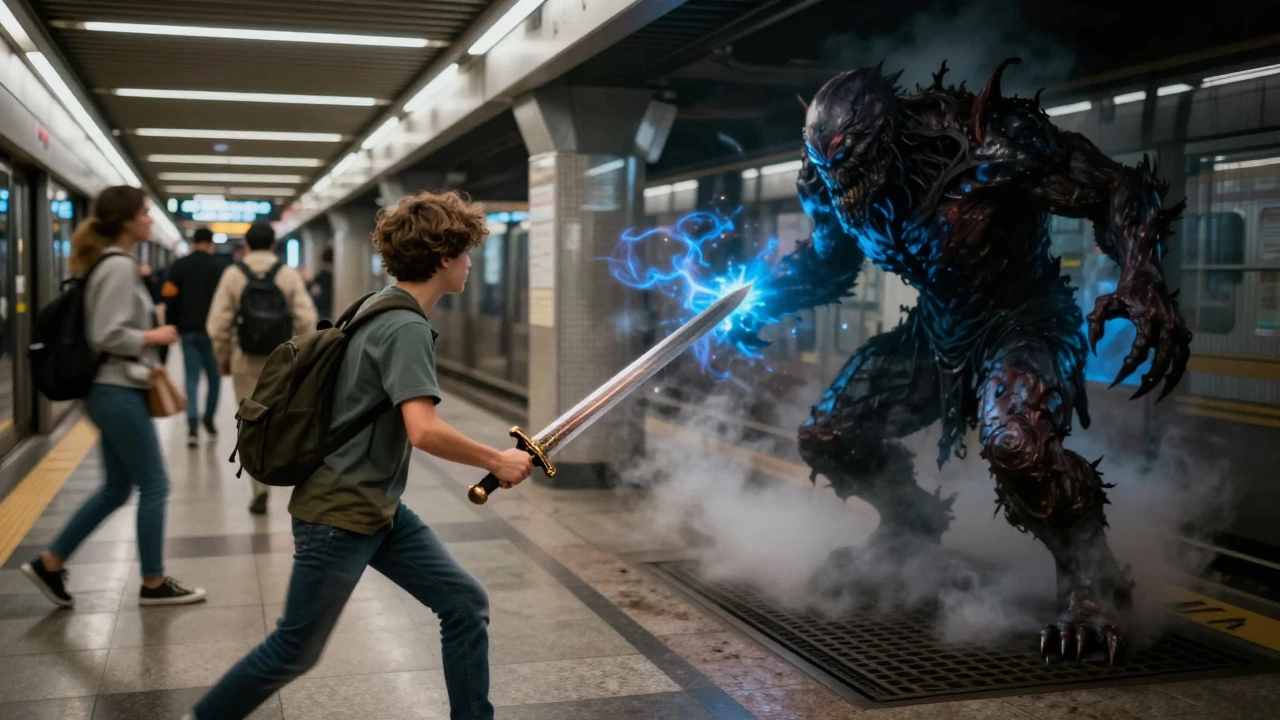
In Percy Jackson, the monster attacks happen on highways, in shopping malls, and on subway trains. The Camp Half-Blood cabins are built right next to Long Island Sound. The interaction between the mortal world and the divine world is constant and immediate. Percy doesn’t travel to a distant magical realm to solve his problems; he solves them while commuting to school or hanging out in Central Park. This seamless blending of the everyday and the extraordinary is the hallmark of urban fantasy.
Furthermore, urban fantasy often relies on a specific set of rules for how magic interacts with technology and society. In Riordan’s universe, monsters are invisible to mortals unless they break certain rules, and demigods have specific weaknesses like bronze and ambrosia. These rigid rules create a sense of order within the chaos, which is a staple of the urban fantasy genre rather than the more chaotic or intrusive nature of low fantasy.
The Role of Mythological Fiction
Another major label for Percy Jackson is mythological fiction. This genre focuses on retelling or adapting existing myths. Unlike original fantasy, which creates new lore, mythological fiction draws heavily from established sources like Homer’s Iliad or Ovid’s Metamorphoses.
Rick Riordan doesn’t just use Greek gods as flavor text; he builds the entire plot around their personalities and relationships as described in ancient texts. Zeus is jealous and powerful; Hera is vengeful; Poseidon is protective but distant. Percy’s journey mirrors the hero’s journey found in classical epics. He faces trials, meets mentors like Chiron, and descends into the Underworld. By rooting the narrative in these ancient stories, the books become a form of modern myth-making. They bridge the gap between ancient oral traditions and contemporary young adult literature.
This classification is important because it explains why the magic feels so familiar. Readers don’t need to learn a new magic system from scratch; they already know who Medusa is or what the Minotaur looks like. The familiarity allows the story to move quickly, focusing on character development and humor rather than extensive world-building explanations.
Young Adult Dynamics and Tone
We can’t talk about Percy Jackson without mentioning its target audience: Young Adult (YA). The YA genre influences how the fantasy elements are presented. YA fantasy tends to be more accessible, faster-paced, and focused on identity formation. Percy’s struggle isn’t just about saving the world; it’s about figuring out who he is. Is he a bad kid, or is he a son of Poseidon?
The tone of the books is humorous and irreverent. Percy narrates the story with a sarcastic, self-deprecating voice that appeals to teenagers. This contrasts sharply with the solemn, serious tone often found in high fantasy or even some low fantasy works. The humor serves to ground the mythical events in relatable teen experiences. When Percy complains about the food at camp or argues with his friends, it feels authentic. This blend of epic stakes with teenage humor is a defining characteristic of modern YA fantasy.
Comparison Table: Percy Jackson vs. Other Genres
| Feature | High Fantasy | Low Fantasy | Urban Fantasy | Percy Jackson |
|---|---|---|---|---|
| Setting | Secondary World (e.g., Middle-earth) | Real World with Magic Intrusion | Modern City with Hidden Magic | Modern Real World (NYC, etc.) |
| Magic System | Original, Complex Rules | Often Mysterious or Ancient | Structured, Coexisting with Tech | Greek Mythology Rules |
| Tone | Serious, Epic | Varies, Often Dark | Varies, Often Noir or Humorous | Humorous, Irreverent |
| Source Material | Original Lore | Original or Folklore | Original or Folklore | Classical Greek Myths |
| Protagonist Age | Adults or Coming-of-Age | Adults or Children | Usually Adults | Teenagers (YA) |
Why the Distinction Matters
You might wonder why it matters if Percy Jackson is low fantasy or urban fantasy. For casual readers, it doesn’t matter much. If you enjoy the story, the label is irrelevant. However, for librarians, teachers, and avid fans, understanding the genre helps in finding similar books. If you love Percy Jackson because of the modern setting mixed with magic, looking for "low fantasy" might lead you to darker, more serious books like Harry Potter (which is also often debated as low vs. urban) or The Chronicles of Narnia. Instead, searching for "urban fantasy" or "mythological fiction" will yield better recommendations, such as Riordan’s own Kane Chronicles or Magnus Chase series, which follow similar structural patterns.
Additionally, recognizing the mythological roots encourages readers to explore the original sources. Many students read Percy Jackson and then discover a genuine interest in Greek history and literature. The genre acts as a gateway, making ancient stories accessible to a new generation. This educational value is a unique aspect of mythological fiction that pure high or low fantasy rarely achieves.

Common Misconceptions About the Series
One common misconception is that Percy Jackson is purely for children. Because the protagonist starts at age twelve, some adults dismiss the series as too simple. However, the complexity of the moral dilemmas, the political intrigue among the gods, and the references to classical literature make it appealing to older readers as well. The humor is sophisticated, relying on wordplay and situational irony rather than slapstick.
Another misconception is that the magic is inconsistent. Critics sometimes argue that Percy gets lucky too often. But when you view the series through the lens of mythological fiction, these moments align with the concept of fate and divine intervention. In Greek myths, heroes often succeed due to the favor of the gods or their own hubris leading to downfall. Percy’s struggles reflect these ancient themes, adapted for a modern context.
How Percy Jackson Influenced Modern Fantasy
Percy Jackson played a significant role in revitalizing interest in mythology for young readers. Before Riordan, many schools had removed myths from curricula due to perceived violence or sexual content. By sanitizing and adapting these stories for a YA audience, Riordan opened the door for a wave of mythological retellings. Books like Madeline Miller’s Circe or Natalie Haynes’ A Thousand Ships owe a debt to the popularity created by the Percy Jackson phenomenon.
The series also demonstrated the commercial viability of diverse voices in fantasy. Later books in the Riordanverse, such as The Heroes of Olympus, introduced characters from Roman, Egyptian, and Norse mythologies, reflecting a broader cultural awareness. This expansion helped normalize multicultural perspectives in mainstream fantasy, influencing other authors to explore non-European myth systems.
Final Thoughts on Genre Classification
So, is Percy Jackson low fantasy? Technically, no. It lacks the isolation and intrusion typical of low fantasy. Instead, it is a hybrid of urban fantasy, mythological fiction, and young adult adventure. It takes the real world and populates it with ancient gods, creating a vibrant, humorous, and exciting narrative that resonates with millions of readers. Whether you call it urban fantasy or mythological fiction, the result is the same: a beloved series that brings ancient stories to life in a modern setting.
If you are looking for more books like this, try exploring other urban fantasy series that feature hidden magical worlds in cities, or dive into other mythological retellings. The genre is rich with possibilities, and Percy Jackson is just one entry point into a vast landscape of magical storytelling.
What is the main genre of Percy Jackson?
The main genre of Percy Jackson is a combination of urban fantasy, mythological fiction, and young adult adventure. It features modern settings with hidden magical elements based on Greek mythology.
Is Percy Jackson considered high fantasy?
No, Percy Jackson is not high fantasy. High fantasy takes place in a completely invented secondary world, whereas Percy Jackson is set in the real world with magical elements integrated into it.
Why is Percy Jackson not low fantasy?
While Percy Jackson is set in the real world, it differs from low fantasy because the magic is not an intrusion but an established, hidden system coexisting with modern life. This makes it more aligned with urban fantasy.
What are some similar books to Percy Jackson?
Similar books include Rick Riordan’s other series like The Kane Chronicles and Magnus Chase, as well as other mythological retellings like Madeline Miller’s Circe or Nancy Farmer’s Sea of Trolls.
Who is the target audience for Percy Jackson?
The primary target audience is young adults, specifically middle-grade and early YA readers aged 10-15. However, the series has a broad appeal that includes older teens and adults interested in mythology.
Does Percy Jackson use real mythology?
Yes, Percy Jackson is heavily based on classical Greek mythology. It adapts characters, plots, and themes from ancient texts like the Iliad, Odyssey, and Metamorphoses, though it modifies them for a modern audience.