Is Harry Potter High or Low Fantasy? Defining the Magical Realism
 May, 29 2026
Harry Potter Genre Classifier
Determine where Harry Potter fits in the fantasy spectrum by analyzing its key world-building features.
Classification Result
You open a book, and you expect magic to be everywhere. Or maybe you expect it to be hidden, lurking in the shadows of your daily commute. Then comes Harry Potter, which is a series of seven fantasy novels written by British author J.K. Rowling that chronicle the life of a young wizard and his friends at Hogwarts School of Witchcraft and Wizardry. It was first published in 1997 and has since become one of the best-selling book series in history. The question that keeps popping up in book clubs and online forums is simple but tricky: Is it high fantasy or low fantasy?
The short answer? It’s neither, strictly speaking. It sits in a unique middle ground often called "portal fantasy" or "magical realism." But to understand why, we need to break down what those terms actually mean and how Rowling built her world. If you’ve ever felt confused about where the magic ends and the real world begins in these books, you’re not alone. Let’s clear up the confusion.
What Actually Defines High Fantasy?
To figure out where Harry fits, we first have to look at the gold standard of fantasy: high fantasy. Think of J.R.R. Tolkien's The Lord of the Rings. In high fantasy, the story takes place entirely in a secondary world. This is a completely invented universe with its own laws of physics, geography, and history. Middle-earth isn’t just a map; it’s a fully realized planet (or continent) that exists independently of our own.
In this genre, magic is usually common, systemic, and central to the plot from page one. The stakes are often global-saving the entire world from darkness. There are no iPhones, no cars, and definitely no Muggles checking their emails while a dragon burns down a castle. The setting is self-contained. You don’t step out of the fantasy into reality; reality doesn’t exist within the narrative frame.
- Setting: Entirely separate, invented world (Secondary World).
- Magic System: Often pervasive, ancient, and integral to society.
- Stakes: Usually cosmic or world-ending.
- Examples: The Lord of the Rings, A Song of Ice and Fire, The Wheel of Time.
If Harry Potter were high fantasy, Harry would never have lived on Privet Drive. He wouldn’t have gone to primary school with Dudley. The wizarding world would be the only world, and wizards would be the dominant species, not a secret subculture hiding behind mirrors in London.
Understanding Low Fantasy
Now let’s flip the coin. Low fantasy is the opposite approach. Here, the story takes place in the primary world-our real world, right here and now. The setting is recognizable: New York, London, Tokyo. The technology is modern (or historical, depending on when the book is set). Magic is rare, intrusive, and often terrifying because it violates the natural order we know.
In low fantasy, characters might discover magic, but they don’t live in a society built around it. Think of Neil Gaiman’s Coraline or Stephen King’s The Dark Tower series (parts of it). The horror or wonder comes from the fact that magic shouldn’t be there. It’s an anomaly. The protagonist is usually an ordinary person thrust into extraordinary circumstances without having been born into a magical lineage.
- Setting: The real world (Primary World).
- Magic System: Rare, mysterious, often dangerous or unknown.
- Stakes: Personal survival or local impact.
- Examples: The Chronicles of Narnia (arguably portal), Good Omens, The Night Circus.
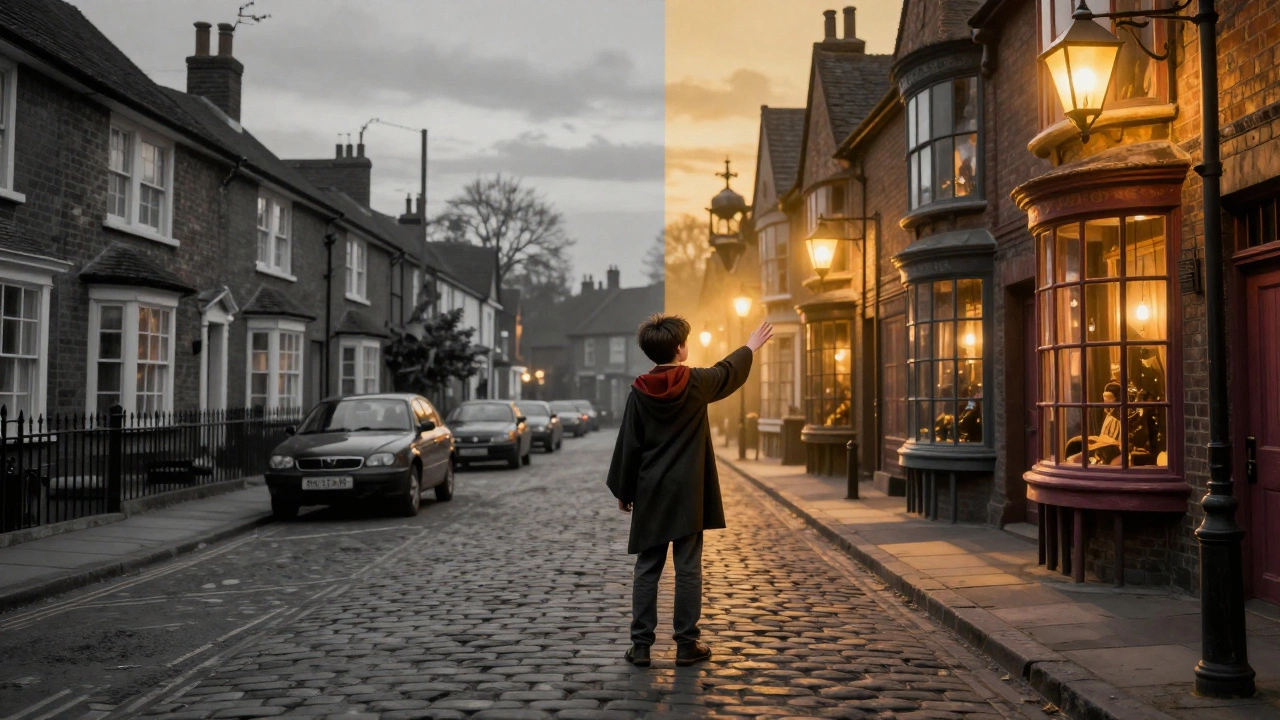
At first glance, Harry Potter seems like low fantasy. Why? Because it starts in Surrey, England. We see normal houses, normal cars, and normal people. The Dursleys are painfully mundane. For the first chapter, this is a realistic contemporary novel. But then, the magic arrives.
The Portal Fantasy Loophole
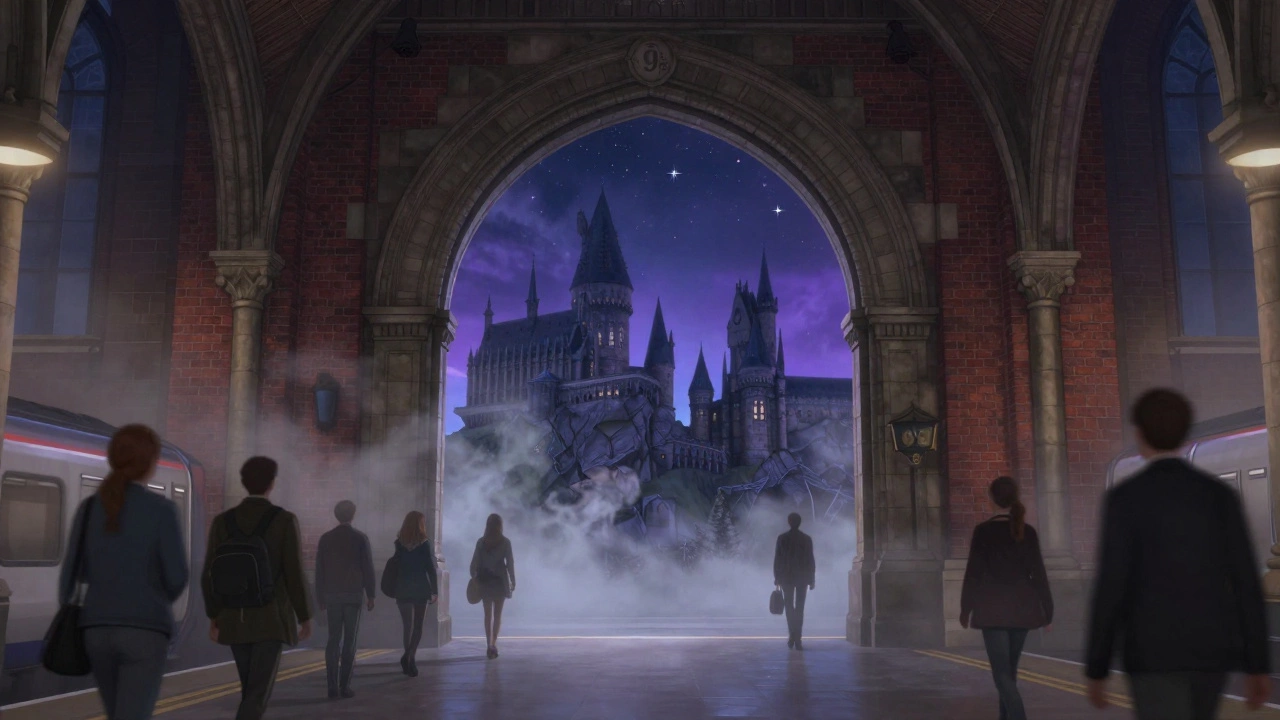
This is where things get interesting. Harry Potter doesn’t fit neatly into low fantasy because once Harry steps through the barrier at King’s Cross Station or walks down Diagon Alley, he enters a structured, rule-based society that has existed for centuries alongside ours. This is known as portal fantasy.
Portal fantasy involves a character moving from the primary world (our world) to a secondary world (the magical world). The key difference between low fantasy and portal fantasy is the depth of the secondary world. In low fantasy, magic is a glitch. In portal fantasy, the secondary world is a full-blown civilization with its own government, economy, sports, and media.
Hogwarts isn’t just a haunted house; it’s a boarding school with a curriculum, a house system, and a headmaster. The Ministry of Magic isn’t just a group of wizards hanging out; it’s a bureaucratic institution with departments, laws, and elections. This level of detail pushes Harry Potter away from low fantasy and toward high fantasy, even though the entry point is our world.
| Feature | High Fantasy | Low Fantasy | Harry Potter (Portal) |
|---|---|---|---|
| Setting | Secondary World only | Primary World only | Both (Dual Worlds) |
| Magic Prevalence | Common/Systemic | Rare/Anomalous | Hidden but Structured |
| Society | Magical Civilization | Non-Magical Civilization | Secret Magical Society |
| Entry Point | Born into it | Accidental discovery | Threshold crossing (Platform 9¾) |
Why "Magical Realism" Doesn't Quite Fit Either
You might hear people call Harry Potter "magical realism." That’s a mistake. Magical realism, popularized by authors like Gabriel García Márquez, treats magic as a mundane part of everyday life. There is no distinction between the magical and the real. A character might float away, and everyone just shrugs. There is no secret society, no wands, no spells. The magic is metaphorical and seamless.
In Harry Potter, magic is very much distinct from reality. Wizards have to hide it. They use specific tools (wands) and learn specific incantations. The two worlds are segregated by law (the International Statute of Secrecy). This separation is crucial. In magical realism, the worlds aren’t separated; they’re blended. In Harry Potter, they’re parallel tracks that rarely intersect, except through portals.
The Role of the "Statute of Secrecy" in Genre Definition
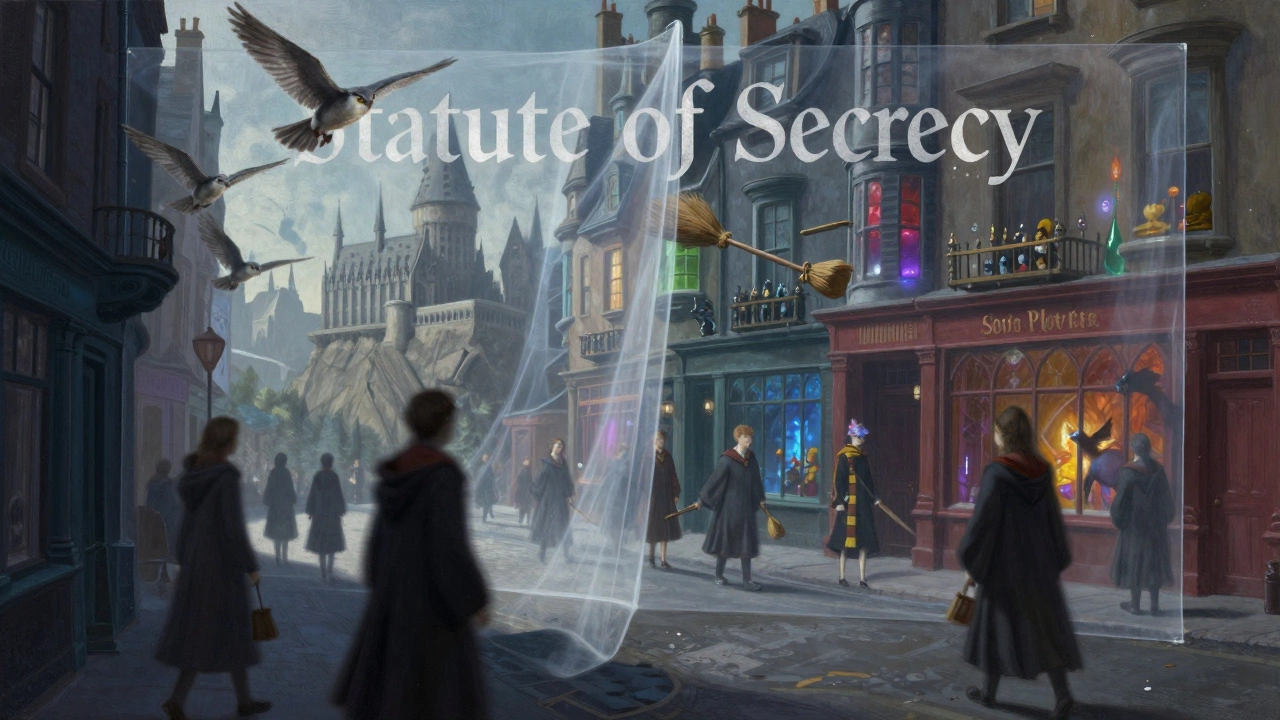
The most defining element of the Harry Potter universe is the International Statute of Secrecy. Enforced after 1689, this law required witches and wizards to hide their existence from Muggles (non-magical people). This legal framework creates a dual-reality structure.
Because of this statute, the wizarding world functions like a high fantasy society-it has its own history, wars, currency (Galleons), and politics-but it is physically located within our world. This is sometimes called "urban fantasy," but urban fantasy usually implies that magic is more visible or integrated into the city’s fabric (like in Dresden Files). Harry’s world is a bubble. It’s a high-fantasy ecosystem trapped inside a low-fantasy container.
This duality is why fans argue so much. From the perspective of the Muggle world, it’s low fantasy (magic is hidden). From the perspective of the Wizarding world, it’s high fantasy (they live in a complete magical culture). Rowling brilliantly uses this tension to explore themes of prejudice, secrecy, and belonging.
How Other Authors Handle the Blend
Rowling wasn’t the first to do this, nor the last. C.S. Lewis’s The Chronicles of Narnia is the classic example of portal fantasy. Children step through wardrobes or paintings into a world that operates on different rules. However, Narnia is a separate dimension with its own time flow. When you leave Narnia, you return to the same moment in England.
In contrast, Harry Potter’s wizarding world shares the same timeline and geography as ours. Diagon Alley is *under* Charing Cross Road. The Leaky Cauldron is *next to* a real pub. This physical overlap makes it feel more grounded than Narnia but less isolated than Middle-earth. It’s a "hidden layer" of reality rather than a separate dimension.
More recently, series like Percy Jackson & The Olympians by Rick Riordan follow a similar model. Camp Half-Blood is a hidden sanctuary within the real world. These stories rely on the concept of the "Veil"-a thin boundary between the mundane and the magical. The closer the veil is, the more the genre leans toward urban fantasy or portal fantasy, rather than pure high or low.
Why the Distinction Matters for Readers
So, does it really matter if it’s high or low? Yes, because it changes how you read the story. If you treat it as high fantasy, you’ll focus on the political intrigue of the Ministry, the history of Hogwarts, and the mechanics of spell-casting. You’ll analyze it like Game of Thrones.
If you treat it as low fantasy, you’ll focus on Harry’s coming-of-age journey, his trauma, and his struggle to fit into both worlds. You’ll analyze it like a contemporary YA drama with special effects. The beauty of Harry Potter is that it allows you to do both. It offers the escapism of high fantasy with the relatability of low fantasy.
For writers, understanding this blend is powerful. It shows you don’t have to choose between a fully invented world and the real world. You can build a secret world that reflects our own, using magic as a mirror for real-world issues like racism (pure-blood supremacy), bureaucracy (the Ministry), and education (Hogwarts’ flaws).
Final Verdict: A Hybrid Masterpiece
Harry Potter is best classified as Portal Fantasy with strong elements of Urban Fantasy. It is not high fantasy because it doesn’t take place in a wholly separate world. It is not low fantasy because the magic is not an anomaly; it’s a structured, hidden society. It occupies a unique space where the secondary world is embedded within the primary world, accessible only through specific thresholds.
This hybrid nature is exactly why the series appeals to such a wide audience. Kids love the adventure and the clear good-vs-evil stakes of high fantasy. Adults appreciate the social commentary and the realistic portrayal of institutions found in low fantasy. By blending the two, Rowling created a world that feels both impossibly magical and strangely familiar.
Is Harry Potter considered urban fantasy?
Yes, many critics classify it as urban fantasy because the magical events take place in a modern, real-world setting (London and surrounding areas). However, traditional urban fantasy often features magic that is more visible or integrated into the city's daily life, whereas Harry Potter's magic is strictly hidden behind the Statute of Secrecy.
What is the difference between high fantasy and Harry Potter?
The main difference is the setting. High fantasy takes place in a completely invented secondary world (like Middle-earth) where magic is the norm. Harry Potter takes place in our real world, where magic is hidden in a secret society. In high fantasy, there are no non-magical people; in Harry Potter, Muggles make up the majority of the population.
Why is Harry Potter not low fantasy?
Low fantasy typically involves magic appearing as a rare, strange, or terrifying event in the real world. In Harry Potter, magic is systematic, taught in schools, and governed by laws. The wizarding world is a fully developed culture with its own history and infrastructure, which goes beyond the scope of typical low fantasy anomalies.
What is portal fantasy?
Portal fantasy is a subgenre where characters travel from the real world to a fantasy world through a specific gateway or portal. Examples include the wardrobe in Narnia or Platform 9¾ in Harry Potter. It bridges the gap between the mundane and the magical, allowing readers to enter the fantasy world alongside the protagonist.
Does the Statute of Secrecy change the genre?
Yes, the International Statute of Secrecy is crucial. It explains why the high-fantasy elements (wizards, dragons, spells) coexist with the low-fantasy setting (cars, phones, governments) without merging. It creates the "hidden world" dynamic that defines the Harry Potter series as a unique blend of genres.