Do YA Books Have Swearing? A Guide to Language in Young Adult Fiction
 Oct, 20 2026
YA Book Profanity Checker
Estimate the language intensity of a YA novel before you buy or borrow it. This tool uses general trends from popular titles to help parents and educators gauge suitability.
Select options and click "Analyze" to see results.
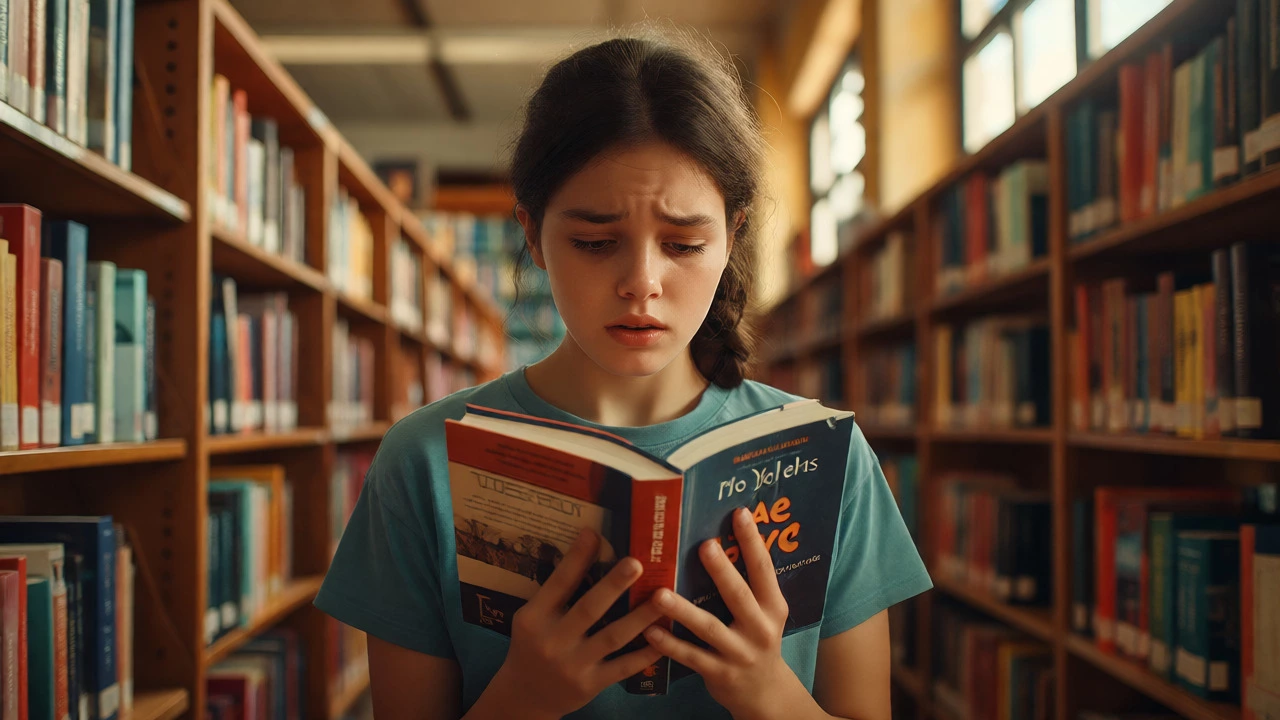
You’re standing in the library aisle, holding a copy of The Hate U Give or maybe Six of Crows, and you hesitate. You want to know if your teenager is ready for the language inside. It’s a valid question. The short answer is yes, many young adult (YA) novels contain profanity, but the amount varies wildly depending on the author, the genre, and the publisher's target demographic.
Parents and educators often worry that "swearing" equals "inappropriate." But in modern YA literature, strong language is rarely used just for shock value. It’s usually there because real teenagers swear when they’re angry, scared, or trying to fit in. If a character never said "damn" after dropping their phone, they’d feel fake. So, before you ban a book based on a single bad word, let’s look at how language actually works in this genre.
Why Do Authors Use Profanity in YA?
Think about how you talk with your closest friends. Are you using formal grammar? Probably not. Teenagers are developing their identities, and part of that process involves testing boundaries, including linguistic ones. Authors like Angie Thomas use profanity to create authenticity. In The Hate U Give, the protagonist Starr Carter navigates two different worlds: her predominantly Black neighborhood and her wealthy, white prep school. She code-switches. When she’s stressed or angry in her home environment, the language becomes sharper. Removing those words would strip the character of her voice.
It’s also about emotional intensity. A scene where a character loses a parent or faces a life-threatening situation might include an expletive to convey raw panic. Consider John Green. His books, like The Fault in Our Stars, generally have very mild language, focusing more on wit and vulnerability. Compare that to Victoria Aveyard’s Red Queen, where political intrigue and violence might warrant stronger descriptors. The presence of swearing isn’t random; it serves the narrative.
How Much Swearing Is Too Much? The Spectrum of Cleanliness
Not all YA books are created equal. There’s a spectrum of language usage, ranging from completely clean to quite explicit. Understanding where a book falls on this scale helps you decide if it fits your household rules.
| Book Title | Author | Profanity Level | Context & Notes |
|---|---|---|---|
| The Hunger Games | Suzanne Collins | Mild | Rarely uses strong swears. Focuses on action and survival. Occasional "hell" or "damn," but no F-words. |
| Holes | Louis Sachar | Clean/Mild | Targeted at younger teens/pre-teens. Very little profanity, mostly mild exclamations. |
| Divergent | Veronica Roth | Moderate | Some strong language during conflict scenes. Reflects dystopian stress. |
| A Court of Thorns and Roses | Sarah J. Maas | Moderate to High | Fantasy romance. Contains sexual innuendo and occasional strong language, though less frequent than adult fantasy. |
| Throne of Glass | Sarah J. Maas | High | As the series progresses, it leans into adult fantasy territory with more frequent profanity and graphic content. |
Notice the trend? Older YA readers (16+) often get access to books with higher profanity levels. Publishers categorize these as "Upper YA" or even crossover titles. If your child is 13, sticking to the "Mild" column is safer. If they’re 17, they can likely handle the "Moderate to High" entries without issue.

The Role of Content Warnings and Reviews
You don’t have to read every page to know what’s inside. The publishing industry has improved transparency significantly over the last decade. Most major retailers now provide detailed content warnings. Sites like Common Sense Media offer granular breakdowns. They’ll tell you exactly how many times an F-word appears, or if there are specific triggers like suicide or sexual assault.
Don’t rely solely on the back cover blurb. That’s marketing copy. Look for "Reader Advisory" sections online. BookTok (the book community on TikTok) is surprisingly useful here. Search for terms like "clean reads" or "spicy books" to gauge both romance and language levels. Creators often do "read-aloud" segments where they highlight specific lines. This crowdsourced data is often more accurate than official age ratings, which can be vague.
Is Swearing Harmful? What Research Says
Here’s a controversial take: hearing a swear word in a book doesn’t make a kid swear more. Studies in developmental psychology suggest that children and teens distinguish between fictional dialogue and real-world expectations. If a character in Harry Potter says "bloody hell," your child learns that’s British slang, not necessarily a license to say it at dinner.
In fact, exposure to diverse language in literature can improve vocabulary awareness. Teens learn nuance. They understand that saying "shut up" is different from screaming an expletive. Banning books with swearing might push them toward unmonitored media, like video games or social media, where language is far less curated. A controlled environment-a printed book-is easier to discuss than a viral tweet.
How to Talk About It With Your Teen
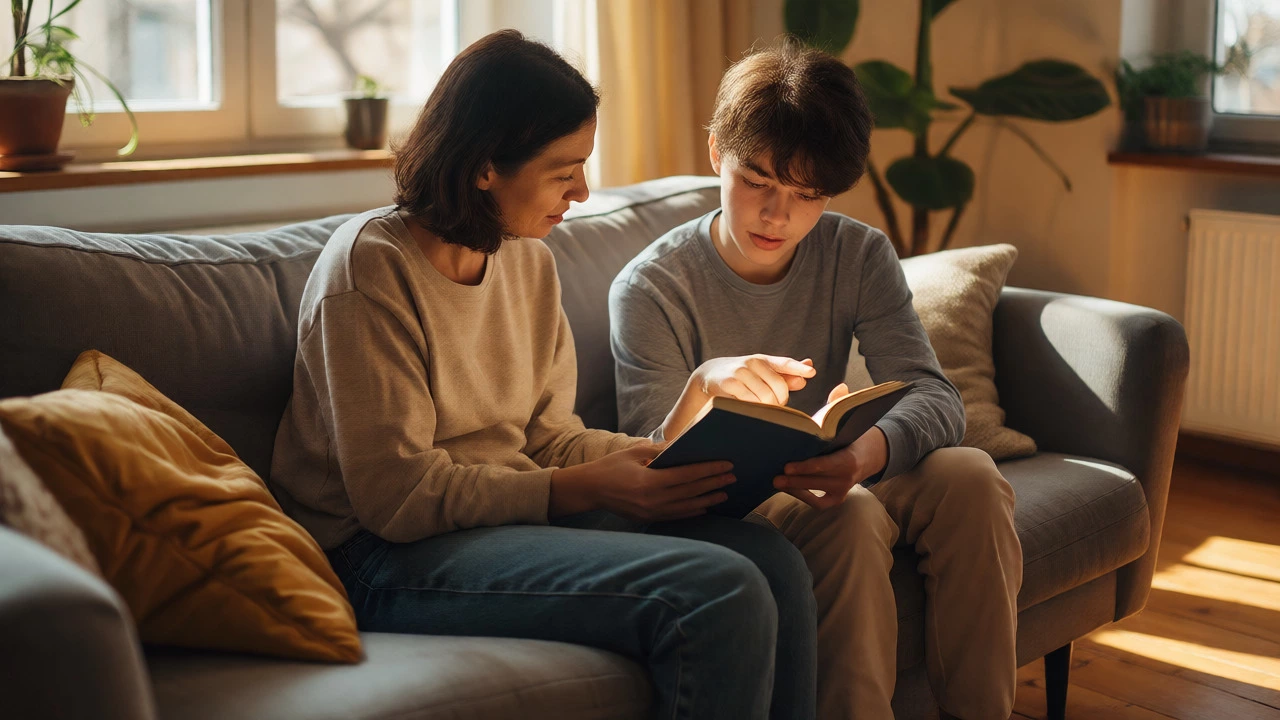
If you find a swear word in your teen’s current read, don’t panic. Use it as a conversation starter. Ask them why the author chose that word. Was the character angry? Trying to sound tough? Did it change the tone of the scene?
- Ask, don’t accuse: "I noticed some strong language in chapter four. How did that make you feel reading it?"
- Set family standards: Explain that while books reflect reality, your home has its own communication rules. Reading about swearing is fine; using it disrespectfully is not.
- Encourage critical thinking: Help them identify when swearing feels earned by the plot versus when it feels lazy.
This approach respects their growing autonomy while maintaining your values. It turns a potential conflict into a bonding moment over literature.
Alternatives for Families Who Prefer Clean Reads
If your household policy is strictly "no swearing," there are plenty of fantastic options. Look for authors known for cleaner prose. Rick Riordan’s Percy Jackson series is largely clean, relying on humor rather than vulgarity. Erin Morgenstern’s The Night Circus is poetic and avoids profanity entirely. For non-fiction, biographies of historical figures often maintain a respectful tone while still being engaging.
Check for "Clean Reads" lists on Goodreads or specialized blogs. These communities curate books specifically for families who prefer avoiding profanity, sexual content, or heavy violence. You don’t have to sacrifice quality for cleanliness. Some of the most powerful stories in YA are told without a single expletive.
Are all YA books rated PG-13?
No, there is no universal rating system for books like there is for movies. While many YA novels align with a PG-13 sensibility, some lean closer to G-rated cleanliness, while others, particularly in the fantasy and thriller genres, may contain content suitable for mature audiences (16+ or 18+). Always check specific content reviews for individual titles.
Does the number of swear words affect the book's literary value?
Not necessarily. Literary value depends on character development, plot structure, and thematic depth. Some award-winning novels contain minimal profanity, while others use it effectively for realism. The presence or absence of swearing is a stylistic choice, not a metric of quality. Judge the book by its overall impact and relevance to the reader.
Can I find a list of clean YA books?
Yes. Websites like Common Sense Media, Goodreads groups dedicated to "Clean Reads," and blogs focused on conservative parenting often publish updated lists. Additionally, searching for tags like "wholesome," "G-rated," or "no profanity" on book review sites can help filter results effectively.
Why do some parents object to swearing in YA books?
Concerns usually stem from a desire to protect children from inappropriate role models or to uphold specific religious or cultural values regarding speech. Some parents believe that exposure to profanity normalizes coarse language in daily life. Others worry about desensitization. These concerns are valid, but open dialogue often resolves conflicts better than outright bans.
Is audiobook narration different regarding swearing?
Sometimes. Narrators deliver dialogue with tone and emphasis, which can make profanity feel more impactful than reading it silently. However, the text remains the same. If the written word bothers you, the spoken word will likely have a similar effect. Check sample chapters before purchasing audiobooks if you are sensitive to audio delivery of strong language.