Defining Young Adult Fiction: What Actually Makes a Book YA?
 Apr, 24 2026
YA vs. Adult Fiction: Genre Classifier
Is your story Young Adult (YA) or Adult Fiction? Use this tool to analyze the "emotional center of gravity" of your narrative.
Classification Analysis:
To get a handle on this, we first need to define our central subject. young adult fiction is a category of fiction written for readers typically between the ages of 12 and 18, focusing on the transition from childhood to adulthood. While it's often grouped under the umbrella of YA literature, it's less of a rigid genre and more of a target demographic. It's the literary space where the 'firsts' happen-first love, first major loss, first time realizing your parents are flawed humans, and the first time you question where you fit in the world.
The Core of the YA Experience: Coming-of-Age
If there is one heartbeat that drives this category, it's the coming-of-age a narrative theme centered on the psychological and moral growth of a protagonist from youth to adulthood arc. In adult fiction, characters are often dealing with the consequences of their established lives. In YA, characters are in the process of building those lives from scratch. The stakes feel astronomical because, for a teenager, everything is happening for the first time.
Think about the difference in perspective. In a story about a divorce, an adult novel might focus on the legal battle or the emotional wreckage of a twenty-year marriage. A YA novel focuses on the teenager who has to navigate two different houses, the feeling of betrayal, and the sudden need to grow up faster than their peers. The focus isn't on the marriage ending, but on the identity shift that happens because of it. This shift is what defines the emotional resonance of the category.
Age is a Suggestion, Not a Rule
One of the biggest misconceptions is that if the character is 16, the book is automatically YA. That's simply not true. Look at classics like The Catcher in the Rye a 1951 novel by J.D. Salinger featuring Holden Caulfield, often cited as a precursor to modern YA . While Holden is a teenager, the book was written for adults to look back at the angst of youth. Conversely, many modern adults read YA because the intensity of the emotion is more raw than what you find in literary fiction.
The industry usually looks at the "protagonist's age" as a guideline. Most YA leads are between 14 and 19. However, the real indicator is the young adult fiction's focus on the internal search for identity. Adult fiction often assumes the character's identity is a given and explores how they interact with the world. YA asks: "Who am I in this world?"
| Feature | Young Adult (YA) | Adult Fiction |
|---|---|---|
| Primary Focus | Identity formation and discovery | Complexity of established life/relationships |
| Pacing | Typically faster, more immediate | Can be slower, more meditative |
| Perspective | Immediate, high-emotion, first-person common | Reflective, detached, or multifaceted |
| Thematic Weight | The "First Time" experience | The "Long Term" consequence |
The Role of Genre in YA
YA isn't a genre like Fantasy a genre of speculative fiction involving magical elements and imaginary worlds or Romance a genre focusing on the development of a romantic relationship between two people . Instead, it's a framework that these genres plug into. You can have YA Contemporary, YA Dystopian, or YA Paranormal. The "YA-ness" comes from how the story handles the protagonist's growth, not from whether there are dragons or cell phones involved.
Take the dystopian boom of the early 2010s. Stories like those found in The Hunger Games a series of dystopian novels by Suzanne Collins focusing on a survival competition aren't just about a scary government; they're about a girl realizing she has the power to ignite a revolution. The political struggle is the backdrop, but the core is Katniss's transition from a protector of her family to a symbol for a nation. That's the essence of YA: the individual's growth against a larger, often oppressive, system.

Pacing and Voice: The Narrative Energy
There's a specific energy to YA writing. It tends to be more direct and immersive. Authors often use a tight, present-tense or immediate past-tense perspective to make the reader feel the urgency of the character's situation. In adult fiction, you might find long paragraphs of exposition or internal monologue that spans chapters. In YA, the plot usually moves with a sense of urgency because the characters are living in a state of constant change.
The voice is also crucial. It doesn't mean the author uses "teen slang" (which often dates a book instantly and makes it feel cringeworthy). Instead, it's about the emotional honesty. YA doesn't shy away from the melodrama of adolescence because adolescence is melodramatic. When a 16-year-old's world falls apart, it doesn't feel like a "phase"-it feels like the end of the world. Good YA acknowledges that reality without patronizing the reader.
The "Crossover" Phenomenon and the Market
We've seen a massive rise in "crossover" novels-books that appeal equally to teens and adults. This is partly due to the publishing industry the business of producing and distributing books, including editing, marketing, and sales recognizing that adults enjoy the high-stakes emotion and fast pacing of YA. When a book like Twilight or Six of Crows becomes a global hit, it ceases to be just a "teen book" and becomes a cultural product.
This has led to the creation of the "New Adult" (NA) category. NA is designed to fill the gap between 18 and 25, focusing on college years, first jobs, and more explicit romantic content. It’s a response to the fact that many people don't stop reading YA the moment they graduate high school. They're still looking for those themes of discovery and identity, but they want them paired with adult complexities.
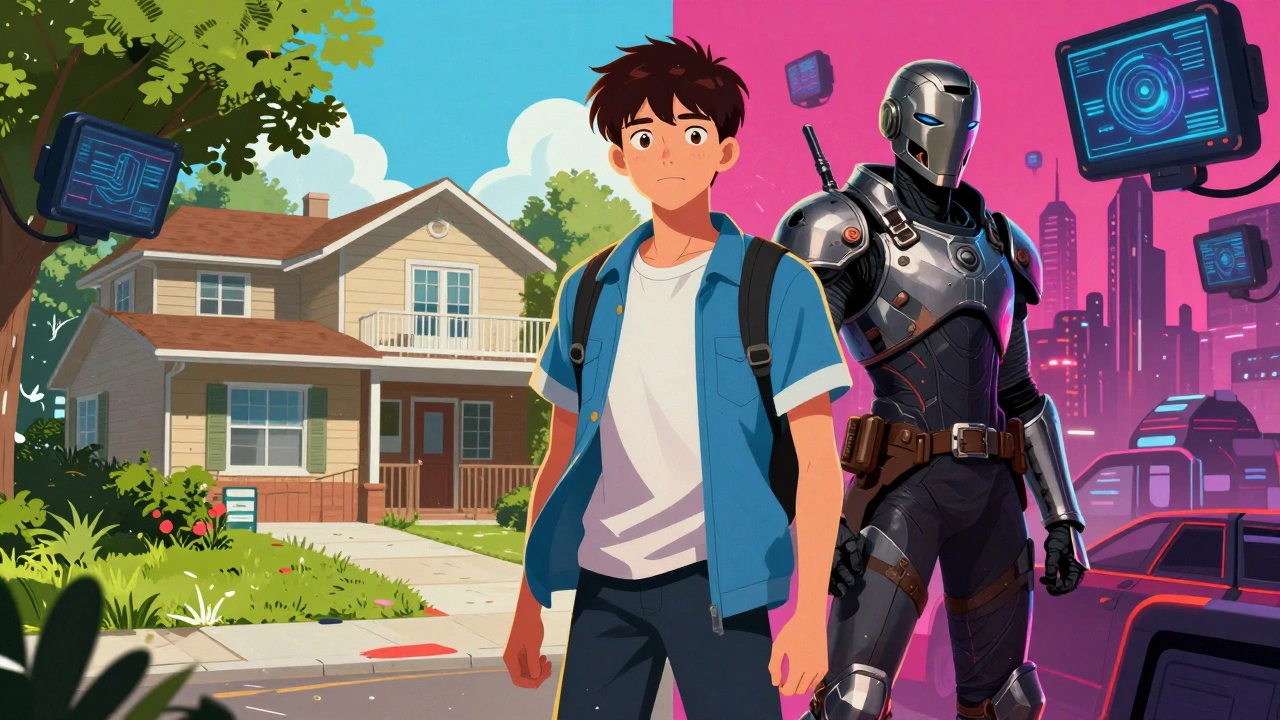
Common Pitfalls in Defining YA
Many people think that the lack of explicit violence or sex is what makes a book YA. While some publishers have guidelines, this is a shaky metric. There are adult novels with zero sex and YA novels that deal with very heavy, adult themes. The real distinction is the emotional center of gravity. If the story is primarily about the protagonist's internal struggle to figure out who they are in relation to the adults in their life, it's likely YA.
Another pitfall is assuming YA is "simplified" versions of adult stories. This is a fundamental misunderstanding. The best YA is often more complex than adult fiction because it has to capture the volatility of a developing brain. It's not about simplifying the plot; it's about intensifying the focus on the protagonist's immediate emotional experience.
Can an adult write a YA novel?
Absolutely. Most YA novels are written by adults. The key is not to "mimic" how teens talk, but to remember how it felt to be that age. The most successful authors focus on the universal emotions of adolescence-loneliness, excitement, rebellion-rather than trying to use current slang that will be outdated in six months.
Is there a maximum age for YA characters?
Generally, if the character is over 19 or 20, the book starts moving into the New Adult or Adult category. However, this varies. If the character is 20 but still grappling with the core identity questions of a teenager, some publishers may still market it as YA, though it's becoming rarer as the New Adult category grows.
What is the difference between Middle Grade (MG) and YA?
Middle Grade is typically for ages 8-12. The themes are usually about friendship, family, and fitting in, but without the intense romantic or existential angst of YA. MG protagonists are usually children who see the world with a certain level of innocence, whereas YA protagonists are entering a stage of disillusionment and self-discovery.
Do YA books have to have a happy ending?
Not at all. While many have optimistic endings, some of the most powerful YA novels are tragedies. The goal isn't necessarily a "happy" ending, but an ending that feels honest to the character's journey and growth. The resolution should provide some form of closure or understanding regarding the character's identity.
Why is YA so popular with adult readers?
Adults are drawn to the raw emotionality and the clear-cut stakes of YA. Life as an adult can feel stagnant or repetitive; reading about a time when every single day felt like a turning point is cathartic. Additionally, the faster pacing makes YA a great "palate cleanser" between heavier adult reads.
What to Do Next
If you're a writer trying to decide if your book is YA or Adult, ask yourself: Does the protagonist's identity change because of the events of the plot, or are they simply reacting to the plot using an identity they already have? If it's the former, you're likely in YA territory. Focus on the internal shift and the emotional intensity.
For readers who want to explore the category, don't stick to just one genre. If you liked the emotional depth of a YA romance, try a YA historical novel. The common thread is the coming-of-age experience, and that's where the real magic of the category lies. Whether it's a magic school or a quiet suburb, the heart of the story is always the same: the struggle to become yourself.