Can Narratives Make an Argument? How Stories Shape Beliefs and Change Minds
 Dec, 26 2025
Narrative Persuasion Builder
Craft Your Persuasive Story
Transform your issue from abstract facts to a story that changes minds. Follow the article's framework to build narratives that resonate emotionally.
Your Issue
Your Persuasive Story
Your story should focus on one human experience that makes the issue personal and emotional. Use the framework from the article:
- Start with the emotional core
- Introduce a specific character
- Show a turning point
How This Works
The article shows that stories change minds better than facts. Your story needs: 1) An emotional core, 2) A character people care about, and 3) A turning point that makes your point clear. Don't just state your argument - show it through a human experience.
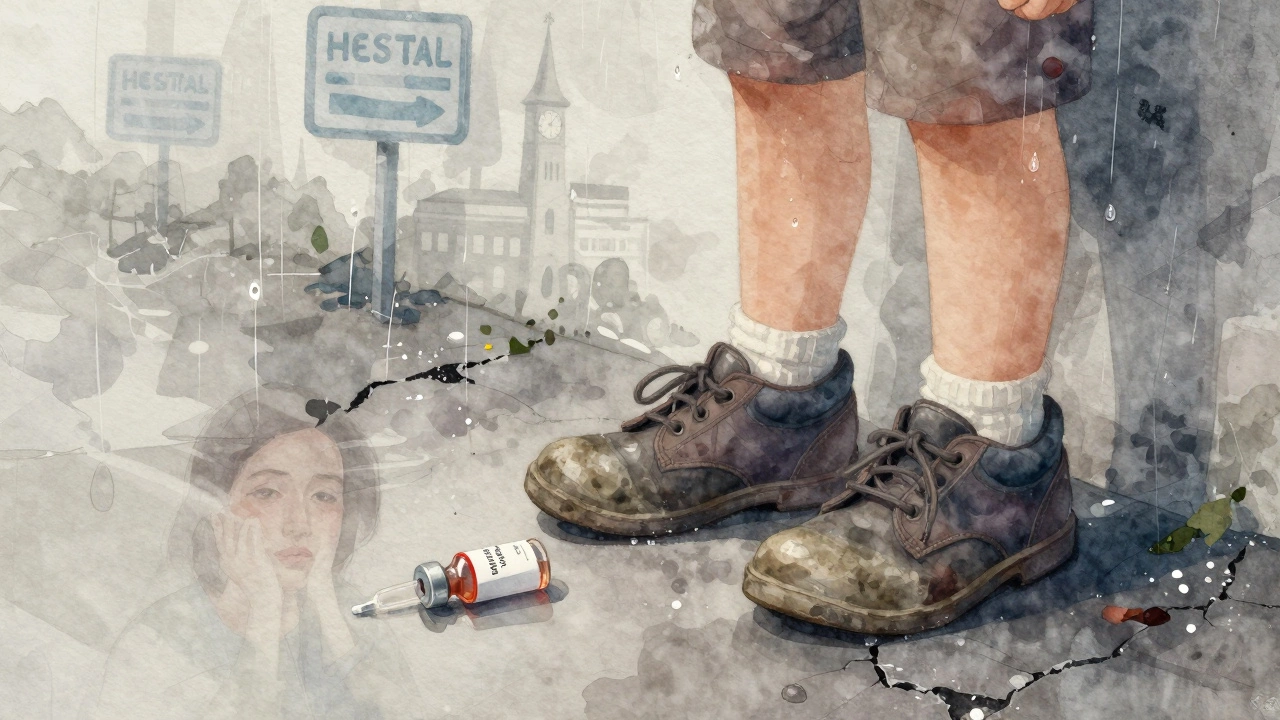
Think about the last time you changed your mind-not because of data, but because of a story. Maybe it was a friend describing how they lost their job and how the system failed them. Or a movie that showed you what poverty really looks like, not in graphs, but in a child’s worn-out shoes. That’s not just emotion. That’s persuasion. And it works better than any spreadsheet ever could.
Stories Don’t Just Inform-They Convert
Narratives don’t argue in the way logic does. They don’t list premises and conclude with a syllogism. Instead, they slip into your mind through the back door. They give you a face, a name, a heartbeat. And once you care about someone in a story, you start seeing the world through their eyes. That’s when arguments take root.
Take the civil rights movement. The argument for equality wasn’t won by legal briefs alone. It was won by images of fire hoses turned on children, by the voice of Martin Luther King Jr. telling the story of a dream. Those weren’t facts-they were narratives. And they made people feel the injustice in their bones.
Studies from the University of California, Berkeley show that when people hear a personal story tied to a social issue, their willingness to support policy change increases by up to 52%. That’s not because stories are more accurate. It’s because they’re more memorable. The brain remembers stories 22 times better than isolated facts, according to research published in the Journal of Consumer Research.
Cultural Narratives Are the Hidden Architecture of Society
Every culture has its deep stories-the ones we don’t even notice because they’re woven into everything. In the U.S., the narrative of the self-made man suggests that if you work hard enough, you’ll succeed. In Japan, the story of group harmony teaches that individual ambition must bend to collective stability. These aren’t laws. They’re stories. And they shape what people believe is fair, possible, or right.
When a culture repeats a story often enough, it stops feeling like a story. It becomes truth. That’s why debates about immigration, gender roles, or climate change feel so stuck. People aren’t just disagreeing on facts. They’re defending different stories.
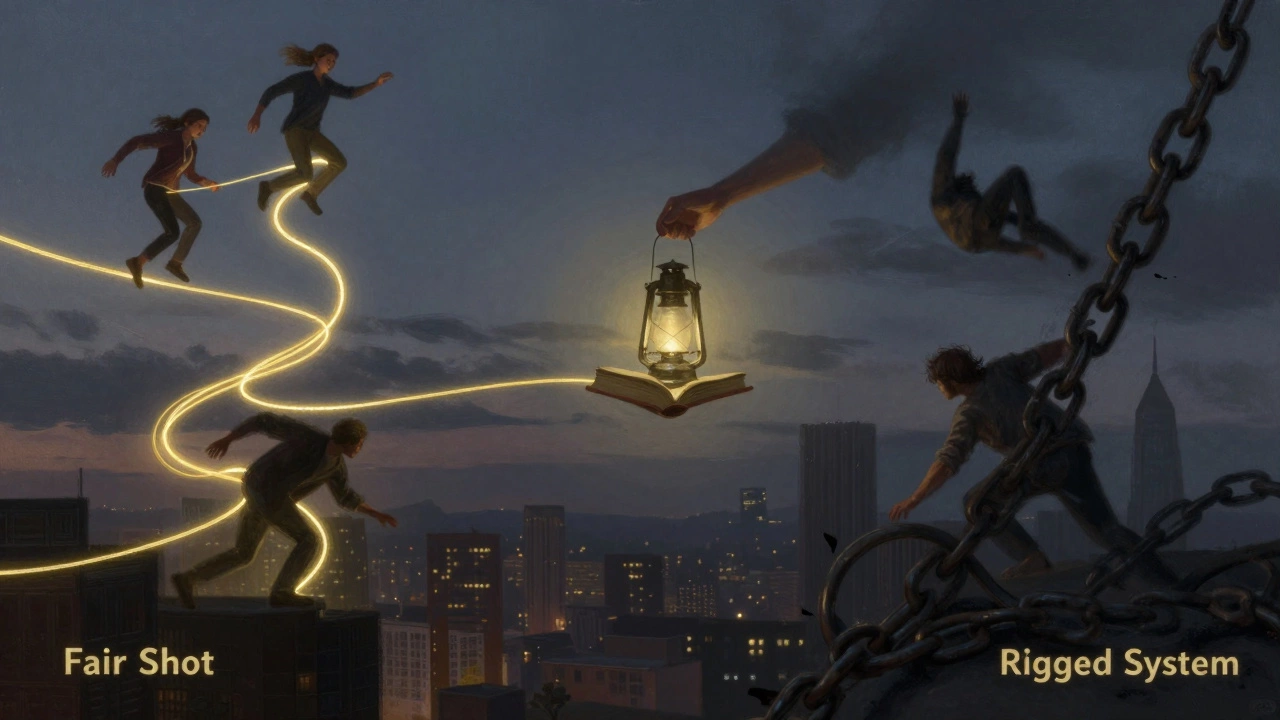
One side says: "The system is rigged." The other says: "Everyone has a fair shot." Neither side is just citing statistics. They’re telling different origin stories about how the world works. The real battle isn’t over data-it’s over which narrative wins the right to be believed.
How to Build an Argument That Sticks
If you want to change someone’s mind, don’t lead with data. Lead with a person. Start with a moment. Give them a scene they can see.
Here’s how it works in practice:
- Find the emotional core of your issue. What’s the human cost? The hidden pain? The unspoken fear?
- Build a short story around it. Three sentences. One character. One turning point.
- Anchor your claim in that story. Don’t say, "We need better healthcare." Say, "Maria worked two jobs and still couldn’t afford her insulin. She died waiting for a discount that never came."
This isn’t manipulation. It’s clarity. The best arguments aren’t the most complex-they’re the ones that make you feel something real.
Look at how climate activists shifted public opinion. They didn’t start with CO2 levels. They showed kids holding signs that said, "My future is melting." They told stories of villages swallowed by rising seas. Suddenly, a 2-degree rise wasn’t a number. It was a home, a school, a birthday party never had.
The Dark Side: When Narratives Lie
But stories can also be weapons. The most dangerous arguments aren’t the ones with bad facts-they’re the ones with beautiful lies.
Think about propaganda. Nationalist myths. Conspiracy theories. They all use the same tools: a clear hero, a villain, and a simple cause-effect chain. "They took your job." "They’re coming for your freedom." These stories don’t need evidence. They need resonance.
That’s why facts alone can’t defeat false narratives. You have to offer a better one. If you just say, "That’s not true," you’re fighting a fire with a water pistol. You need a new story that gives people a different way to understand their world.
Take the myth that welfare creates laziness. The narrative says: "People are choosing not to work." The counter-story? "Millions of people work full-time and still can’t pay rent. The system doesn’t pay enough to live on." The first story blames the person. The second blames the structure. One is easy to believe. The other requires a shift in perspective.
Why Fiction Is More Powerful Than Fact
Novels, films, and myths have always been the quiet architects of public belief. George Orwell’s 1984 didn’t predict surveillance-it gave us a language to understand it. Harper Lee’s To Kill a Mockingbird didn’t just describe racism-it made white readers feel the shame of it.
That’s why the most effective activists, politicians, and marketers don’t just speak. They craft stories. They know that people don’t reject ideas-they reject feeling foolish. A good story lets someone change their mind without admitting they were wrong.
Think of the rise of remote work. It wasn’t the technology that changed minds. It was the story: "You can be a good parent and still have a career." That narrative cracked the 9-to-5 mold faster than any policy memo ever could.
What Happens When Stories Collide?
When two cultures tell different stories about the same event, conflict isn’t just possible-it’s inevitable. The Israeli-Palestinian conflict isn’t just about borders. It’s about two origin stories: one about return and survival, the other about displacement and loss. Neither side can surrender their story without feeling erased.
That’s why peace talks fail. Not because the parties are irrational. But because they’re not just negotiating land-they’re negotiating identity. And identity lives in story.
Same with debates over gender, race, or history. The fight isn’t over what happened. It’s over who gets to tell it. Who gets to be the hero? Who gets to be the victim? Who gets to be invisible?
Can You Use Narratives to Win an Argument? Yes-If You’re Honest
Using stories to persuade isn’t cheating. It’s how humans have always made sense of the world. The only question is: Are you telling a story that reflects truth-or one that hides it?
A good narrative doesn’t distort. It reveals. It doesn’t simplify. It clarifies. It doesn’t manipulate. It connects.
When you use narrative to argue, you’re not avoiding logic. You’re completing it. Facts tell you what is. Stories tell you why it matters.
And in the end, that’s what changes minds-not the numbers, but the meaning behind them.