Are Fantasy Novels Still Popular? The 2026 Market Reality
 Nov, 20 2026
Find Your Perfect Fantasy Subgenre
Answer these 3 questions to discover which fantasy trend matches your vibe.
You are a Romantasy Reader!
You want heart-pounding romance set against magical backdrops. You're looking for emotional intensity and character-driven plots rather than dense lore.
Market Trend:
Explosive Growth
Top Recommendation:
Fourth Wing by Rebecca Yarros or books by Sarah J. Maas.
You are an Epic Fantasy Fan!
You crave deep world-building, complex magic systems, and political intrigue. You don't mind long books if they offer rich context and intellectual engagement.
Market Trend:
Stable / Niche
Top Recommendation:
The Way of Kings by Brandon Sanderson.
You are a Cozy Fantasy Lover!
You prefer low-stakes narratives where characters run shops, make friends, and solve gentle problems. You read to relax, not to be stressed out by apocalyptic threats.
Market Trend:
Rising Fast
Top Recommendation:
Legends & Lattes by Travis Baldree.
You are an Urban Fantasy Enthusiast!
You like magic blended with modern settings, detective work, and action. You enjoy seeing how supernatural elements interact with our real-world infrastructure and society.
Market Trend:
Declining but Loyal
Top Recommendation:
Dresden Files by Jim Butcher.
You might think the fantasy novel is a relic of the 1990s, something your older sibling kept on a dusty shelf next to their Dungeons & Dragons rulebooks. But walk into any independent bookstore in Bristol or scroll through the bestseller lists on Amazon right now, and you’ll see something different. The genre isn’t just alive; it’s eating up market share like a dragon hoarding gold. If you’re wondering whether picking up a sword-and-sorcery paperback today is worth your time, the short answer is yes. But the landscape has shifted dramatically since the days when J.R.R. Tolkien was the only name that mattered.
The Shift from High Fantasy to Romantasy
Let’s be honest: the definition of "fantasy" has expanded. Ten years ago, if you said you read fantasy, people pictured elves and dwarves fighting over a magic ring. Today, the biggest driver of sales isn’t epic world-building-it’s romance. We are living in the era of Romantasy, a hybrid genre where magical worlds serve as the backdrop for intense romantic relationships. Authors like Sarah J. Maas and Rebecca Yarros have dominated the charts not because their magic systems are complex, but because their characters fall in love with devastating intensity.
This shift answers a crucial question for readers: why are these books still popular? Because they offer emotional escapism. In a world filled with real-world stressors, readers aren’t looking for dense lore dumps; they want comfort, tension, and a happy ending. The BookTok community on TikTok has played a massive role here, turning niche titles into global phenomena overnight. It’s no longer about what critics say; it’s about what makes millions of readers feel something.
Why Traditional Publishers Are Betting Big
If you look at the financial data, the trend is undeniable. Major publishing houses are acquiring fantasy rights at record prices. Why? Because fantasy readers are loyal. Unlike mystery or thriller readers who might jump between authors based on plot twists, fantasy fans often commit to entire series. They buy hardcovers, special editions, and merchandise. This loyalty creates a stable revenue stream that publishers crave in an unpredictable market.
Consider the impact of Brandon Sanderson. He didn’t just write books; he built a brand around his "Cosmere" universe. His Kickstarter campaigns raise millions, proving that direct-to-reader models work exceptionally well for this genre. When an author like Sanderson releases a new book, it’s not just a product launch; it’s an event. This level of engagement suggests that fantasy isn’t just popular-it’s culturally significant in a way few other genres can match.
Comparing Fantasy Subgenres by Popularity
Not all fantasy is created equal. To understand where the momentum is, we need to break down the subgenres. While classic high fantasy remains steady, urban fantasy has seen a decline, while cozy fantasy and romantasy have surged. Here’s a snapshot of how these categories stack up in the current market:
| Subgenre | Primary Appeal | Market Trend | Key Example |
|---|---|---|---|
| Romantasy | Romance + Magic | Explosive Growth | Fourth Wing by Rebecca Yarros |
| Epic Fantasy | World-building & Lore | Stable / Niche | The Way of Kings by Brandon Sanderson |
| Cozy Fantasy | Low stakes & Comfort | Rising Fast | Legends & Lattes by Travis Baldree |
| Urban Fantasy | Modern setting + Magic | Declining | Dresden Files by Jim Butcher |
The Role of Social Media in Reviving Old Titles
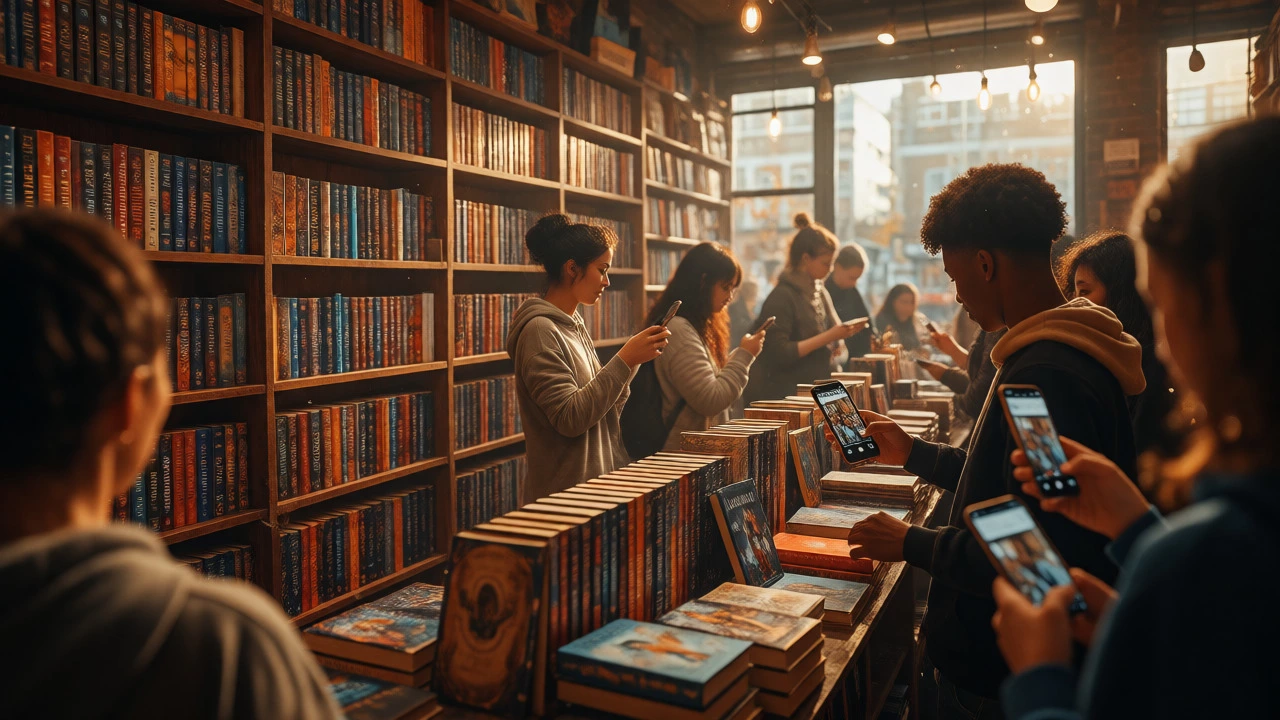
You might assume that new releases drive the market, but social media has changed the game. Books published five or ten years ago are suddenly hitting bestseller lists again. This phenomenon is largely driven by viral marketing. A single video on TikTok showing someone crying over a plot twist can send a backlist title soaring to number one.
This means the fantasy novel market is less predictable than ever. An obscure self-published book can outsell a major traditional release simply because it resonated with a specific online community. For readers, this is great news. It means there’s always something new to discover, regardless of publication date. It also means that libraries and bookstores are stocking more diverse titles, moving away from the safe, formulaic choices of the past.
Is It Worth Reading Fantasy Now?
If you’ve been out of touch with the genre, you might worry about missing the context. Do you need to read three thousand pages of history before the plot starts? In many cases, no. Modern fantasy tends to start in medias res-right in the action. The barrier to entry is lower than it used to be. Plus, with the rise of audiobooks, you can consume these stories during your commute without needing to carry heavy bricks.
Moreover, fantasy offers a unique lens for understanding contemporary issues. Themes of power, identity, and environmental collapse are woven into these magical narratives. Reading about a kingdom dealing with resource scarcity feels surprisingly relevant when you’re reading the news. It’s escapism, sure, but it’s smart escapism.
Final Thoughts on the Genre’s Future
So, are fantasy novels still popular? Absolutely. But don’t expect them to look like the books from your childhood. The genre is evolving, becoming more inclusive, more emotionally driven, and more integrated with digital culture. Whether you prefer the intricate politics of a sprawling empire or the comforting warmth of a magical coffee shop, there’s a shelf waiting for you. The key is to ignore the snobs who think fantasy is "just for kids." The numbers don’t lie, and neither do the millions of readers staying up until 3 AM to finish one more chapter.
What is the most popular type of fantasy novel right now?
Currently, Romantasy (a blend of romance and fantasy) is the dominant force. Books that feature strong romantic arcs alongside magical elements, such as those by Sarah J. Maas or Rebecca Yarros, are consistently topping bestseller lists due to their appeal on social media platforms like BookTok.
Do I need to read old classics to enjoy modern fantasy?
No, you don't. Most modern fantasy novels are written as standalone experiences or part of accessible series that don't require prior knowledge of classic works like Tolkien's. Modern pacing is faster, and exposition is often handled more subtly, making it easier for new readers to jump in.
Why is fantasy considered a 'safe' bet for publishers?
Fantasy readers are known for their loyalty and high engagement rates. They tend to buy multiple books in a series, purchase special editions, and follow authors closely on social media. This consistent behavior provides publishers with predictable revenue streams compared to more volatile genres.
Has the definition of fantasy changed in recent years?
Yes, significantly. The genre has broadened to include hybrids like Cozy Fantasy, which focuses on low-stakes comfort rather than epic battles, and Urban Fantasy, which blends magic with modern settings. The strict boundaries between fantasy, science fiction, and horror have also blurred, allowing for more creative freedom.
Are fantasy books suitable for adults?
Absolutely. While some fantasy is marketed toward young adults, a large portion of the genre is aimed squarely at adults. These books tackle complex themes like political intrigue, moral ambiguity, war, and grief, using magical metaphors to explore human conditions.